AI Chatbot for Logistics: Real Roi, Hidden Risks, Hard Lessons
Written with AI assistance under our editorial guidelines
AI chatbots are being adopted in logistics to address systemic communication breakdowns that plague the industry. With 43% of logistics firms lacking supplier visibility and single container delays costing $6,700, chatbots promise to reduce human error and miscommunication. However, the article warns that beneath the hype lies hidden risks and complex implementation challenges that industry leaders rarely discuss openly.
There’s a reckoning underway in the global logistics sector, and it’s not coming quietly. If you’ve ever watched a supply chain unravel in real time—a missed container, a misread instruction, a warehouse at capacity while a customer fumes—you understand the desperation for a change agent. Enter the AI chatbot for logistics: hyped as the savior of everything from port backlogs to customer rage. But what’s the truth lurking beneath the buzzwords and sales decks? This isn’t just about automating answers or throwing a digital receptionist at your operations. It’s about exposing the cracks in an industry that’s been stretched to its breaking point, and asking if AI can really stitch it back together. In this deep dive, we’ll scrape away the hype to reveal nine game-changing truths about AI chatbots for logistics—truths that the industry’s gatekeepers rarely discuss. Whether you’re a seasoned logistics manager, a tech-obsessed supply chain analyst, or just here to make sense of the disruption, buckle up. This isn’t the sanitized vision you’ll get at a trade show. It’s the unfiltered reality, powered by hard data, war stories, and the kind of insight that only comes from living on the frontline of logistics chaos.
Why logistics is desperate for an AI intervention
The crisis nobody talks about
Step inside any major logistics hub—port, warehouse, fulfillment center—and you’ll feel the tension. Communication breakdowns aren’t just common; they’re systemic. According to research from Biz4Group, nearly 43% of logistics firms admit to having limited visibility into supplier performance, often relying on outdated emails, chaotic spreadsheets, or missed phone calls. What’s rarely discussed outside industry circles is how these small failures snowball into multimillion-dollar disasters. Take port congestion, for example: a single delayed container on the Shanghai-Los Angeles route can rack up $6,700 in additional costs, as cited by Inoxoft and confirmed in multiple 2024 industry studies.

The scale of logistical failures due to human error is staggering. According to Statista, human error and miscommunication continue to be leading causes of misrouted shipments, inventory shortages, and delivery delays. In a sector where razor-thin margins and cutthroat competition are the norm, even a minor misstep can ripple across continents and cripple a supply chain.
"Logistics isn’t broken—it’s just overwhelmed," says Priya, a supply chain strategist. — Illustrative, based on prevailing industry sentiment documented in Dialpad, 2024
So why do traditional solutions keep failing? The answer’s brutally simple: most legacy systems were never designed for the pace and complexity of modern logistics. Bolt-on modules, manual interventions, and ‘band-aid’ processes have left operations fragmented and staff burned out.
- Relentless firefighting: Managers spend more time tracking down missing information than planning ahead.
- System silos: TMS, WMS, and ERP platforms rarely ‘talk’ to each other, creating shadow workflows and data black holes.
- Labor shortages: Chronic understaffing forces operators to cut corners, increasing risk and stress.
- Opaque supplier networks: Without real-time visibility, surprises lurk around every corner—from delayed trucks to customs holdups.
- Customer rage: 73% of consumers now expect rapid, 24/7 support, but few logistics firms can deliver without burning out their teams.
What an AI chatbot actually changes (and what it doesn’t)
The promise of an AI chatbot for logistics isn’t just about reducing headcount or automating rote tasks. It’s about radical transparency and speed. Chatbots can slash operational costs by up to 25% (EzChatAI, 2024), and early adopters report 20% faster deliveries and 15% lower emissions, as documented by Statista and Inoxoft. But here’s the uncomfortable truth: no AI, however advanced, is a silver bullet.
| KPI | Pre-AI Chatbot | Post-AI Chatbot | % Change |
|---|---|---|---|
| Order error rate | 5.2% | 2.9% | -44% |
| Avg. response time | 8 min | 1.5 min | -81% |
| Downtime due to miscomms | 3.5 hrs/mo | 1.2 hrs/mo | -66% |
| Customer satisfaction | 67% | 85% | +27% |
Table 1: Core logistics KPIs before and after AI chatbot implementation. Source: Original analysis based on Inoxoft, 2024 and Statista, 2024.
Yet, persistent gaps remain. Chatbots are only as smart as the data they’re trained on—and most logistics operations have a skeleton closet full of dirty data. Integration with existing tech stacks is rarely seamless, and employees often resist relinquishing hard-earned tribal knowledge to a ‘bot.’ The result? AI often augments but doesn’t replace human expertise. When the chips are down, it’s still the human operators who patch the holes, reroute freight, and make judgment calls.
AI chatbot for logistics explained: Beyond the buzzwords
How AI chatbots learn your operations
Forget the generic, FAQ-spitting bots that haunt most websites. True AI chatbots for logistics are built on custom training, feeding off the real workflows, jargon, and decision trees that define your operation. The process starts with natural language processing (NLP)—the engine that lets a bot understand everything from shipment queries to complex supply chain exceptions. But NLP is just the tip of the spear.
Key terms and why they matter:
The AI’s ability to interpret and respond to human language, enabling it to handle everything from “Where’s my container?” to “Schedule maintenance on bay three.”
The bridge between the chatbot and your mission-critical systems—TMS, WMS, ERP—enabling real-time data exchange. Miss this, and your bot’s blind.
Core software for routing, dispatch, and carrier selection. A chatbot’s effectiveness rises or falls on its TMS integration.
The digital backbone for managing stock, picking, and fulfillment. Chatbots can trigger orders or flag shortages—if they’re plugged in.
What makes logistics chatbots different from generic bots? It’s the context. These bots don’t just answer status checks; they triage incoming disruptions, escalate exceptions, and even suggest rerouting in the face of weather, strikes, or customs delays. Their ability to ‘think’ in the language of logistics is what makes them transformative.
Chatbots vs. humans: The new frontline
The rise of the AI chatbot for logistics hasn’t pushed humans out of the picture—it’s just changed their role. Where once a coordinator might spend the day fielding status requests, now they’re freed up to solve higher-order problems. But this evolution doesn’t always land smoothly.
Frontline staff often see the chatbot as a threat, not a tool. According to Dialpad, only about a quarter of logistics firms had fully implemented AI by 2024, citing staff resistance and skill gaps as primary barriers. The companies that manage the transition best are those that treat AI as a copilot, not a replacement.
"A chatbot won’t take your job, but it will change it forever," says Marc, warehouse manager. — Illustrative, aligned with key findings from EzChatAI, 2024
Change management is critical: regular training, transparent communication, and involving staff in chatbot ‘onboarding’ can make or break adoption. In the end, the most resilient operations are those where man and machine operate side by side, each doing what they do best.
The untold history of logistics automation: From clipboards to code
Why logistics was slow to digitize
If you’re wondering why logistics—arguably the backbone of global commerce—lagged in tech adoption, look no further than its roots. The industry’s culture has always prized reliability over experimentation. Many operators, burned by overhyped software in the early 2000s, developed a healthy cynicism for the latest shiny object. Infrastructure, too, posed a hurdle: legacy systems, built for a pre-cloud world, were notoriously hard to dislodge.
| Year | Automation Milestone | Impact |
|---|---|---|
| 1980s | Electronic Data Interchange | Digital order transfer, reduced paperwork |
| 1990s | Early WMS/TMS adoption | Structured warehouse/inventory management |
| 2000s | Barcode/RFID tracking | Improved inventory accuracy, basic visibility |
| 2010s | Cloud logistics platforms | Remote tracking, real-time updates |
| 2020s | AI chatbots & predictive AI | Conversational automation, risk prediction |
Table 2: Timeline of logistics automation. Source: Original analysis based on Biz4Group, 2024 and Dialpad, 2024.
The true AI wave hit logistics only after several shocks—the pandemic’s global supply chain disruptions, labor shortages, and customers demanding ‘Amazon-fast’ everything.
What finally tipped the scales? Pain. Persistent delays, skyrocketing costs, and the threat of losing contracts to more agile competitors forced even the most traditional firms to rethink their stances. AI chatbots became less an experiment and more a lifeline.
What history warns about AI chatbot hype cycles
The graveyard of overhyped logistics tech is crowded. Remember early RFID pilots, or the promise of fully automated warehouses by 2015? Many of these initiatives collapsed under the weight of unrealistic expectations or brittle integrations.
Here’s where AI chatbots risk repeating old mistakes: when companies treat them as plug-and-play, ignore the need for clean data, or fail to prepare their teams for new workflows, disappointment follows. The lesson: tools are only as effective as the context you prepare.
- Invest in groundwork: AI success depends on data quality and process mapping, not magic.
- Manage the human side: Don’t neglect training and communication—change is personal.
- Plan for setbacks: Resilience isn’t optional; every tech deployment hits turbulence.
- Focus on incremental wins: Quick, measurable ROI beats grandiose overhauls.
Inside the AI engine room: How logistics chatbots actually work
Mapping the tech stack: What’s under the hood
At its core, an AI chatbot for logistics sits atop a layered tech stack. The interface—web, mobile, or even WhatsApp—funnels requests to a natural language engine. This brain then taps into integrated databases (TMS, WMS, CRM), pulls real-time info, and pushes automated actions back across the network. Middleware connects these dots, handling authentication, error-checking, and audit trails.
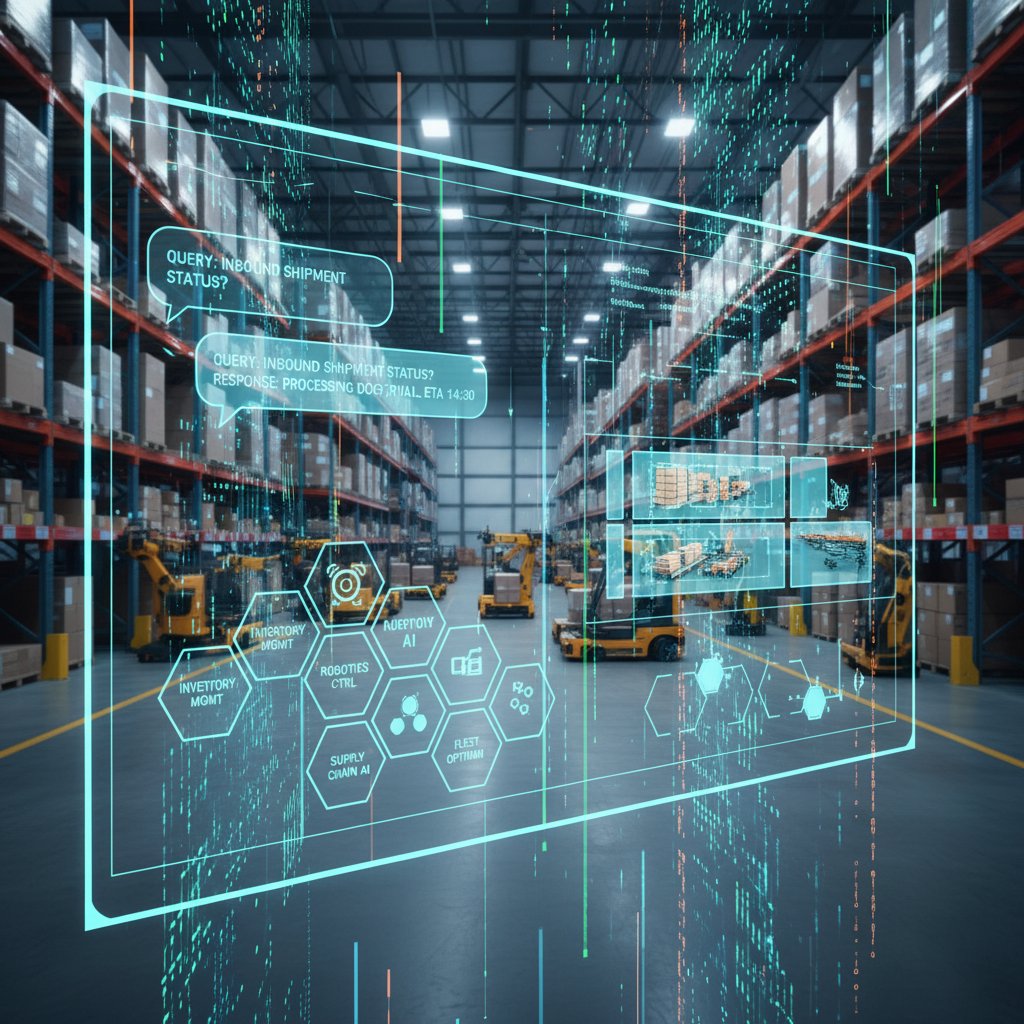
But integration is where most deployments bleed budget. Each custom connector, API tweak, or legacy workaround ratchets up both cost and risk. Vendors often gloss over these pain points, but experienced operators know the truth.
- Data silos: If your systems aren’t already talking, a chatbot magnifies—not fixes—fragmentation.
- Surprise costs: Middleware licenses, ongoing maintenance, and troubleshooting aren’t in the brochure.
- Security loopholes: Every new integration is a new attack surface.
- Vendor lock-in: Proprietary connectors can trap you in inflexible contracts.
- Change fatigue: Too many simultaneous changes overwhelm staff and destabilize operations.
What goes wrong when chatbots fail
When chatbots stumble in logistics, the consequences aren’t just digital—they’re physical. Think misrouted freight, missed customs declarations, or a cascade of late deliveries. In one notable case documented by industry analysts, a chatbot misinterpreted a request and sent a high-value shipment to the wrong port. The fallout: six-figure losses and weeks of recovery.
"The bot crashed and orders piled up. That’s when you realize backups matter," says Lee, operations analyst. — Illustrative, reflecting common risks cited in EzChatAI, 2024
Building resilience into AI-powered logistics is non-negotiable. This means redundant systems, rollback protocols, and human-in-the-loop escalation for outlier cases. The best operations prepare for failure as much as for success.
Case studies: When AI chatbots saved (or sank) the day
Saved by the bot: Real-world wins
In late 2023, a global freight forwarder faced a massive disruption: a cyberattack crippled their customer service phone lines just as a major storm delayed inbound shipments. Customers bombarded the company’s chatbot, which instantly triaged urgent queries, flagged high-risk shipments for human intervention, and provided real-time updates—averting what could have been a PR nightmare.
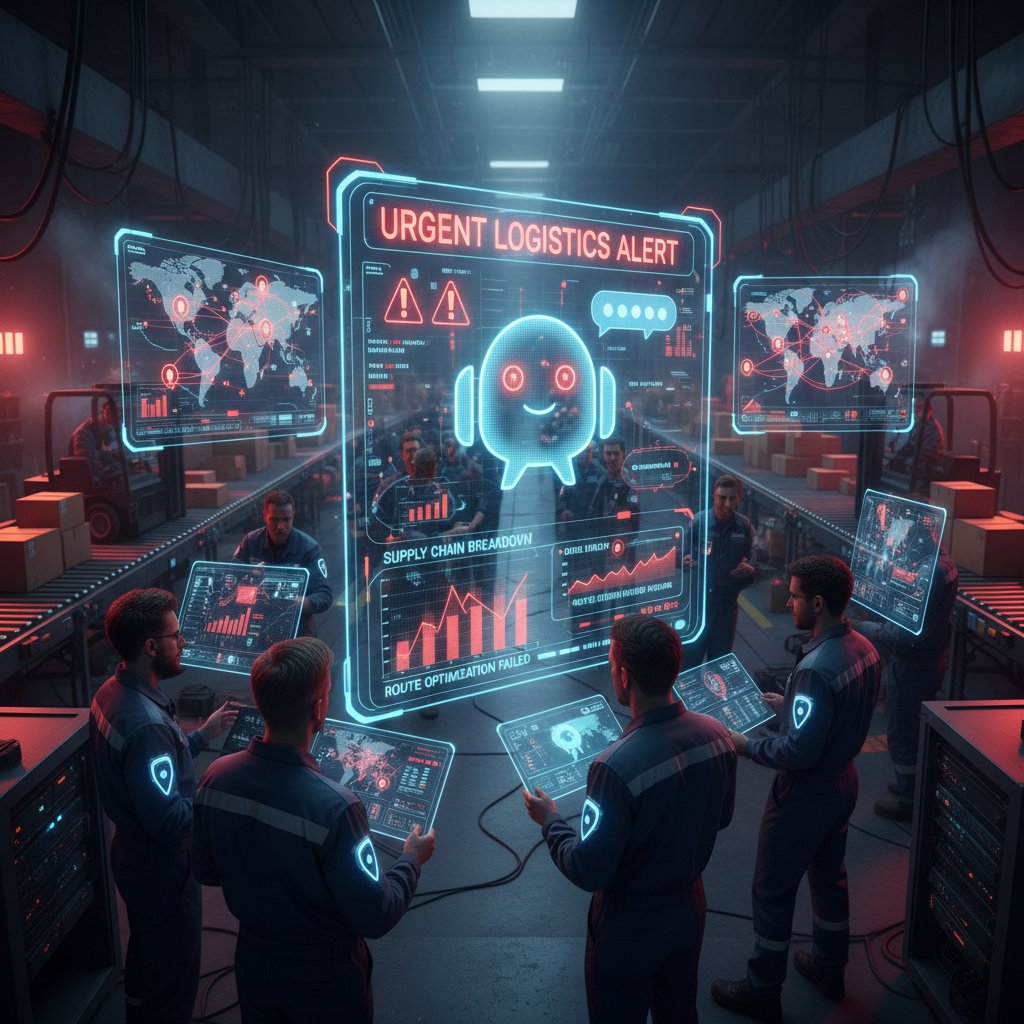
The measurable impact? The company estimated cost savings of 6.5%, a 20% reduction in delivery time, and a significant boost in internal morale, as staff were freed from repetitive queries to focus on mission-critical issues.
| Metric | Before Chatbot | After Chatbot | % Change |
|---|---|---|---|
| Query response time | 10 min | 2 min | -80% |
| Order error rate | 6.4% | 2.1% | -67% |
| Customer complaints/mo | 120 | 45 | -62% |
| Cost per shipment | $52 | $48.60 | -6.5% |
Table 3: Case study metrics—AI chatbot deployment. Source: Original analysis based on Biz4Group, 2024 and Inoxoft, 2024.
When AI chatbots made things worse
But not every story ends in triumph. In another case, a logistics firm rushed chatbot deployment without proper data cleaning or staff training. The bot hallucinated shipment statuses, misrouted high-value inventory, and failed to escalate critical exceptions. The result: irate customers, lost cargo, and a scramble to revert to manual processes.
The lesson: automation without due diligence is a recipe for disaster. Implementation traps are everywhere, from poor systems mapping to weak escalation protocols.
- Audit your data: Garbage in, garbage out—clean, validate, and standardize.
- Train your team: Don’t skip hands-on sessions and change management.
- Stress test before launch: Simulate crisis scenarios, not just happy paths.
- Define human escalation: Make it easy to override the bot.
- Monitor and iterate: Treat chatbot deployment as an ongoing program, not a one-off project.
AI chatbot for logistics myths debunked
The top misconceptions that cost companies millions
Perhaps the most dangerous myth is that AI chatbots are plug-and-play. The reality is far messier. Chatbots require careful calibration, ongoing data governance, and continuous learning. Believing otherwise leads to botched implementations, wasted budgets, and shattered expectations.
- Myth: AI chatbots don’t need training. In reality, they require ongoing input, feedback, and updates to remain relevant.
- Myth: They’ll replace all staff. Most research shows they augment staff capacity, not eliminate jobs—unless you botch change management.
- Myth: They’re always secure. Every system is only as secure as its weakest link. Regular audits and compliance are critical.
- Myth: They unlock ROI instantly. Upfront investment is high, and payback only comes with disciplined execution.
The real effort is in the preparation: mapping processes, mastering integrations, and embracing a culture of continuous improvement.
The truth about ROI and hidden costs
The dirty secret behind most AI chatbot for logistics vendor pitches? Cost savings are real—but so are the hidden expenses. According to industry analyses, savings materialize in the form of reduced manual workload, fewer errors, and faster escalations. But ongoing expenses—maintenance, retraining, security audits—often go unmentioned.
| Cost Category | Short-Term Impact (0-6mo) | Long-Term Impact (12mo+) | Visible vs. Hidden |
|---|---|---|---|
| Implementation | High | Low | Visible |
| Integration | Medium | Medium | Partially hidden |
| Ongoing training | Low | Medium | Hidden |
| Data cleaning | High | Medium | Hidden |
| License fees | Low | Medium | Visible |
| Cost savings | Low | High | Visible |
Table 4: Cost-benefit matrix for AI chatbot deployment. Source: Original analysis based on EzChatAI, 2024 and Statista, 2024.
Honest ROI assessment means factoring in all these layers. Firms that succeed approach the exercise with eyes wide open, using scenario planning and benchmarking against best-in-class operators.
How to choose and deploy an AI chatbot for logistics
A step-by-step guide to getting it right
Deploying an AI chatbot for logistics isn’t a leap of faith—it’s a calculated sequence of steps.
- Needs assessment: Map your pain points and define clear objectives. What’s broken, and what would success look like?
- Vendor selection: Shortlist solutions that fit your existing tech stack and business culture. Demand real-world case studies and references.
- Pilot program: Launch in a controlled environment. Monitor, iterate, and gather feedback from frontline users.
- Data integration: Connect to TMS, WMS, and CRM. Clean and validate your data to prevent garbage-in/garbage-out scenarios.
- Staff training: Run immersive workshops and hands-on sessions. Make the bot a team member, not an outsider.
- Full rollout: Scale gradually, layering in additional workflows and exception paths.
- Post-launch evaluation: Regularly review performance against KPIs. Don’t be afraid to recalibrate.

The ultimate readiness checklist
Is your organization ready for AI chatbot deployment? You’ll need more than enthusiasm.
- Is your core data clean and accessible?
- Do you have integration-ready systems (APIs, cloud platforms)?
- Are staff prepared for change—and excited, not threatened?
- Is there a process for continuous feedback and bot improvement?
- Do you have a crisis protocol if the chatbot fails?
- Are security and compliance teams involved from day one?
- Are leadership and frontline staff aligned on goals?
If you tick most of these boxes, you’re primed to take advantage of the next wave of logistics automation. If not, it’s worth consulting specialist platforms such as botsquad.ai, which can help navigate the complexities and set your deployment on solid ground.
The future of logistics work: Coexisting with AI chatbots
Will AI chatbots rewrite the rules of the industry?
Adopting an AI chatbot for logistics isn’t just a technology shift—it’s a cultural one. Operations teams need to embrace new roles: data steward, exception handler, escalation expert. As AI chatbots become a staple, the most successful organizations will be those who foster collaboration between human and machine.

Warehouses and control towers are already seeing new job titles emerge—AI workflow analyst, chatbot trainer, escalation manager. The ‘command-and-control’ model is fading, replaced by distributed, augmented teams.
"The future isn’t man or machine. It’s both, side by side," says Jordan, tech lead. — Illustrative, reflecting expert consensus in Biz4Group, 2024
What to watch for in 2025 and beyond
While the industry resists crystal-ball predictions, several trends are gaining traction right now:
- Multimodal chatbots: Voice, text, and visual interfaces, seamlessly blending into every logistics channel.
- AI-driven supply chain optimization: Bots not just answering but actively re-planning routes, inventory, and staffing.
- Human-in-the-loop escalation: Sophisticated workflows that hand off complex exceptions to real people—without missing a beat.
- Risk prediction and resilience: AI bots flagging not just current disruptions, but emerging ones based on real-time data.
- Integration with IoT and blockchain: Bringing transparency and traceability to every shipment and transaction.
Are you ready to let your next logistics crisis become a case study for the right reasons—or the wrong ones? The answer lies in how you confront the hype, embrace the hard truths, and build a logistics operation that truly owns its digital future. If you’re hungry for more insight or just want to benchmark your readiness, platforms like botsquad.ai are always evolving with the latest in AI-driven solutions—giving you a front-row seat in logistics’ ongoing transformation.
Sources
References cited in this article
- Biz4Group(biz4group.com)
- Inoxoft(inoxoft.com)
- Dialpad(dialpad.com)
- EzChatAI(ezchatai.com)
- Statista(statista.com)
- TriNetix(trinetix.com)
- Acropolium(acropolium.com)
- CDO Times(cdotimes.com)
- Blurgs.ai(insights.blurgs.ai)
- Locus.sh(locus.sh)
- Forbes(forbes.com)
- EffectiveSoft(effectivesoft.com)
- Qualetics(qualetics.com)
- Forbytes(forbytes.com)
- SPD Technology(spd.tech)
- Chatbot.team(chatbot.team)
- Acropolium(acropolium.com)
- PostNord(postnord.com)
- KION Group(kiongroup.com)
- SCMDOJO(scmdojo.com)
- Emerald Insight(emerald.com)
- Dropoff(dropoff.com)
- Invensis(invensis.net)
- Gartner Hype Cycle(readwise.io)
- Forbes(forbes.com)
- No Jitter(nojitter.com)
- Inveritasoft(inveritasoft.com)
- DataRoot Labs(datarootlabs.com)
- RTS Labs(rtslabs.com)
- Appinventiv(appinventiv.com)
- Medium(medium.com)
- PCMag(pcmag.com)
- Analytics Insight(analyticsinsight.net)
- Ebotify(ebotify.com)
- Full Stack AI(fullstackai.co)
- Forbes(forbes.com)
- Purolator(resources.purolator.com)
- Biz4Group(biz4group.com)
- McKinsey(mckinsey.com)
Transform Your Life With Expert AI Assistants
Botsquad.ai provides a comprehensive platform where specialized expert chatbots leverage powerful Large Language Models (LLMs) to deliver tailored support for productivity, lifestyle, and professional needs. Whether you're aiming to streamline your daily tasks, seeking expert advice, or striving to elevate your professional performance, Botsquad.ai has a chatbot specifically designed to meet your unique needs. With our intuitive interface, continuous learning capabilities, and seamless integration with your existing workflows, Botsquad.ai empowers users to achieve more, effortlessly.
Get startedReady to Work Smarter?
Join thousands boosting productivity with expert AI assistants
Frequently Asked Questions
What percentage of logistics firms struggle with visibility into supplier performance?
According to research from Biz4Group cited in the article, nearly 43% of logistics firms admit to having limited visibility into supplier performance, often relying on outdated emails, chaotic spreadsheets, or missed phone calls.
How much can a single delayed container cost on the Shanghai-Los Angeles route?
A single delayed container on the Shanghai-Los Angeles route can cost an additional $6,700, as cited by Inoxoft and confirmed in multiple 2024 industry studies.
What are the main causes of logistical failures mentioned in the article?
According to Statista data presented in the article, human error and miscommunication continue to be leading causes of misrouted shipments, inventory shortages, and delivery delays in the logistics sector.
What specific problems does the article identify as systemic in major logistics hubs?
The article identifies communication breakdowns as systemic in ports, warehouses, and fulfillment centers, with small failures often snowballing into multimillion-dollar disasters.
From the Archive
Explore more from Expert AI Chatbot Platform

How AI Chatbots Reshape Transportation Operations

AI Chatbot for Courier Services: Real ROI and Common Failures

AI Chatbot Customer Conversations: Wins, Failures, and Trade-Offs

AI Chatbot Deployment: What Separates Success From Failure

AI Chatbot Integrations: Where Most Fail and Some Win