
AI Chatbot Real-Time Professional Updates: Edge or Overload?
Written with AI assistance under our editorial guidelines
AI chatbots now deliver real-time professional updates at unprecedented speed, transforming industries by providing instant information and expertise. However, this constant stream of notifications creates information overload and anxiety, raising concerns about decision-making quality, expertise redefinition, and the psychological cost of always-available AI guidance in modern work environments.
There’s a new breed of intelligence pulsing through the veins of modern work—a force that’s both liberating and unsettling. If you’ve ever felt the anxiety of falling behind as your inbox fills with notifications, you’re not alone. Welcome to the era of AI chatbot real-time professional updates. Here, seconds matter, information flows without pause, and expertise is available at the tap of a button—or so we’re told. But beneath the polished surfaces and corporate buzzwords, a more complicated story simmers. This is not just about gadgets; it’s about control, power, and the shifting definition of what it means to be an “expert” in a world where chatbots deliver updates faster than you can blink. In this deep dive, we’ll rip back the curtain on the promises, pitfalls, and edgy realities of real-time AI chatbot updates: how they’re transforming industries, where they go wrong, and what nobody warns you about. Strap in—this isn’t your average tech optimism. It’s the raw, researched truth about the tools that claim to shape your career, your decisions, and maybe even your sanity.
The rise of real-time AI chatbots: How we got here
From clunky assistants to real-time experts
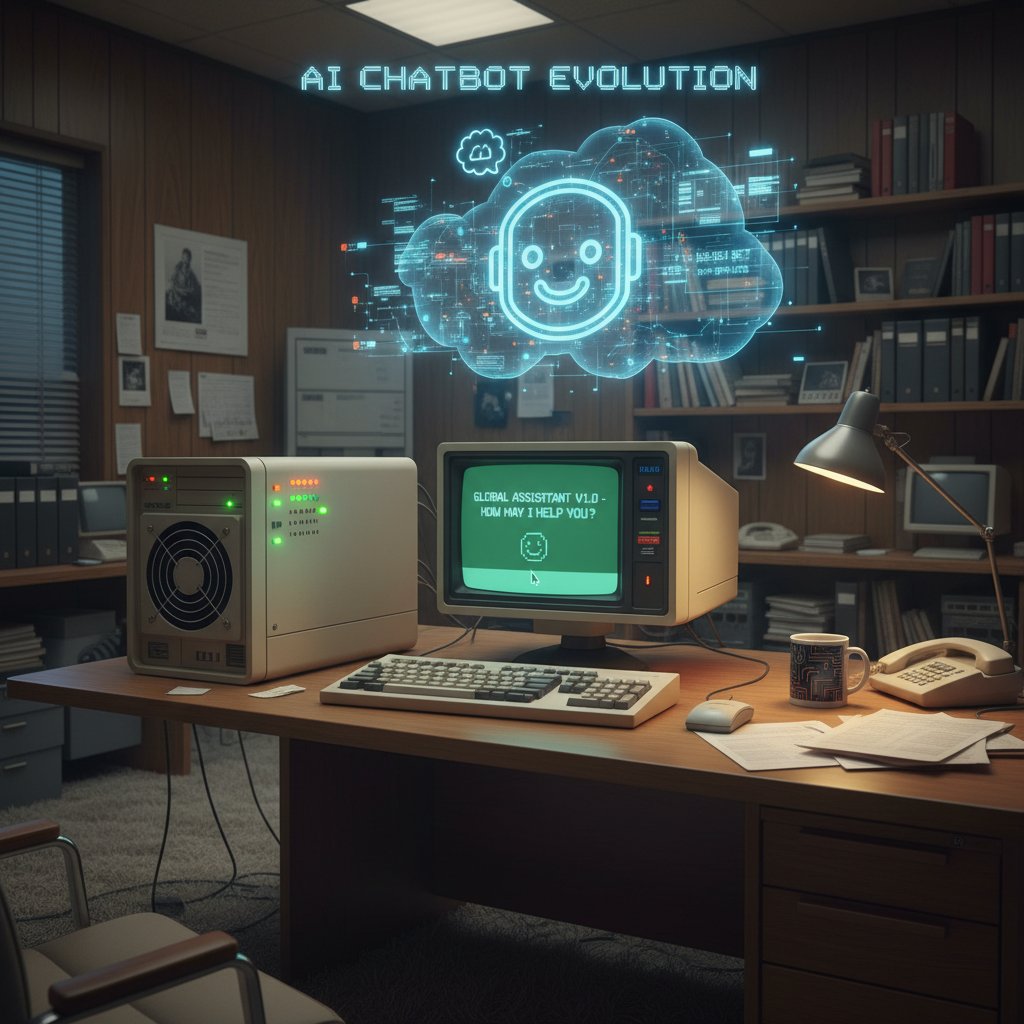
Rewind to the early days of AI chatbots—think sterile office cubicles, beige monitors, and “helpful” software that was anything but. The promise was there, but the reality was frustratingly slow. Chatbots were glorified FAQ machines: rigid, pre-programmed, and utterly incapable of understanding nuance. According to Search Engine Journal, 2023, early bots in the 80s and 90s offered limited value in professional settings, often tripping over basic queries or requiring perfectly worded inputs.
The turning point? A convergence of machine learning breakthroughs, cloud computing, and the explosion of real-time data streams. Suddenly, chatbots weren’t just answering questions—they were tapping into live databases, parsing breaking news, and synthesizing market shifts as they happened. By 2023, more than 50% of banks and 55% of retail interactions relied on chatbots as their primary interface, according to ExpertBeacon, 2024. This shift turned the concept of “real-time” from a pipedream to a baseline expectation.
| Year | Key Innovation | Industry Impact |
|---|---|---|
| 1988 | First digital assistants | Basic task automation, minimal context |
| 2011 | NLP breakthroughs (Siri, Alexa) | Wider adoption, voice queries enter mainstream |
| 2017 | First LLM-powered chatbots | Contextual understanding, multi-turn dialogue |
| 2023 | Generative AI & real-time data | Live updates, expert-level responses at scale |
| 2024 | Multi-bot ecosystems | Specialized, cross-domain professional support |
Table 1: Timeline of chatbot evolution and its impact on professional environments
Source: Original analysis based on Search Engine Journal, 2023, ExpertBeacon, 2024
As technology surged forward, something unexpected happened: professionals stopped seeing bots as slow, clumsy tools and started demanding expert-level, real-time updates. In high-stakes sectors like finance, healthcare, and marketing, waiting for yesterday’s data just wasn’t good enough. The expectation flipped—if your bot didn’t deliver now, it might as well not exist.
Why 'real-time' became the new gold standard
Fast information isn’t just a convenience; it’s a weapon in the battle for relevance. Businesses, battered by disruption and volatility, crave any edge they can find. According to Forbes, 2023, 68% of consumers used AI chatbots for customer service in the past year, and 61% said they preferred self-service for straightforward issues—underscoring a growing trust in instant, AI-driven responses.
But there’s a darker motivation lurking: FOMO. In skyscraper boardrooms and home offices alike, the fear of missing out on critical updates pushes professionals to chase alerts around the clock. The idea that “real-time isn’t a luxury anymore—it’s a survival tool” (Maya, industry analyst) isn’t just hype—it’s the unspoken rule in industries where the cost of a delayed decision can be catastrophic.
The psychological impact is profound. Always-on updates bring a low hum of anxiety, making it harder to disconnect and focus on deep work. Decision-making, once a deliberate process, now risks becoming a reflex—reacting to the latest ping, rather than weighing long-term strategy. Yet, for many, opting out is not an option. In this climate, AI chatbot real-time professional updates have become the thread that holds the fabric of modern work together—and sometimes, the string that unravels it.
What 'real-time' really means—and what it doesn’t
Demystifying the jargon
The world of AI chatbot real-time professional updates is thick with techno-babble. Here’s what the key terms actually mean (and why they matter):
- Real-time: Data or alerts delivered with minimal delay, often seconds after the source event occurs. True real-time is rare—most systems offer “near real-time,” with a lag of a few seconds to minutes, depending on infrastructure and data pipelines.
- AI-driven: Refers to systems that use machine learning models, especially Large Language Models (LLMs), to adapt responses based on context and historical interactions—bots like ChatGPT or Claude don’t just follow scripts; they learn and adjust on the fly.
- Push notifications: Updates sent proactively to users, rather than requiring users to request (“pull”) information. Essential for breaking news or critical alerts.
A common misconception is that “real-time” means “perfectly up-to-date” or “always accurate.” In reality, latency creeps in via data processing, network lags, and even internal review protocols. According to TechCrunch, 2024, even top-tier AI chatbots can experience delays or errors, especially during system overloads or when vetting sensitive information.
Hidden benefits of AI chatbot real-time professional updates experts won't tell you:
- They democratize access to information, letting small teams act with the agility of big corporations.
- Real-time updates enable rapid course correction—spotting mistakes or market shifts before they snowball.
- Push notifications can be customized to cut through the noise, surfacing what matters most to your workflow.
- Aggregated alerts across multiple sources reduce blind spots and information silos.
Yet, it’s important to recognize what actually counts as “instant.” Most users experience a delay that’s imperceptible—but insiders know that milliseconds can mean millions in industries like high-frequency trading or emergency response. Latency, data source reliability, and backend complexity all influence whether an update is truly “real-time” or just marketing spin.
The myth of perfect knowledge
No matter how advanced your AI chatbot, perfection is a moving target. Even the most sophisticated bots are only as good as the data they ingest—and that data is perpetually filtered, incomplete, and sometimes flat-out wrong. In professional contexts, the myth of “perfect real-time knowledge” can be dangerous. According to Pew Research, 2023, over 52% of Americans express more concern than excitement about the societal impact of AI, citing accuracy and privacy as top worries.
Over-reliance on “real-time” alerts creates a false sense of security. As Alex, a product manager in tech, puts it:
“No AI, no matter how fast, can replace human judgment.”
Professionals who thrive balance the speed and scale of AI updates with critical thinking. They recognize that every chatbot has blind spots, and that context—industry nuances, timing, even company culture—can’t always be encoded in an algorithm. AI is an amplifier, not a replacement, for human discernment.
Insider secrets: How top professionals really use AI chatbots
Beyond the hype: Real-world applications
Picture a financial analyst at 7:00 a.m., coffee in hand, screens aglow. Every flicker of the market, every regulatory update—surfaced instantly by a customized AI chatbot. Botsquad.ai, for example, has become a trusted name in this space, offering a dynamic ecosystem of expert assistants that plug directly into professional workflows. These bots don’t just summarize; they interpret, flag anomalies, and offer up-to-the-second insights—so the analyst never misses a beat.

But the landscape varies by industry. In marketing, chatbots automate campaign tracking, deliver competitor intelligence, and surface trending topics in real time. In healthcare, they notify clinicians about new clinical studies or medication recalls, reducing cognitive overload. Education, meanwhile, benefits from bots that personalize learning, adapt to individual progress, and even spot academic dishonesty as it happens. According to ExpertBeacon, 2024, retail companies have slashed customer support costs by 50% while boosting satisfaction through AI-driven updates.
Unconventional uses you never considered
- Creative professionals use real-time chatbot updates to catch cultural trends as they break, fueling everything from viral ad campaigns to timely think-pieces.
- Sports journalists rely on AI assistants to flag obscure stats, injury reports, or social media buzz during live events—turning chaos into opportunity.
- Nonprofits harness bots to monitor grant deadlines, policy shifts, and donor engagement, helping small teams punch above their weight.
- In crisis management, chatbots parse emergency alerts, weather warnings, and public sentiment to inform real-time strategy.
Rapid-fire updates are a double-edged sword: they unlock new possibilities for agility and innovation while creating fresh risks around information overload and decision fatigue. That’s why top performers treat AI chatbots as collaborators, not oracles—using their speed to augment, not automate away, professional intuition.
The dark side: When real-time updates go wrong
Misinformation and alert fatigue
Speed is seductive, but unchecked alerts can become a minefield. A chatbot pushing unverified news, stock rumors, or misinterpreted data can trigger disastrous reactions. According to a 2023 survey by ExpertBeacon, platforms vary dramatically in their ability to filter out noise and false positives.
| Platform | Verification Method | False Positive Rate | User Controls |
|---|---|---|---|
| Botsquad.ai | Multi-source cross-check | <2% | Extensive |
| Generic ChatBotX | Keyword matching | ~12% | Limited |
| Enterprise Z | Human-in-the-loop review | <1% | Customizable |
Table 2: Alert accuracy and verification protocols for leading AI chatbot platforms
Source: Original analysis based on ExpertBeacon, 2024
"Sometimes, too much information is just noise." — Jordan, senior analyst
Alert fatigue is real: when every ping demands attention, critical alerts risk being lost in the chaos. Professionals must curate their notification streams ruthlessly, or risk drowning in a sea of “urgent” updates that, in hindsight, were anything but.
Over-automation and loss of context
AI chatbots, for all their prowess, still stumble on nuance. Algorithms can misinterpret sarcasm, industry jargon, or cultural references—leading to embarrassing or even dangerous mistakes. Ignore human checks, and the cost can be high: missed regulatory deadlines, botched client communications, or flawed strategic decisions.
Red flags to watch out for when setting up an AI chatbot for updates:
- Failure to allow manual override or user feedback.
- Lack of transparency about data sources or verification protocols.
- High rate of irrelevant or repetitive notifications.
- Absence of customizable filters for different user roles.
- No audit trail or history for disputed alerts.
Each of these pitfalls is avoidable—if you treat AI as a partner, not an infallible oracle.
Choosing the right AI chatbot for real-time professional updates
What features truly matter?
In the torrent of sales pitches, it’s easy to get distracted by bells and whistles. Here’s what actually moves the needle:
- Reliability: Consistent uptime, minimal latency, and robust fail-safes.
- Customizability: The ability to fine-tune update filters, notification channels, and data sources.
- Security: End-to-end encryption and transparent privacy controls.
- Integration: Seamless fit into existing workflows (email, Slack, dashboards).
- Transparency: Clear explanation of how and why decisions are made.
| Feature | Importance | Typical Implementation | Potential Drawbacks |
|---|---|---|---|
| Real-time alerts | Essential | API/webhook feeds | May prompt alert fatigue |
| Custom filters | High | User-defined rules | Complexity for non-tech users |
| Multi-source | Essential | Aggregation engines | Risk of conflicting data |
| LLM responses | High | GPT/Claude models | Possible hallucinations |
| Audit logs | Medium | History dashboards | Data privacy concerns |
Table 3: Feature matrix for leading AI chatbot platforms
Source: Original analysis based on Forbes, 2023, ExpertBeacon, 2024
Don’t be blinded by “AI wizardry” that masks weak verification or poor integration. Customization, robust data sources, and user-friendly controls are the real differentiators.
Checklist: How to vet your next AI assistant
- Assess update accuracy: Require demo data and real-world test cases.
- Probe for customizability: Ensure you can filter out noise and tailor alerts.
- Demand transparency: Ask for clear documentation on data sourcing and decision-making logic.
- Test integration: Verify seamless onboarding with your existing tools.
- Examine user controls: Look for manual override options and feedback loops.
- Audit privacy and security: Confirm compliance with relevant standards (GDPR, HIPAA if applicable).
- Check support and community: Strong documentation and active user forums are invaluable.
Balancing innovation with reliability isn’t just smart—it’s necessary. Platforms like botsquad.ai position themselves as resources for customizable, expert-level AI assistants that fit real professional needs, not just tech fantasies.
Case studies: Successes and failures in the real world
Winning big with real-time AI insights
Consider a global marketing team facing a viral crisis: a competitor’s controversial ad campaign ignites overnight backlash. Thanks to a real-time AI chatbot parsing social media, competitor press releases, and internal sales figures, the team pivots instantly—launching a creative counter-campaign that turns the tide and wins back market share. According to ExpertBeacon, 2024, these kinds of rapid interventions can boost campaign efficiency by over 40%, slashing response times from days to minutes.

Setup is everything: the team’s chatbot filters for relevant sentiment, spots trending hashtags, and prioritizes actionable alerts over generic noise. The outcome? Not just survival, but a PR victory that cements the brand as agile and in-touch.
Learning from spectacular failures
But not every story ends with confetti. In 2023, a financial services firm suffered a million-dollar blunder: a chatbot flagged a “market correction” based on an erroneous data feed, prompting a hasty sell-off. No human double-check, no audit trail. The result: massive losses, client backlash, and a PR nightmare.
The warning signs were there: a lack of update verification, over-reliance on a single data source, and poor escalation protocols. The lesson? Real-time doesn’t mean right. Professionals must embed checks for plausibility, require human sign-off for high-stakes actions, and periodically audit bot performance.
Actionable tips to avoid disaster:
- Mandate periodic accuracy reviews and cross-source validation.
- Implement escalation thresholds for major decisions.
- Maintain an accessible log of bot-generated alerts for auditing.
The future of work: Will AI chatbots replace human expertise?
Collaboration or competition?
Are chatbots partners or rivals? The answer is as messy as modern work itself. Some professionals resent the rise of tireless, always-on digital colleagues; others see them as liberators, freeing up time for real strategy. As Sam, a senior engineer, wryly observes:
"AI is the new colleague—sometimes helpful, sometimes infuriating."
What’s clear: roles and skillsets are shifting. According to DW, 2024, the demand for hybrid expertise—where humans interpret, curate, and challenge AI-generated insights—is surging. Being “good with bots” is now as essential as knowing Excel was a decade ago.
What’s next for real-time professional updates?
The next wave of AI chatbot real-time professional updates isn’t about speed alone—it’s about context and transparency. Expect deeper integrations with industry-specific platforms, smarter aggregation of signals, and clearer audit trails. But with great power comes great responsibility: professionals and vendors alike must champion transparency, ethical data use, and user empowerment.

The present reality? AI chatbots are as likely to amplify human expertise as they are to disrupt it. The difference lies in how thoughtfully you wield these tools—and how rigorously you separate the signal from the noise.
How to make the most of AI chatbot real-time professional updates
Actionable strategies for every professional
You don’t have to be a tech oracle to master real-time AI updates. Here’s how savvy professionals wield these tools for maximum effect:
- Start with clear goals: Know what you actually want to monitor—don’t drown in irrelevant data.
- Customize your filters: Use bot settings to mute the noise and focus on what really drives your daily performance.
- Schedule periodic reviews: Don’t set it and forget it—periodically assess whether the bot is surfacing the right information.
- Keep a human in the loop: Set up protocols for manual review of high-stakes or ambiguous alerts.
- Leverage feedback loops: Use bot feedback tools to refine accuracy over time.
Step-by-step guide to mastering AI chatbot real-time professional updates:
- Identify your key information needs—focus on impact, not volume.
- Select a reputable, customizable chatbot platform.
- Test with real-world scenarios and tweak notification settings.
- Establish escalation protocols for critical alerts.
- Regularly review and update filters as your needs evolve.
- Document lessons learned and share best practices with colleagues.
Customizing update filters isn’t just about preference—it’s about accuracy and relevance. Real professionals treat their bots as living tools, always tuning for sharper results.
Avoiding common pitfalls
Even the smartest AI chatbots can drift from relevance if left unchecked. Monitoring and adjusting bot performance over time is mission critical. Ongoing human oversight—think weekly audits and user feedback surveys—ensures that “real-time” doesn’t devolve into “real-annoying.”
Hidden pitfalls of relying on AI chatbot updates:
- Echo chamber effect: Bots trained on limited data can reinforce existing biases.
- Alert fatigue: Too many notifications devalue truly urgent information.
- Scope creep: Without regular review, bots expand to cover irrelevant topics.
- Security risks: Poorly vetted bots may leak sensitive data or enable social engineering.
Awareness is your armor. Stay vigilant, stay strategic, and you’ll harness the real power behind AI chatbot real-time professional updates.
Glossary: Essential terms for navigating AI chatbot updates
Decoding the language of real-time AI chatbots
Machine learning
Systems that “learn” patterns from data, improving over time without being explicitly programmed. In AI chatbots, ML powers smarter, more adaptive responses—think of it as the difference between a parrot and a conversationalist.
Natural language processing (NLP)
The science of teaching machines to understand and generate human language. NLP is why chatbots can decode slang, context, and even tone (sometimes).
Push vs. pull updates
Push: Information is sent automatically (think notifications about breaking news).
Pull: You have to request the data (like searching Google). Most real-time AI chatbots thrive on “push” for true instant alerts.
Confidence interval
A statistical measure of certainty, often included in AI-generated reports. It tells you how much to trust a given update, expressed as a percentage. Example: “70% confidence that this trend will persist.”
The difference between AI-driven and rule-based bots? AI-driven bots adapt and evolve, using LLMs to interpret context and intent, while rule-based bots simply follow scripts—fine for static FAQs, but hopeless for the speed and ambiguity of real-world updates.
Terminology in this space moves fast. As AI chatbots mature, expect new lingo to emerge—always ask for plain-English explanations from your vendors. The best platforms, like botsquad.ai, don’t just automate—they empower you to understand, challenge, and control your flow of professional information.
In summary:
The explosion of AI chatbot real-time professional updates is reshaping what it means to be a professional in 2024. With botsquad.ai and its peers leading the charge, professionals now wield tools that can deliver expertise, insight, and alerts at a pace once unimaginable. But with this power comes new pressures—alert fatigue, misinformation, and the risk of losing sight of the human judgment that sets true experts apart. The edgy truth? Real-time isn’t always right—and expertise isn’t just about speed. To stay ahead, you need more than fast data. You need the insight, skepticism, and strategic mindset to make it mean something. Welcome to the new game. Play it wisely.
Sources
References cited in this article
- Forbes(forbes.com)
- Pew Research(pewresearch.org)
- ExpertBeacon(expertbeacon.com)
- TechCrunch(techcrunch.com)
- Search Engine Journal(searchenginejournal.com)
- DW(dw.com)
- ChatInsight.ai(chatinsight.ai)
- Haptik.ai(haptik.ai)
- Forbes(forbes.com)
- Maticz(maticz.com)
- Tech.co(tech.co)
- Bloomberg AI Glossary(bloomberg.com)
- Chatbot.com(chatbot.com)
- Moveworks(moveworks.com)
- EBI.ai(ebi.ai)
- Freshworks(freshworks.com)
- Yellow.ai(yellow.ai)
- PCMag(pcmag.com)
- NewsGuard(newsguardtech.com)
- IntelliGenesis LLC(intelligenesisllc.com)
- Cambridge Core(cambridge.org)
- Forbes(forbes.com)
- SAGE Journals(journals.sagepub.com)
- Tom’s Guide(tomsguide.com)
- Yellow.ai(yellow.ai)
- WVU Digital Learning Hub(digitallearning.cahs.wvu.edu)
- UseHatchApp(usehatchapp.com)
- Dashworks(dashworks.ai)
- ChatbotWorld(chatbotworld.io)
- Overthink Group(overthinkgroup.com)
- ExpertBeacon(expertbeacon.com)
- KPMG(kpmg.com)
- McKinsey(mckinsey.com)
- Forbes(forbes.com)
- Pew Research(pewresearch.org)
- Exploding Topics(explodingtopics.com)
- HubSpot(blog.hubspot.com)
Transform Your Life With Expert AI Assistants
Botsquad.ai provides a comprehensive platform where specialized expert chatbots leverage powerful Large Language Models (LLMs) to deliver tailored support for productivity, lifestyle, and professional needs. Whether you're aiming to streamline your daily tasks, seeking expert advice, or striving to elevate your professional performance, Botsquad.ai has a chatbot specifically designed to meet your unique needs. With our intuitive interface, continuous learning capabilities, and seamless integration with your existing workflows, Botsquad.ai empowers users to achieve more, effortlessly.
Get startedReady to Work Smarter?
Join thousands boosting productivity with expert AI assistants
Frequently Asked Questions
What percentage of banks and retail companies now use chatbots as their primary interface?
By 2023, more than 50% of banks and 55% of retail interactions relied on chatbots as their primary interface, according to ExpertBeacon, 2024.
What made the shift from early chatbots to real-time AI chatbots possible?
The turning point came from a convergence of machine learning breakthroughs, cloud computing, and the explosion of real-time data streams, which enabled chatbots to tap into live databases, parse breaking news, and synthesize market shifts as they happened.
What were the main limitations of early chatbots in the 80s and 90s?
Early chatbots were glorified FAQ machines that were rigid, pre-programmed, and incapable of understanding nuance. They often tripped over basic queries or required perfectly worded inputs, offering limited value in professional settings.
Is the article advocating for or against AI chatbot real-time updates?
The article presents a balanced, critical perspective, describing AI chatbot real-time updates as "both liberating and unsettling" and promising to explore "the promises, pitfalls, and edgy realities" rather than offering simple praise or condemnation.
From the Archive
Explore more from Expert AI Chatbot Platform

AI Chatbot for Professional Interests: Power, Risk, and Real Gains

AI Chatbot for Real-Time Updates: What Actually Works

AI Chatbot Improve Professional Outcomes: Evidence and Pitfalls

Stay Updated with AI Chatbot Shifts Without Drowning in Noise

What an AI Chatbot for Up-To-Date Insights Can and Cannot Do