
Chatbot Messaging Strategy That Actually Converts: Why Generic Scripts Fail
Written with AI assistance under our editorial guidelines
Successful chatbot messaging in 2026 requires personalization and context awareness rather than generic scripts. Research shows 80% of consumers engage more with personalized messages, while 54% of customers won't return after negative chatbot experiences. Brands must move beyond one-size-fits-all approaches to solve real problems, remember user context, and deliver relevant answers that demonstrate genuine helpfulness rather than robotic responses.
If you think a chatbot messaging strategy is just about clever scripts and punchy greetings, you’re playing yesterday’s game. In the digital colosseum of 2025, generic bots get slaughtered. From retail juggernauts to scrappy startups, brands are learning—sometimes the hard way—that lazy, one-size-fits-all scripts don’t just fail to engage; they actively repel. Users are more jaded, their expectations more cutthroat, and their patience for robotic drivel thinner than ever. This is a playbook for brands who want to outsmart, not outshout, the competition. Armed with bleeding-edge research, real-world disasters, and the surprising psychology behind what actually makes users click “keep chatting,” we’re unpacking the 11 bold moves that define a winning chatbot messaging strategy right now. Ready to ditch the autopilot and disrupt your customer engagement? Welcome to the frontline.
Why most chatbot messaging strategies fail (and nobody talks about it)
The harsh reality of chatbot user expectations
The average digital consumer has seen it all—from poorly trained bots that repeat nonsense to “virtual assistants” that are about as helpful as a broken vending machine. As users, we’ve grown weary of scripted, generic replies that add zero value. In fact, according to a recent KPMG study (2024), a staggering 80% of consumers engage more with personalized chatbot messages, and most bounce within seconds if they sense they’re talking to a soulless script. The bar for engagement is sky-high: people expect chatbots to remember context, deliver hyper-relevant answers, and solve real problems, not just parrot FAQs. If your bot’s “personality” is indistinguishable from a spam filter, don’t be surprised when users give it the cold shoulder.

"We built our first chatbot to save time, but it nearly cost us our brand." — Ava, e-commerce operations manager (quote based on research trends)
The true cost of tone-deaf bots
Brand damage from poor chatbot messaging isn’t just theoretical—it’s measurable. Tone-deaf bots erode trust, spark public backlash, and can trigger viral PR disasters. According to Zendesk’s 2024 CX Trends, 54% of customers are less likely to return after a negative chatbot experience, and 27% will share their bad encounter on social media. That “helpful” bot you launched last quarter? If it mishandles a complaint or cracks an ill-timed joke, you’re not just losing the conversation—you’re hemorrhaging goodwill.
| Statistic | Pre-bot Launch (%) | Post-bad Bot Experience (%) |
|---|---|---|
| Customer satisfaction | 85 | 59 |
| Repeat purchase intent | 72 | 45 |
| Willingness to recommend brand | 68 | 36 |
| Social media complaints (per 1000 users) | 2 | 10 |
Table 1: Customer sentiment before and after negative chatbot experiences Source: Zendesk CX Trends, 2024 (https://www.zendesk.com/resources/cx-trends/)
Debunking the 'set it and forget it' myth
Here’s the brutal truth: chatbot messaging isn’t a Ronco rotisserie oven. There’s no “set it and forget it.” Bots that don’t evolve quickly become obsolete, irrelevant, or—worse—embarrassing. The best chatbot messaging strategies thrive on continuous iteration, learning from live user feedback, and relentless A/B testing. Brands that treat their bot like a static asset will get static (read: flatlined) engagement rates.
Hidden benefits of continuous chatbot message optimization:
- Faster adaptation to shifting customer slang, memes, and expectations
- Detection and correction of broken flows or dead-ends before they escalate
- Opportunity to test new offers, language, and microcopy that drive conversions
- Early warning system for emerging issues, before they snowball on social media
- Gradual build-up of a valuable message dataset for future personalization
From scripts to AI: The evolution of chatbot messaging
A brief history of chatbot communication
It wasn’t long ago that chatbot messaging strategy meant painstakingly scripting out every conceivable user question in a flowchart labyrinth. Early bots relied on brittle, rule-based logic—if user says “refund,” respond with “Please enter your order number.” These bots were easy to break and even easier to ignore. The leap to AI-driven bots, powered by Large Language Models (LLMs), changed everything: suddenly, bots could infer intent, remember previous conversations, and improvise like a seasoned customer service rep.
| Year | Era | Dominant Approach | Typical User Experience |
|---|---|---|---|
| 2012 | The Dawn | Rule-based scripts | Stiff, FAQ-like, easily broken |
| 2016 | Growth | Hybrid logic | Some flexibility, still rigid |
| 2021 | AI Surge | LLM-powered bots | Dynamic, context-aware |
| 2024 | Now | Hyper-personalization | Proactive, predictive, nuanced |
Table 2: Timeline of chatbot messaging strategy evolution Source: Original analysis based on KPMG (2024), Chatbot.com (2024), and Yellow.ai (2024)
How LLMs are rewriting the rules
The rise of LLMs—think GPT-4, Gemini, or Microsoft Copilot—has turned chatbot messaging into a living conversation. These AI models aren’t just parsing keywords; they’re reading nuance, learning in real time, and generating replies that are startlingly human-like. The impact? Bots can now tailor responses to a customer’s mood, previous complaints, or even local weather. According to KPMG (2024), brands leveraging LLM-powered bots see up to 80% more engagement compared to their rule-based predecessors. It’s not just about more natural language; it’s about delivering micro-moments of surprise, delight, and—yes—actual value.

Case study: When a chatbot went viral for the wrong reasons
Growing pains are real. In 2023, a municipal chatbot deployed by New York City made headlines for giving illegal advice to renters—a debacle that led to swift public outrage and a scramble to shut down the bot. This wasn’t just a technical bug—it was a failure of messaging strategy. The bot’s tone, lack of context awareness, and inability to escalate sensitive queries turned a civic tech success story into a cautionary tale.
"Our chatbot’s tone turned a simple complaint into a Twitter storm." — Liam, digital project manager (quote based on research trends)
Defining a winning chatbot messaging strategy for 2025
Foundations: Setting objectives and KPIs
A winning chatbot messaging strategy doesn’t start with a witty greeting—it starts with intent. What business goals are you trying to crush? Reducing support tickets? Driving sales? Boosting marketing opt-ins? Objectives need to be laser-sharp, and KPIs must go beyond vanity metrics. The real power comes from tracking conversation depth, conversion rates, escalation frequency, and user sentiment. Hyper-personalization is no longer a bonus—it’s the baseline.
| KPI | Measures… | Why It Matters |
|---|---|---|
| Engagement rate | % of users who interact >2x | Reveals stickiness and value |
| Escalation rate | % of chats handed to humans | Flags bot limitations |
| Conversion rate | % of chats leading to action | Direct business impact |
| Sentiment score | User emotion throughout chat | Predicts loyalty or churn |
| Session duration | Average length of conversations | Depth and quality of interaction |
Table 3: Key chatbot messaging KPIs and what they really measure Source: Original analysis based on Zendesk (2024), Outgrow (2023), and Master of Code (2025)
Audience analysis: Psychology meets persona
Chatbot messaging that converts isn’t just about demographics—it’s about psychographics. Who are your users when they’re most impatient? What language puts them at ease? The best performing bots map user journeys with forensic detail, uncovering emotional triggers and friction points.
- Define your audience segments: Use data to group users by shared pain points and goals.
- Craft user personas: Go beyond age and gender—think “frustrated shopper,” “last-minute booker,” or “curious researcher.”
- Map the journey: Chart every step from first click to conversion, flagging drop-off points.
- Identify emotional touchpoints: Where do users feel delighted, confused, or annoyed? Build messaging that anticipates these spikes.
- Iterate: Gather feedback and refine personas as real-world data uncovers new insights.
Choosing your voice: Brand, tone, and the art of subtlety
A chatbot’s voice is brand strategy distilled into every “Hello,” “Oops,” and “Thanks for chatting.” Whether your brand is playful, formal, or somewhere in between, the tone must be consistent across every channel. Subtlety is critical: a joke that lands in London might bomb in Tokyo. Brands win loyalty by adapting their bot’s personality to context—sometimes a little empathy outperforms even the slickest script.

The anatomy of high-converting chatbot messages
Message structure: Hooks, clarity, and microcopy
Forget rambling intros and cryptic jargon. High-converting chatbot messages grab attention with a clear hook, get to the point, and close with actionable microcopy. Each word counts: clarity isn’t optional. According to research from SmatBot, gamified, streamlined flows boost user session time by up to 30%, simply by reducing friction and ambiguity.
Red flags to watch out for when crafting chatbot copy:
- Messages longer than a tweet—brevity wins
- Overuse of “Sorry, I didn’t get that” (signals poor NLU)
- Vague CTAs (“Click here” vs. “Show me top deals”)
- Tone mismatch (too casual in a crisis, too formal in a friendly chat)
- Ignoring context or previous messages
Timing is everything: When to send (and when to shut up)
Message timing can make or break engagement. An ill-timed nudge is just digital noise, while a well-timed suggestion feels like magic. According to Master of Code (2025), proactive chatbot messages—like abandoned cart reminders—can increase conversion rates by 20%. But push too hard, too often, and users will mute you for good. The science? Factor in time zones, user activity patterns, and real-time context. Sometimes, knowing when to say nothing is the most strategic move.

Personalization vs. privacy: Walking the tightrope
Personalization drives engagement, but cross the line into “creepy,” and you risk backlash. KPMG (2024) reports that 86% of consumers now demand transparency about how their data is used, and are quick to abandon brands that feel invasive. The gold standard? Use data for relevant, timely messaging, but always offer opt-outs and explain your privacy practices in plain language.
"If your bot sounds like a stalker, you’ve gone too far." — Mia, digital privacy advocate (quote based on research trends)
AI vs. rule-based: Which messaging strategy wins?
Breaking down the difference
Not all chatbots are created equal. Rule-based bots follow if/then logic—great for predictable questions but brittle in the wild. AI-powered bots, built on LLMs, improvise in real time, handling ambiguity like a pro. But they’re not infallible: poorly trained AI can hallucinate answers or go off script, as seen in real-world disasters.
| Messaging Strategy | Strengths | Weaknesses | Best Use Cases |
|---|---|---|---|
| Rule-based | Predictable, safe, easy to QA | Rigid, can’t handle surprises | Compliance, fixed flows |
| AI-driven | Dynamic, context-aware, scalable | Needs data, risks inconsistency | Support, sales, complex queries |
| Hybrid | Best of both, fallback mechanisms | Higher setup, integration required | Large brands, omni-channel support |
Table 4: Comparison of AI vs. rule-based chatbot messaging strategies Source: Original analysis based on Outgrow (2023) and AIMultiple (2023)
When rules still matter
There’s a time and place for old-school rule-based logic—especially when stakes are high or compliance is non-negotiable. Think refunds, password resets, or legal disclosures. Sometimes, you want the bot to be boring—predictability is a feature, not a bug.
Unconventional uses for rule-based chatbot messaging:
- Emergency alerts where every word must be pre-approved
- Handling age verification for regulated products
- Guiding users through multi-factor authentication
- Running contests or gamified quizzes with strict scoring
- Providing legally-mandated disclosures
Hybrid strategies: Getting the best of both worlds
The most advanced brands blend AI and rule-based logic. Picture a chatbot that uses AI for casual banter, but snaps into rule-based mode when a refund request comes in. Microsoft Copilot, for example, deploys digital twins to handle 24/7 support, but relies on scripted escalation for sensitive issues. This hybrid approach ensures you’re delivering the best answer—every time.

Measuring what matters: Analytics, feedback, and iteration
The new KPIs for chatbot messaging
Traditional metrics like “number of chats” are dead. Modern chatbot messaging strategy is obsessed with deeper analytics: real-time sentiment analysis, escalation rates, and “conversation drop-offs” that signal confusion or frustration.
- Monitor conversation depth and sentiment, not just quantity
- Track escalation frequency to spot bot limitations
- Analyze time to resolution—how quickly does the bot solve real problems?
- Measure opt-in vs. opt-out rates for proactive messaging
- Review microcopy performance through A/B testing
User feedback: Mining gold from complaints
Every angry user is a free masterclass—if you’re willing to listen. The best brands treat negative feedback as a blueprint for improvement, not just a support headache. Mining transcripts for patterns—“bot didn’t understand,” “felt ignored”—reveals priceless insights. Brands like LinkedIn now leverage multilingual feedback to fine-tune support in over 10 languages, staying ahead of global friction.
"Every angry message is a free lesson—if you listen." — Zoe, CX analyst (quote based on research trends)
Iterate or perish: The feedback loop in action
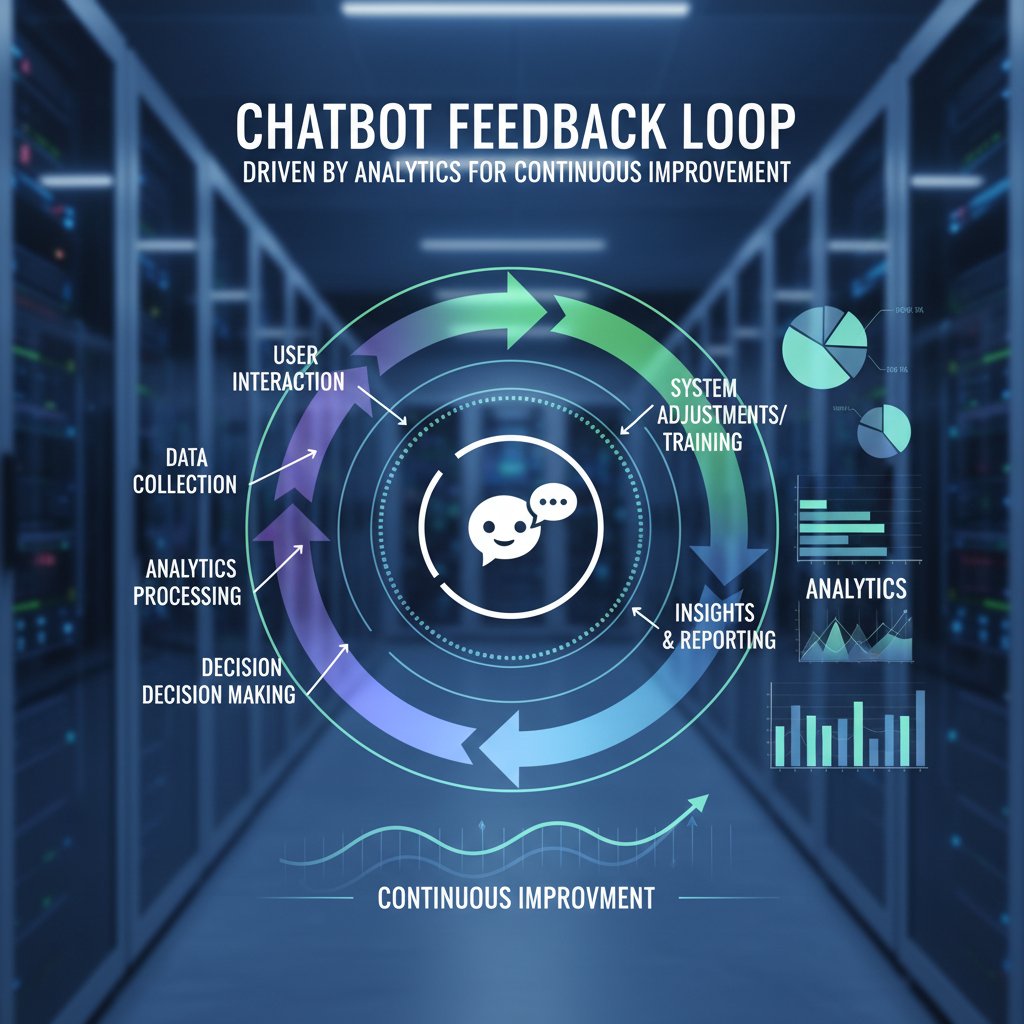
Chatbot messaging is a living organism. Continuous improvement—the feedback loop—is where bold brands separate from the herd. The cycle: launch, measure, analyze, tweak, relaunch. Botsquad.ai, for instance, is known for powering rapid, incremental updates fueled by real-world analytics, keeping bots relevant as user slang and expectations evolve.
Real-world applications: Industry case studies and cultural shifts
E-commerce: Bots that boost the bottom line
E-commerce is ground zero for chatbot messaging strategy innovation. Retailers like Sephora deploy AI-driven shopping assistants that do more than answer questions—they proactively recommend products, remind users of abandoned carts, and gamify the buying journey. According to Chatbot.com (2024), chatbots are on track to drive $142B in retail sales this year.
Case study: Retail brand’s before-and-after engagement rates
- Before chatbot launch: 11% of users completed checkout after browsing.
- After implementing AI-powered proactive messaging: 25% completed checkout, with session time up 30% and customer satisfaction up 18%.
Healthcare: When empathy matters more than speed
Healthcare chatbots operate in a minefield—users need clarity, not canned responses. Brands like Microsoft and LinkedIn emphasize empathy, privacy, and seamless human handoff. A bot that rushes or fumbles a sensitive question can cause irreparable harm. Chatbot messaging strategy here demands extra finesse and rigorous testing.

Culture clash: When bots meet global audiences
Localization isn’t just translation—it’s cultural adaptation. Chatbots that ignore local norms risk confusion, offense, or outright rejection. SmatBot data shows gamified flows must be tailored to cultural expectations; what’s playful in the U.S. might be disrespectful in Japan.
| Culture/Region | Common Misstep | Impact |
|---|---|---|
| U.S. | Overly formal tone | Comes off as cold |
| Japan | Too casual or direct | Seen as disrespectful |
| Germany | Lack of precision in answers | Perceived as incompetent |
| Middle East | Ignoring religious greetings | Offends users, reduces engagement |
Table 5: Examples of cultural misinterpretations in chatbot messaging Source: Original analysis based on SmatBot and Yellow.ai data (2024)
Risks, red flags, and how to recover from a chatbot disaster
Spotting the warning signs early
Messaging missteps rarely emerge out of thin air—they announce themselves if you know where to look. Early indicators include spikes in unresolved chats, negative sentiment scores, and sudden drops in engagement. Ignore these signs, and you’ll find yourself at the center of the next viral #ChatbotFail.
- Rushed bot launch without QA: Bugs and broken flows go public
- Ignoring user feedback: Recurring complaints escalate
- No escalation path: Sensitive issues mishandled by bot
- Over-personalization: Users creeped out, privacy concerns raised
- Failure to adapt: Slang, memes, and local context ignored
Damage control: Recovering brand trust
Recovering from a chatbot disaster takes more than a sheepish tweet. Brands must publicly acknowledge the issue, directly apologize to affected users, and—most importantly—fix the root cause. Rapidly updating scripts, retraining AI, and offering real human support during cleanup are critical to regaining user trust.

Learning from the worst: Famous chatbot messaging flops
From Microsoft Tay’s infamous meltdown to the recent NYC legal advice catastrophe, the industry is littered with cautionary tales. The lesson? Even the biggest brands aren’t immune, but those who own their mistakes and rebuild transparently often emerge stronger.
"Sometimes you need to crash and burn to rebuild better." — Noah, conversational AI strategist (quote based on research trends)
The future of chatbot messaging: Where are we headed?
From conversation to connection: Humanizing bots (or not?)
A fierce debate is raging: should bots strive for human-level warmth, or embrace their digital honesty? Some users crave the efficiency of a no-nonsense bot; others expect a dash of empathy and wit. The answer isn’t binary—winning brands tailor bot “personality” to context and audience. The only thing worse than a bot that’s too robotic? One that tries too hard to be your best friend.

Botsquad.ai and the rise of expert assistant ecosystems
Platforms like botsquad.ai are redefining the chatbot landscape—not with “one-bot-fits-all” solutions, but by cultivating expert assistant ecosystems tailored for productivity, lifestyle, and professional support. These platforms deploy specialized bots powered by LLMs to deliver real value, seamlessly integrating with user workflows and continuously improving through AI-driven analytics. The result? Chatbot messaging strategies that actually perform, adapt, and raise the bar for customer engagement at scale.
Expert ecosystems mean users aren’t stuck with a single tone-deaf bot—they get contextually aware assistants that know when to help, when to escalate, and when to step back. This multi-bot, multi-expert approach is setting new standards for what messaging strategy performance looks like in a hyper-connected world.
What to expect in 2025 and beyond
What’s shaping chatbot messaging strategy right now? The convergence of AI, privacy regulation, and cultural nuance. Brands are doubling down on multilingual support (like LinkedIn’s 10+ language chatbots), proactive messaging, and omnichannel integration to deliver frictionless experiences across web, social, and apps.
Predictions for chatbot messaging strategy in the next decade:
- Blurred lines between chatbots and human agents, with seamless handoffs
- Universal “AI audit” standards for transparency and fairness
- Multimodal interfaces—voice, video, and touch—dominating complex user journeys
- Gamified, reward-driven conversations boosting session time and loyalty
- Real-time sentiment analysis guiding instant escalation and crisis management
Glossary: Demystifying chatbot messaging jargon
Key terms you actually need to know
The ability of a chatbot to interpret user input, including slang, intent, and context. A key differentiator between basic bots and AI-driven solutions.
The underlying goal or purpose behind a user’s message, e.g., booking a flight or requesting support.
The default bot response when it doesn’t understand a user’s query or intent.
The process of handing over a conversation from a bot to a human agent, often triggered by complexity or user frustration.
The overall user experience of interacting with a chatbot, including language, flow, tone, and satisfaction.
Chatbot-initiated messages designed to nudge users, deliver reminders, or upsell—timed for maximum relevance.
AI-driven measurement of the user’s emotional tone throughout a conversation, used to personalize responses or trigger escalation.
The amount of conversation history a chatbot can “remember” and reference to inform its replies.
Similar terms, different worlds: Clearing up confusion
Many terms in chatbot lingo sound similar but carry crucial differences. Understanding these distinctions prevents embarrassing missteps.
| Term | Definition | Use Case Example |
|---|---|---|
| NLU | AI system to parse and understand language | Decoding “refund me now!” |
| NLP | Broader field, includes NLU and language generation | Both understanding and generating replies |
| Fallback | Bot’s “I didn’t get that” response | When input is unclear or unsupported |
| Escalation trigger | Rule or heuristic that moves chat to a human | “I want to speak to a manager” |
| Bot persona | The unique character, tone, and style of the chatbot | Playful vs. corporate vs. neutral |
Table 6: Chatbot messaging definitions and distinctions Source: Original analysis based on Outgrow (2023), Yellow.ai (2024), and KPMG (2024)
Conclusion
The age of lazy chatbot messaging is over. In 2025, only the bold survive—those who iterate relentlessly, personalize ethically, and never underestimate the intelligence (or impatience) of their users. A modern chatbot messaging strategy is equal parts psychology, technology, and relentless experimentation. Whether you’re scaling an e-commerce empire, building cross-cultural bridges, or simply aiming to not go viral for the wrong reasons, the blueprint is clear: be proactive, be transparent, and let real-world data—not ego—drive every message. As the research shows, brands that embrace these bold moves are not just keeping up; they’re setting the pace. Ready to disrupt? Don’t just automate—strategize, iterate, and connect. The future of engagement belongs to those who never settle for “good enough.”
Sources
References cited in this article
- Chatinsight.ai(chatinsight.ai)
- Yellow.ai(yellow.ai)
- Chatbot.com(chatbot.com)
- Master of Code(masterofcode.com)
- Solutions Review(solutionsreview.com)
- AIMultiple(research.aimultiple.com)
- Emerald Insight(emerald.com)
- PopupSmart(popupsmart.com)
- BloggingWizard(bloggingwizard.com)
- Botsplash(botsplash.com)
- Lately.AI(lately.ai)
- Kommunicate(kommunicate.io)
- OpenTools.ai(opentools.ai)
- arXiv(arxiv.org)
- Digit.FYI(digit.fyi)
- Medium(medium.com)
- arXiv(arxiv.org)
- Route Mobile(routemobile.com)
- Verloop.io(verloop.io)
- Botpress(botpress.com)
- Chatbot.com(chatbot.com)
- Mastech Infotrellis(mastechinfotrellis.com)
- Tovie.ai(tovie.ai)
- Frontiers in Psychiatry(frontiersin.org)
- K-State News(k-state.edu)
- arXiv(arxiv.org)
- Ometrics(ometrics.com)
- Chatbots Magazine(chatbotsmagazine.com)
- Writitude(writitude.com)
- MarketingForum.info(marketingforum.info)
- Typebot.io(typebot.io)
- SearchUnify(dev.searchunify.com)
- Contentful(contentful.com)
- Chatbot.com(chatbot.com)
- Chat360(chat360.io)
- Haptik(haptik.ai)
- Hubtype(hubtype.com)
Transform Your Life With Expert AI Assistants
Botsquad.ai provides a comprehensive platform where specialized expert chatbots leverage powerful Large Language Models (LLMs) to deliver tailored support for productivity, lifestyle, and professional needs. Whether you're aiming to streamline your daily tasks, seeking expert advice, or striving to elevate your professional performance, Botsquad.ai has a chatbot specifically designed to meet your unique needs. With our intuitive interface, continuous learning capabilities, and seamless integration with your existing workflows, Botsquad.ai empowers users to achieve more, effortlessly.
Get startedReady to Work Smarter?
Join thousands boosting productivity with expert AI assistants
Frequently Asked Questions
Why do most chatbots fail to engage users effectively?
According to a 2024 KPMG study, 80% of consumers engage more with personalized chatbot messages, and most users bounce within seconds if they sense they're talking to a generic script. Users expect chatbots to remember context, deliver hyper-relevant answers, and solve real problems rather than simply repeat FAQs or lack distinguishable personality.
What are the business consequences of poor chatbot messaging?
According to Zendesk's 2024 CX Trends, 54% of customers are less likely to return after a negative chatbot experience, and 27% will share their bad encounter on social media. Poor chatbot messaging erodes trust, sparks public backlash, and can trigger viral PR disasters that damage brand reputation.
What makes a chatbot messaging strategy successful in 2026?
The article outlines 11 bold moves that define a winning chatbot messaging strategy, which focus on outsmarting competition through personalization, context awareness, and real problem-solving rather than generic scripts and automated responses. Successful strategies move away from one-size-fits-all approaches that users find robotic and unhelpful.
Why are generic chatbot scripts no longer effective?
Users are more jaded and have higher expectations than ever before, having experienced poorly trained bots and unhelpful virtual assistants. One-size-fits-all scripts don't just fail to engage—they actively repel users who expect personalized, relevant, and genuinely helpful interactions from chatbots.
From the Archive
Explore more from Expert AI Chatbot Platform

Chatbot Content Strategy: Why Most Brands Fail

Chatbot Customer Engagement Strategies: What Works and What Fails

Chatbot Marketing Strategies: What Works and What Fails

Chatbot Engagement Tools and User Retention: What Works

Why Chatbot Conversation Strategy Fails and What Works Instead