AI Chatbot Human Support Replacement: What's Actually Lost and Gained
Written with AI assistance under our editorial guidelines
By 2026, AI chatbots will likely coexist with human support rather than fully replace it, as executives pursue cost savings while consumers increasingly demand genuine human interaction for complex issues. The gap between efficiency and service quality will drive a backlash against purely automated systems, forcing hybrid models that balance automation with human oversight.
Call it the paradox of progress: as AI chatbots muscle their way into the frontlines of customer support, the very notion of “help” is being rewritten—sometimes with brutal efficiency, sometimes with unintended casualties. The phrase “AI chatbot human support replacement” has become a rallying cry for executives chasing lower costs and 24/7 coverage, a persistent specter for support teams, and a source of either hope or unease for consumers caught in the system’s gears. The headlines boast of instant answers, slashed budgets, and algorithms that “learn” on the job. But what’s the trade-off behind the hype?
This deep dive doesn’t just scratch the surface. We dissect the machinery and psychology of modern AI support, expose the myths that drive decision-makers, and interrogate what’s actually lost (and gained) when chatbots take the wheel. Expect the facts, the failures, the edge-case stories executives would rather you didn’t know, and a no-nonsense guide to what works in 2025—and what still doesn’t. If you’re betting your business, your sanity, or your customer loyalty on the promise of AI chatbot human support replacement, buckle up. Here’s what you won’t find in the marketing decks or LinkedIn platitudes.
How did we get here? The rise of AI chatbots in support
From phone trees to neural networks: A brief history
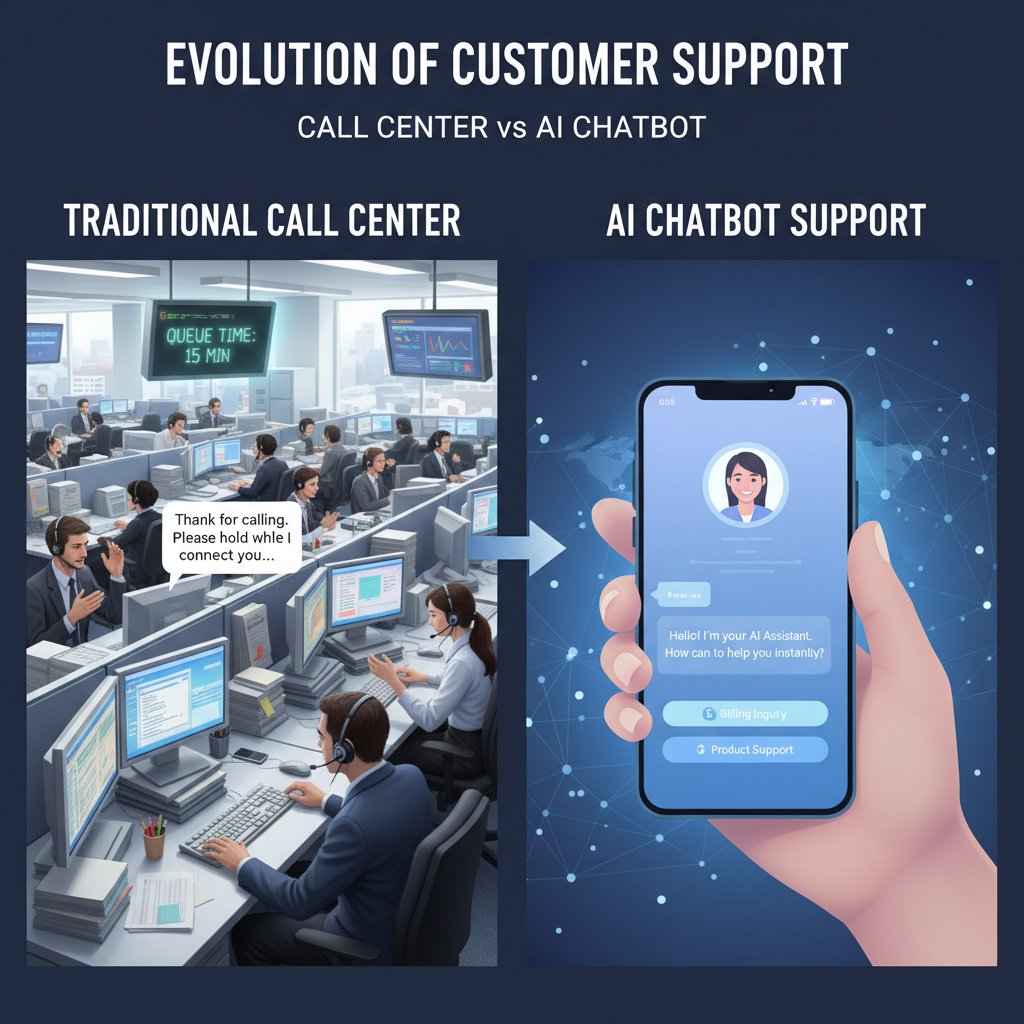
Rewind to the 1990s: customer support meant endless hold music, script-reading call center reps, and the Sisyphean frustration of shouting “representative!” into a phone tree that refused to understand. Automation crept in slowly—first with clunky Interactive Voice Response (IVR) systems, then with basic email templates and chat pop-ups offering canned answers. The goal was always the same: do more with less, and keep the humans from burning out or breaking the bank.
The past decade, though, cracked things wide open. Natural language processing (NLP) moved chatbots from rigid decision trees to something approaching real conversation. By 2016, mainstream platforms like Facebook Messenger and WhatsApp had opened the floodgates, inviting businesses to build chatbots that could “talk” to millions. Suddenly, the dream of AI chatbot human support replacement was no longer science fiction—it was a boardroom mandate.
| Year | Support Milestone | Technology | Impact |
|---|---|---|---|
| 1990 | Call center boom | Phone + IVR | Human-intensive, slow |
| 2000 | Email ticketing | Email automation | Slight efficiency |
| 2010 | Live chat widgets | Scripted chatbots | Scripted, rigid |
| 2016 | NLP-powered chatbots proliferate | NLP, ML | Smarter, scalable |
| 2020 | Multimodal AI, hybrid support | LLMs, AI+human | Blended experiences |
| 2023 | AI-first support strategies | Deep learning | Human jobs disrupted |
| 2024 | 96% of queries answered by AI | Generative AI | Near-instant answers |
Table 1: Timeline of major AI milestones in human support replacement.
Source: Original analysis based on Patricia Gestoso (2024), Gartner (2023), and McKinsey (2024).
From call scripts to neural networks, each leap was driven by the pressure to do more—faster, and for less. But every leap leaves something behind: a skill, a sense of empathy, a connection.
What makes today’s AI chatbots different
So what sets today’s AI chatbots apart from their ancestors—besides a snappier interface and fewer “I don’t understand” dead-ends? It’s the muscle under the hood: large language models (LLMs) that process context, nuance, and intent at a level that would have been science fiction ten years ago. NLP advances mean chatbots can interpret misspellings, slang, and even sarcasm—at least, sometimes. Machine learning algorithms feed on mountains of customer data, learning to fine-tune responses and escalate only when truly necessary.
These new AI chatbots aren’t just programmable—they’re adaptive. They analyze thousands of conversations, predicting what you want before you type it. The difference? They’re less likely to get stumped by routine requests and more likely to hand off complex ones to a human with just enough context to avoid a repeat explanation. According to Patricia Gestoso (2024), up to 96% of inquiries can be answered within 30 seconds by AI chatbots—a quantum leap in speed and consistency.
But for all this technical wizardry, the old ghosts remain. Context still trips up the best models, especially in multi-turn conversations, and empathy—real, felt empathy—remains the last mile AI can’t cross. As one seasoned product manager, Jordan, put it:
"AI is finally talking back, but the real question is—are we listening?"
The answer, as always, is complicated.
The big promise: Why businesses are betting on AI over humans
Cost, scale, and the myth of 24/7 perfection
Why is the AI chatbot human support replacement trend steamrolling traditional support? Simple: it’s good for the bottom line. Businesses drool over numbers from IBM, which show AI chatbots can slash service costs by up to 30%. The global chatbot market was $5.1 billion in 2023 and is projected to balloon to $36.3 billion by 2032—proof that the money and momentum are locked in (SNS Insider, 2024). Executives see the holy trinity: lower costs, infinite scale, and the fantasy of always-on, never-tired support lines.
But that fantasy is only part of the story. While 62% of consumers prefer chatbots over waiting for a human agent and 30% of C-suite leaders are prioritizing automation (Intercom, 2024), the assumption that AI delivers flawless, frictionless support 24/7 just doesn’t hold up under pressure. Bots may never sleep, but their scripts can break. And when the system fails at 2 a.m.—good luck finding anyone who cares.
- AI exposes hidden efficiency: Chatbots handle routine queries instantly, freeing humans for complex cases. This “triage” effect isn’t always obvious in a cost spreadsheet.
- Consistency is underrated: AI delivers the same experience, every time. There’s no “bad day” or rogue agent going off-script—unless the script itself is broken.
- Data goldmine: Every conversation is logged, parsed, and analyzed for patterns, making it easier to spot trends (or failings) early and often.
- Scalability on demand: Launch a new product? Black Friday chaos? AI chatbots scale without overtime pay or burnout.
- Language barriers shrink: Modern bots handle multiple languages, serving global customers while humans sleep.
- Brand control: Companies set tone, voice, and limits up front, avoiding off-brand improvisation.
- Instant onboarding: No two-week training for a new hire—just a model update and you’re live.

The promise is seductive: an AI army at your command, never taking a sick day, never rolling its eyes at an angry customer. But business utopias rarely survive contact with reality.
The hidden costs businesses rarely admit
Behind the “AI chatbot human support replacement” headlines, real headaches lurk. Transitioning to AI-first support isn’t just a flick of the switch. Retraining entire teams, integrating legacy systems, and managing the blowback from customers who feel ghosted by automation can turn a cost-saving dream into a support nightmare.
Then there’s compliance. With AI parsing sensitive customer data, the risk of running afoul of privacy regulations like GDPR jumps. Security vulnerabilities, data leaks, and model “hallucinations” (AI inventing facts) are more than theoretical risks—they’re daily headlines. According to McKinsey (2024), while AI chatbots boost efficiency, they still struggle with complex, empathetic, or judgment-based scenarios, and they can alienate customers when empathy is needed most.
| Support Type | Upfront Cost | Ongoing Cost | Avg. Satisfaction | Churn Rate |
|---|---|---|---|---|
| Human | $$$ | $$$ | 4.2/5 | 12% |
| AI Chatbot | $$ | $ | 3.8/5 | 18% |
| Hybrid | $$ | $$ | 4.5/5 | 8% |
Table 2: Human vs AI support—true costs, satisfaction, and churn rates (Source: Original analysis based on McKinsey, 2024; Intercom, 2024).
Cutting humans from the support equation might look good in a quarterly report, but customer alienation, compliance fines, and reputation damage rarely fit into a tidy spreadsheet.
Where AI chatbots win—and where humans still dominate
Speed, consistency, and data crunching: AI’s strengths
Let’s not kid ourselves: AI chatbots have undeniable superpowers where it counts. In high-volume environments—think telecoms, retail, airlines—routine queries make up the bulk. “Where’s my order?” “How do I reset my password?” For these, bots are ruthless in their speed and accuracy. According to Patricia Gestoso (2024), up to 96% of inquiries are resolved by AI chatbots within 30 seconds.
Beyond speed, bots excel at consistency. There’s no off-script moment, no “Sorry, I’m new here,” and feedback loops let them learn from every interaction. The secret weapon? Data. AI chatbots mine support tickets, purchase histories, and even sentiment to craft responses that feel personalized—at least, for straightforward cases.
Case in point: a major European retailer automated 85% of first-line support, reducing average handling time by over 40%. Not only did response times plummet, but human agents were freed to tackle the gnarly, high-friction cases that make or break loyalty.
Empathy, nuance, and the art of human support
But not every support question is a multiple-choice test. When a customer’s upset, confused, or facing a crisis, empathy and intuition matter more than speed. AI can regurgitate “I’m sorry you’re experiencing this”—but real humans read tone, adapt phrasing, and escalate with finesse.
Research from McKinsey (2024) underscores this: “AI cannot fully replace humans due to nuanced understanding and emotional intelligence needs.” Customers know the difference. When support feels robotic, satisfaction sinks. In fact, 1 in 3 customers report switching brands after a single negative bot interaction.
"Sometimes, you just need to hear a real voice on the other end." — Priya, customer service veteran
AI may win the sprint, but humans still own the marathon of complex, emotional support.
The inconvenient truths: Myths, misconceptions, and what nobody tells you
Debunking the 'AI will take all the jobs' narrative
The “AI will take all our jobs” narrative makes for a great headline—but the data tells a messier story. According to Gartner (2023), only 20–30% of businesses are actively replacing human agents with AI chatbots. Many are instead adopting hybrid models, where bots triage the easy stuff and humans step in when things get tricky.
AI-focused support doesn’t just kill jobs—it creates new ones. Roles like conversational UX designer, bot trainer, and AI ethicist didn’t exist a decade ago. The future isn’t pink slips; it’s upskilling. The real shift? Humans move upstream, handling exceptions that bots can’t crack.
Key terms you need to know:
Artificial intelligence—a catch-all for computer systems that can “learn” and “reason” to complete tasks that once needed human intelligence. Overhyped, but not magic.
Natural language processing—the tech that allows AI to “read,” interpret, and generate human-like language. It’s the reason bots can talk, not just click.
Combining AI chatbots with human agents, blending efficiency with empathy. The gold standard in 2025.
The dark side: AI fails, bias, and customer backlash
For every success story, there’s a chatbot disaster lurking in the archives. Remember the viral meltdown when a major airline’s chatbot offered absurd rebooking advice after a system outage? Or the PR fiasco of a banking bot that hallucinated account balances? These aren’t just bugs—they’re existential risks.
Algorithmic bias is another minefield. If bots are trained on biased data, they’ll reflect and amplify it—leading to exclusion, discrimination, or just plain weird responses. Customers notice. According to a 2024 Intercom survey, 37% of users felt “alienated” after a bot misunderstood or mishandled a sensitive request.

The lesson: unchecked AI can alienate customers faster than a surly call center rep ever could.
Real-world stories: Successes, stumbles, and surprises
Case study: The retailer who fired their support team (and what happened next)
Consider an anonymous mid-size online retailer—let’s call them “ShopHub.” In late 2023, ShopHub replaced its entire support team with an AI-first chatbot system, betting on lower costs and faster responses. At first, metrics soared: response times dropped from hours to seconds, and support costs halved.
But within three months, trouble surfaced. Negative reviews spiked as customers flagged unresolved issues and “robotic” interactions. Churn climbed by 12%, erasing a chunk of the cost savings. An anonymous former support agent later recounted:
“The bot could handle tracking numbers, but if a customer had a unique problem, they got stuck in circles. It was brutal to watch loyal customers walk away.”
Eventually, ShopHub re-hired a leaner team to handle complex cases—proving that, even in 2025, AI chatbot human support replacement is rarely a one-way street.
When hybrid wins: Botsquad.ai and the rise of blended support ecosystems
Forward-thinking companies aren’t choosing between bots and humans—they’re mixing both for maximum impact. Hybrid models let bots handle routine triage, reserving human agents for the 10–20% of cases that need tact, creativity, or judgment. This approach slashes costs without sacrificing customer loyalty.
Botsquad.ai, for instance, offers businesses a way to blend expert AI chatbots with human oversight, ensuring routine requests get instant answers while edge cases receive the attention they deserve. In one real-world example, a SaaS provider using a hybrid model saw first-response times improve by 50% and escalations drop by 30%, while customer satisfaction actually rose.

The takeaway? The “either/or” debate is dead—hybrid is the new normal.
The tech under the hood: How AI chatbots really work
Natural language processing and the illusion of understanding
Every AI chatbot is powered by a cocktail of tech: NLP for interpreting questions, machine learning for improving over time, and knowledge graphs or databases for facts. The illusion of “understanding” is just that—an illusion. Today’s best bots are masters of pattern recognition, not consciousness. They parse keywords, predict likely responses, and “learn” from feedback loops, but they don’t understand context the way a human does.
| Platform | NLP Engine | Human Handoff | Customization | Multilingual | Cost |
|---|---|---|---|---|---|
| Botsquad.ai | Proprietary LLM | Yes | High | Yes | $$ |
| Intercom | GPT-based | Yes | Moderate | Yes | $$$ |
| Zendesk | Custom/3rd-party | Yes | Moderate | Yes | $$ |
| IBM Watson | Watson NLP | Yes | High | Yes | $$$ |
| Drift | GPT-based | Limited | Moderate | Limited | $$ |
Table 3: Feature matrix—top AI chatbot platforms for support in 2025.
Source: Original analysis based on platform documentation and industry reviews (2025).
The bottom line? Even the smartest bot is still guessing—just a lot faster and smarter than before.
Are chatbots getting smarter—or just better at faking it?
You’ll hear the buzz: “Bots are learning context!” “They remember previous conversations!” True—sort of. Advances in context awareness and multi-turn dialogue mean bots can reference earlier messages, but “memory” is limited and brittle. Much of what appears as understanding is, in fact, clever mimicry plus brute-force data crunching.
Training these bots takes an army: annotators label thousands of conversation snippets, feeding supervised learning algorithms until responses pass the “Turing Test” for 80% of cases. But don’t mistake mimicry for mind reading.
"Today's AI is a master of mimicry, but not a mind reader." — Sasha, AI researcher
The ultimate question isn’t “Can bots fool us?” but “When does the act break down—and who’s left cleaning up the mess?”
The human factor: Psychological, ethical, and cultural stakes
Trust, privacy, and the boundaries of automation
There’s a reason customers hesitate before spilling their secrets to a chatbot. Trust is fragile, especially when data privacy scandals headline the news cycle. AI chatbots can log every word, but not every customer wants their rant immortalized in a training set.
Ethical dilemmas abound: should an AI escalate a suicide risk? How do you handle sensitive financial info? The boundaries of automation aren’t just technical—they’re moral. Responsible deployment means setting sharp guardrails and auditing systems for fairness.
- Define clear escalation rules: Bots must know when to hand off to humans—no exceptions.
- Prioritize transparency: Disclose when customers are talking to AI, and explain how data is used.
- Audit for bias: Regularly test models for unfair outcomes and retrain on diverse datasets.
- Invest in privacy: Encrypt conversations and strictly limit data retention.
- Empower customer feedback: Make it easy for users to flag problems or opt out of automation.
Cultural shifts: Is outsourcing empathy sustainable?
Are we witnessing the slow death of human connection in the name of efficiency? For younger, digitally fluent customers, chatbots are often a relief—no small talk, just solutions. But for others, especially older or vulnerable users, AI support feels cold, impersonal, even threatening.
Generational divides are sharp. A 2024 LivePerson study found that Gen Z and Millennials were twice as likely as Boomers to prefer chatbots for basic support, but just as likely to demand a human for complex issues.

Empathy may be the next luxury good in customer support—a value-add, not a baseline.
The road ahead: What’s next for AI and human support
Emerging trends: Multimodal AI, emotion recognition, and more
The technical arms race is far from over. Leading platforms are rolling out multimodal AI—bots that listen, watch, and even “feel” your frustration through voice, video, and emotion recognition. Today’s bots are the tip of the iceberg: the goal is seamless, invisible support that anticipates needs before you even hit “send.”
But the AI gold rush comes with backlash. Government regulators, privacy watchdogs, and consumer advocates are pushing hard for transparency, fairness, and accountability. The result? The road to “AI everywhere” is lined with both innovation and hard limits.
Action steps: How to future-proof your support strategy
Thinking of jumping on the AI chatbot human support replacement bandwagon? Ignore the hype—start with hard questions and ruthless self-assessment.
- Don’t trust the marketing decks. Ask for real performance data, not vanity metrics.
- Beware of “one-size-fits-all” bots. What works for retail may fail spectacularly in healthcare or finance.
- Insist on clear escalation paths. Bots must hand off to humans when outmatched.
- Audit everything. From bias to uptime, inspect what you expect.
- Invest in training, not just tools. Human oversight is non-negotiable.
- Watch for hidden costs. Implementation, integration, regulatory compliance—all need budget and attention.
- Monitor user feedback relentlessly. Early warning signs often show up in reviews and support tickets.
- Stay humble. Technology changes fast; so do customer expectations.
Your move: Self-assessment and decision-making tools
Is your business actually ready for AI support?
Before you commit, interrogate your readiness:
- Map your support landscape: What percentage of queries are routine vs. complex? Bots shine with the former.
- Analyze your risk tolerance: Are you ready for public failures and recovery plans?
- Engage your team: How will roles shift? Upskilling or downsizing?
- Pilot, don’t plunge: Test AI on a subset before system-wide rollouts.
- Benchmark relentlessly: Track satisfaction, churn, and error rates.
- Design for the hybrid: Assume human backup will always be needed.
- Legal and compliance check: Get privacy, security, and audit frameworks in place.
- Plan for continuous improvement: AI is not “set and forget.”
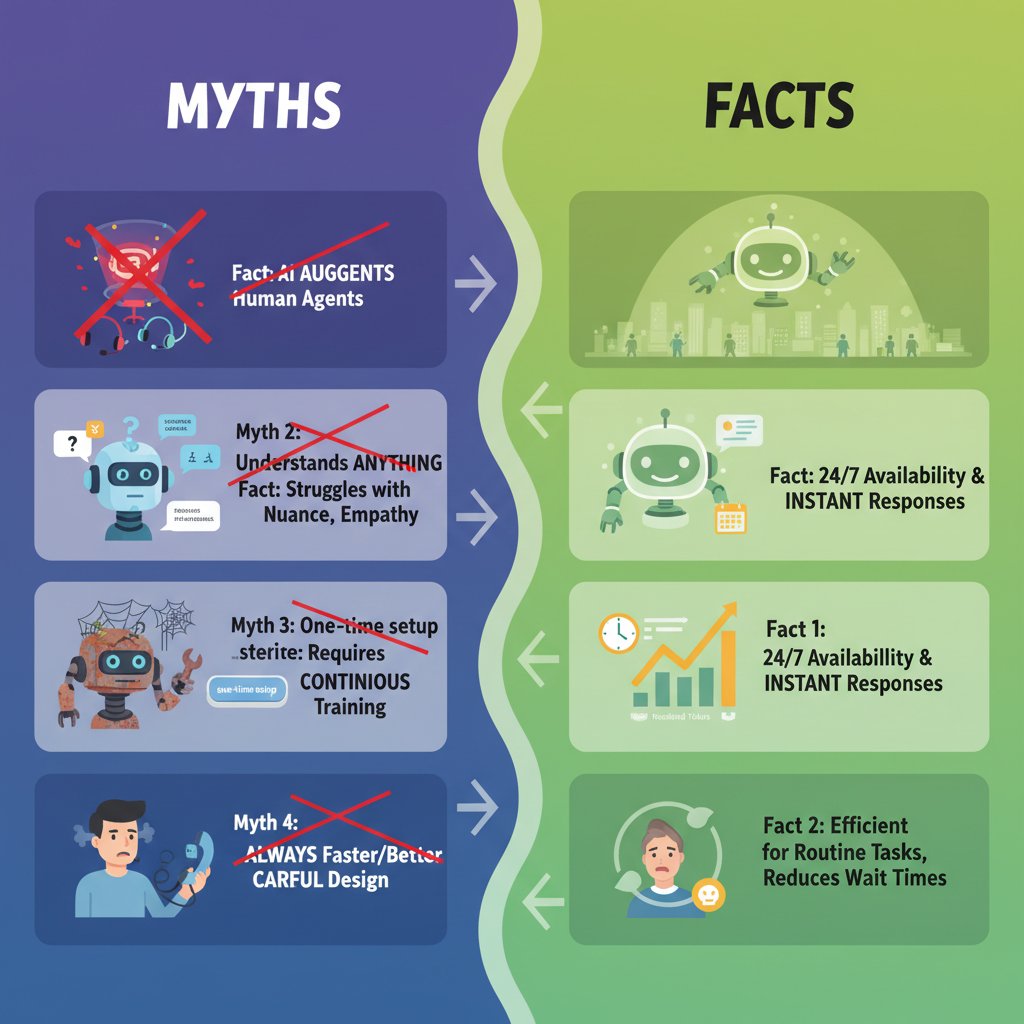
Myth: AI chatbots are always cheaper.
Reality: Hidden costs—compliance, retraining, lost customers—can eat savings.
Myth: AI is “smart enough” for everything.
Reality: Bots stumble on nuance, emotion, and novel scenarios.
Myth: Replacing humans is a one-way street.
Reality: Many firms return to hybrid when churn and backlash spike.
Quick reference: Myths vs. facts at a glance
Forget the talking points—here’s what the numbers really say.
| AI Chatbot Claim | Fact (2025 Data) |
|---|---|
| “AI can resolve all support issues” | 96% of inquiries, but only for routine requests (Patricia Gestoso, 2024) |
| “24/7 flawless support” | Bots fail on complex/moral issues, need human backup (McKinsey, 2024) |
| “AI always reduces costs” | Up to 30% savings, but hidden costs exist (IBM, 2024) |
| “Consumers prefer bots” | 62% do, but only for simple issues (Intercom, 2024) |
| “AI is unbiased” | Bias, exclusion remain persistent risks (Intercom, 2024) |
Table 4: AI chatbot claims vs. documented outcomes (2025 data).
Source: Original analysis based on Patricia Gestoso (2024), IBM (2024), Intercom (2024), McKinsey (2024).
Conclusion: The real future of support—human, AI, or both?
The hybrid model and the case for honest experimentation
The inconvenient truth about AI chatbot human support replacement is this: the best results come from blending the unblinking efficiency of AI with the warmth, judgment, and creativity of humans. Going all-in on bots is a gamble few can afford to lose; clinging to all-human support is a luxury most can’t sustain.
Smart businesses—whether global giants or scrappy startups—are moving toward honest experimentation. They pilot, measure, and adapt, using platforms like botsquad.ai to bridge routine with nuance. The winners? Teams that learn fast, admit mistakes, and put customer experience above dogma.
"The future belongs to those who can blend empathy with efficiency—no matter which side of the chat they’re on." — Alex, support lead, 2025
In a world obsessed with “replacing” humans, maybe the real edge is knowing when not to.
Sources
References cited in this article
- Patricia Gestoso (2024)(patriciagestoso.com)
- Infomineo(infomineo.com)
- Software Oasis(softwareoasis.com)
- McKinsey(mckinsey.com)
- What’s The Big Data(whatsthebigdata.com)
- HubSpot(blog.hubspot.com)
- AIPRM(aiprm.com)
- Sogolytics(sogolytics.com)
- FullView(fullview.io)
- TeamSupport(teamsupport.com)
- Backlinko(backlinko.com)
- Yellow.ai(yellow.ai)
- Persuasion Nation(persuasion-nation.com)
- Blogging Wizard(bloggingwizard.com)
- OECD.AI(oecd.ai)
- Smatbot(smatbot.com)
- Verifast.ai(verifast.ai)
- BuildChatbot.ai(buildchatbot.ai)
- Webuters(webuters.com)
- Glassix(glassix.com)
- Sprinklr(sprinklr.com)
- TechXplore(techxplore.com)
- Nerdbot(nerdbot.com)
- Sofigate(sofigate.com)
- Dialzara(dialzara.com)
- Master of Code(masterofcode.com)
- HubSpot(blog.hubspot.com)
- Fluent Support(fluentsupport.com)
- Gartner(gartner.com)
- ResultsCX(resultscx.com)
- McKinsey(mckinsey.com)
- Debevoise Data Blog(debevoisedatablog.com)
- Comidor(comidor.com)
- Botbuz(botbuz.com)
- Analytics Vidhya(analyticsvidhya.com)
- Medium(medium.com)
- ScienceDaily(sciencedaily.com)
- Springer(link.springer.com)
- Analytics Vidhya(analyticsvidhya.com)
- Brown University(brown.edu)
- Chatbot.com(chatbot.com)
- University of Sydney(sydney.edu.au)
- ZDNET(zdnet.com)
- APA(apaservices.org)
- BBC(bbc.com)
- Frontiers in Psychology(frontiersin.org)
- JMIR(humanfactors.jmir.org)
- ScienceDirect(sciencedirect.com)
- Cisco 2024 Consumer Privacy Survey(forbes.com)
- SpringerOpen(fbj.springeropen.com)
- Medium(medium.com)
Transform Your Life With Expert AI Assistants
Botsquad.ai provides a comprehensive platform where specialized expert chatbots leverage powerful Large Language Models (LLMs) to deliver tailored support for productivity, lifestyle, and professional needs. Whether you're aiming to streamline your daily tasks, seeking expert advice, or striving to elevate your professional performance, Botsquad.ai has a chatbot specifically designed to meet your unique needs. With our intuitive interface, continuous learning capabilities, and seamless integration with your existing workflows, Botsquad.ai empowers users to achieve more, effortlessly.
Get startedReady to Work Smarter?
Join thousands boosting productivity with expert AI assistants
Frequently Asked Questions
What is the main debate about AI chatbots in customer support?
The main debate centers on whether AI chatbots will replace human customer support agents or trigger a consumer backlash. Executives are drawn to lower costs and 24/7 coverage, but there are concerns about what's lost when chatbots handle support instead of humans, raising questions about the actual effectiveness and trade-offs of AI support systems.
How did customer support evolve before AI chatbots became mainstream?
Customer support evolved from 1990s phone trees and Interactive Voice Response (IVR) systems with rigid scripts, to basic email templates and chat pop-ups with canned answers. The shift accelerated in the past decade with advances in Natural Language Processing (NLP), making chatbots more conversational and moving beyond simple decision trees.
What technological breakthrough made AI chatbot human support replacement viable?
Natural Language Processing (NLP) advancements enabled chatbots to move from rigid decision trees to more realistic conversations. The opening of mainstream platforms like Facebook Messenger and WhatsApp around 2016 further accelerated adoption by allowing businesses to deploy chatbots to millions of users.
What does the article promise to reveal about AI chatbots in support?
The article promises to expose myths driving decision-makers' choices, reveal what's actually lost and gained when chatbots replace human support, discuss edge-case stories, and provide a no-nonsense guide to what works in 2025 versus what still doesn't—information not found in typical marketing materials.
From the Archive
Explore more from Expert AI Chatbot Platform

Why Businesses Are Adopting AI Chatbot Human Support Alternatives

AI Chatbot Replace Traditional Services? the Messy Truth for 2026

AI Chatbots As Human Support Alternatives: Costs and Trade-Offs

AI Versus Human Customer Support: What Actually Works

AI Chatbot Customer Support Automation: What Succeeds and What Fails