AI Chatbot for Writer's Inspiration That Kills Block, Not Your Voice
Written with AI assistance under our editorial guidelines
AI writing assistants like chatbots can help writers overcome creative blocks through interactive conversation and brainstorming, without replacing their unique voice. These tools have seen explosive adoption among writers and content marketers, offering inspiration and breaking through paralysis while allowing writers to maintain their originality and creative control.
What happens when the ancient agony of the blank page collides head-on with the most advanced artificial intelligence ever created? The result isn’t just a new tool—it’s a creative arms race, a revolution at the intersection of mind and machine. Today, the phrase “AI chatbot for writer’s inspiration” surges through search engines and writers’ forums alike, dividing purists and pioneers. Forget the tired debate about whether machines can “really” create. Right now, writers are outsourcing their muse to chatbots that don’t sleep, don’t judge, and—sometimes—don’t know when to quit. This is the story of how AI-powered writing assistants like botsquad.ai are changing the rules, shattering creative blocks, and forcing every writer to ask: What’s left of originality when your muse is a machine?
If you’ve ever felt your creative spark flicker or envied the effortless flow of a colleague’s prose, you’re not alone. But with AI writing tools seeing a 300% adoption surge since 2023, according to EveryWriter’s Resource (2024), and 90% of content marketers gearing up to use AI in 2025 [Siege Media, 2025], the question is no longer if you’ll write with AI—but how. This deep dive exposes the edgy reality behind the chatbot creativity craze, from untold hacks to uncomfortable truths and everything in between.
Welcome to the creative machine age: Why writers are turning to AI for inspiration
The agony of the blank page: Old problem, new solution
Every writer knows the silent terror of the cursor blinking on a blank screen. It’s a ritual as old as ink itself: pacing the room, doom-scrolling, grinding through distractions, and stacking crumpled pages like a shrine to frustration. For centuries, this creative paralysis has haunted novelists, copywriters, and poets. Now, that existential dread is colliding with a digital revolution.

Today’s writers are anything but alone in their suffering. The explosion of digital tools—from classic spellcheckers to dynamic writing suites—has changed the landscape. But the leap from static software to AI-driven chatbots is profound. Instead of simply correcting errors or providing grammar tips, modern AI writing assistants interact, riff, challenge, and even provoke. They're not just solving old problems; they're redefining how—and why—writers get inspired. According to recent research from Medium, 2024, more than one in eight professional authors now use AI for brainstorming, outlining, or breaking blocks. The creative process, once solitary and slow, is now a collaborative, real-time dance with algorithms.
How AI chatbots stormed the writer’s room
The journey from mechanical typewriter to GPT-powered muse is a testament to relentless technological ambition. Early word processors simply digitized the writing process, but the arrival of AI has upended everything. Initial AI writing aids were little more than fancy autocomplete. Now, advanced chatbots can analyze context, mimic voice, and even suggest radical plot twists. This isn’t just about convenience—it’s about creative partnership.
| Year | Innovation | Impact |
|---|---|---|
| 1874 | Typewriter | Enabled rapid manuscript creation |
| 1983 | Word processors | Digital editing and formatting |
| 1997 | Spellcheck/grammar | Reduced basic errors |
| 2019 | GPT-2 released | Contextual language generation emerges |
| 2022 | GPT-3/4 and ChatGPT | Advanced dialogue, storytelling, and idea generation |
| 2024 | Specialized AI chatbots (e.g., botsquad.ai) | Personalized, genre-specific writing support |
| 2025 | 90% of content marketers embrace AI [Siege Media, 2025] | Mainstream adoption, creative workflows transformed |
Table 1: Timeline of milestones in AI writing assistance from manual to generative AI. Source: Original analysis based on EveryWriter’s Resource, Siege Media, and industry publications.
In the last two years, the rise of AI writing tools has been nothing short of explosive. According to Siege Media (2025), up to 90% of marketers are integrating AI into their creative workflows. The AI writing arms race is not just about speed—it’s about unlocking new dimensions of storytelling, brainstorming, and revision that were previously unimaginable.
Botsquad.ai: A new breed of creative assistant
Into this maelstrom steps botsquad.ai—a platform at the bleeding edge of the AI writing revolution. Unlike legacy software that simply polishes your prose, botsquad.ai offers a dynamic ecosystem of expert AI chatbots, each tailored to stimulate creativity, break blocks, and provide real-time feedback. For writers, this means a co-author who never tires and an editor who knows your voice.
"The right AI can be a co-author, not just a tool."
— Jamie, Creative Technologist
Botsquad.ai embodies the new breed of AI writing assistants—less digital pen, more creative partner. It sits at the intersection of productivity, intuition, and inspiration, offering a bridge between human imagination and computational might. As platforms like botsquad.ai redefine the possibilities for modern writers, the question becomes not just “Can AI help me write?” but “How much am I willing to let the machine inside my process?”
The science (and art) behind AI inspiration: How chatbots generate creative sparks
What really happens when you prompt an AI chatbot?
So what’s taking place under the hood when you type a prompt into an AI chatbot? Unlike old-school writing aids, generative AI models—like those powering botsquad.ai—don’t simply shuffle canned phrases. They process your words, scan vast oceans of language data, and predict the most contextually relevant, sometimes wildly creative, responses.
The art and science of crafting queries that elicit desirable, surprising, or precise outputs from generative AI. For writers, this means unlocking tailored inspiration instead of bland boilerplate.
AI systems (like GPT-4) that create text, stories, or even poetry by “learning” from huge datasets. These models predict the next word, sentence, or idea based on statistical patterns and learned context.
The chunk of text the AI can “see” at any one time. A larger context window allows for deeper, more cohesive outputs and recognizes subtle narrative threads.
The difference between a random AI suggestion and genuine creative inspiration is all about context. AI chatbots can be prompted with genre, tone, or character backstories, producing ideas that feel not just plausible but freshly minted for a specific writer or project. This is why prompt crafting is rapidly becoming a core skill for every serious writer, blending intuition with a hacker’s edge.
Beyond autofill: How AI learns your creative voice
Modern AI chatbots don’t just parrot generic tropes; they learn, adapt, and mirror a user’s style through repeated interaction. By analyzing your prior chats, drafts, and edits, advanced chatbots like those at botsquad.ai can start to echo your rhythm, vocabulary, and even quirks. This adaptive learning transforms the AI from a generic suggestion engine into a bespoke creative partner.
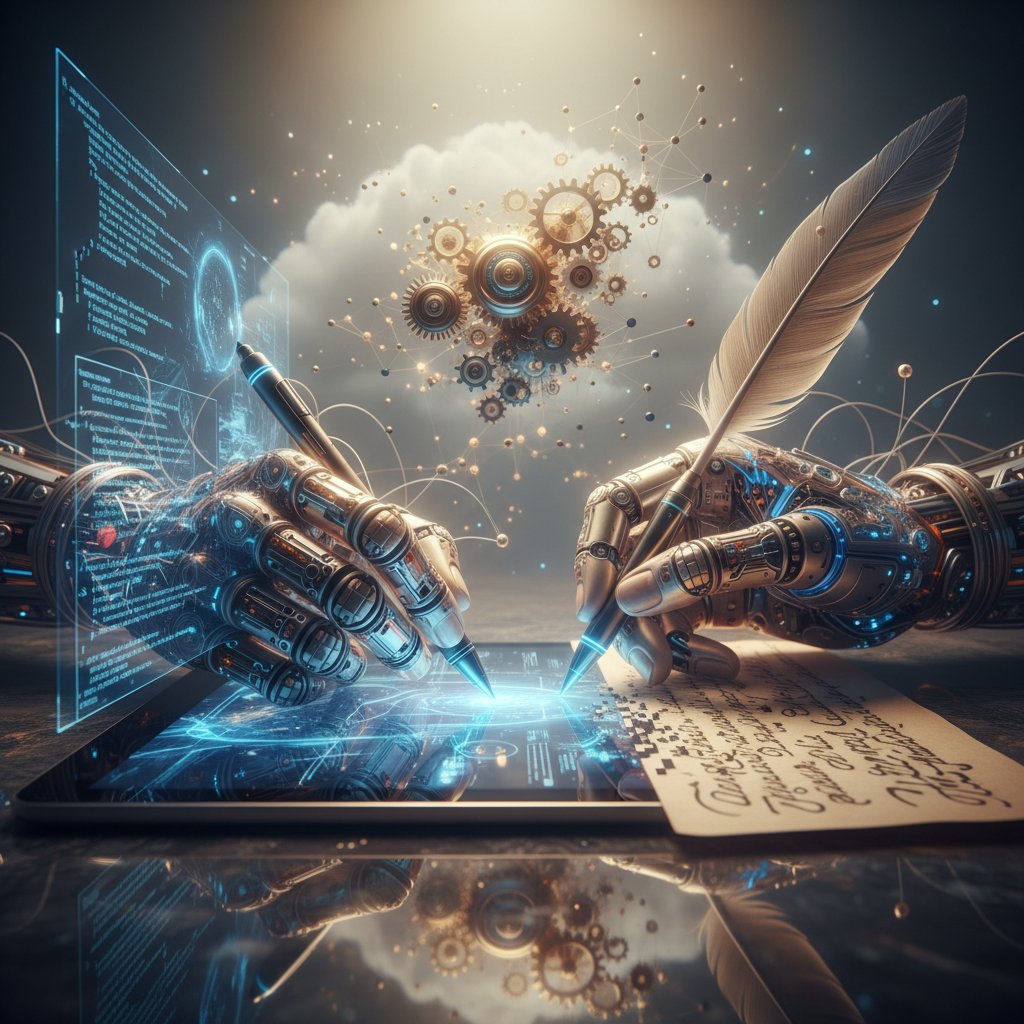
Yet this creative mimicry comes with a dark side. If not managed carefully, AI learning can create an echo chamber, flattening your voice or making you indistinguishable from other authors using similar models. The paradox of AI inspiration is that it can both amplify and erase individuality, depending on how critically the writer engages with its suggestions.
Data-driven muses: Are AI chatbots really original?
Here’s the uncomfortable truth: AI isn’t conjuring ideas out of thin air. Instead, it’s remixing, mutating, and fusing data from millions of texts at superhuman speed. The originality lies not in the “source”—which is everything from Shakespeare to Reddit—but in the remix.
"Originality isn’t about the source, it’s about the remix."
— Morgan, Narrative Designer
This means that, while AI chatbots might surprise you with left-field twists or poetic lines, their creativity is fundamentally recombinant. That doesn’t mean it’s any less valuable—in fact, some of the most groundbreaking art has always been about repurposing and recombination. The myth that AI can only regurgitate clichés is getting shattered daily by writers who dare the machine to go beyond expectation.
Pain points and power plays: The real-world impact of AI on creative writing
Writers on the edge: Stories from the front lines
The new wave of AI-assisted writing isn’t theory—it’s gritty reality for thousands of writers. Pulitzer-nominated novelist Ken Liu has spoken about using AI to probe “new aesthetic possibilities,” while screenwriters and poets are using chatbots for everything from plotting to tone-shifting.

In practice, this means breakthrough moments—like using an AI chatbot to leapfrog a stubborn plot block or realizing the bot “gets” your character better than your last writing partner did. But it also means creative clashes: sudden, uncanny suggestions, glaring logical leaps, and that chilling moment when the AI seems to know your voice a little too well.
From block to breakthrough: How AI chatbots kill creative drought
For all its risks, the AI chatbot is a powerhouse for breaking creative drought. Here’s a step-by-step guide to turning your digital muse into an inspiration engine:
- Identify your block. Name the exact genre, trope, or scene that’s stalling you.
- Feed the context. Paste your last paragraph or outline into the AI chatbot.
- Prompt with personality. Ask for ideas in a specific tone—gritty, satirical, or lyrical.
- Request plot twists. Demand three wild, unexpected developments.
- Roleplay characters. Have the chatbot “become” your villain or love interest in dialog.
- Expand sensory detail. Ask the bot to describe the setting using all five senses.
- Jam with constraints. Set odd rules: “No humans,” “Only dialogue,” or “Start at the end.”
- Iterate and riff. Use the best suggestions as prompts for further layers.
- Switch perspectives. Request the same scene from another character’s POV.
- Curate, don’t copy. Use the ideas as springboards, not gospel.
Writers report that this disciplined, interactive approach can turn hours of creative agony into a rapid-fire brainstorming session. But beware: AI can also go off the rails, suggesting soulless or out-of-place ideas that need a human editor’s eye for nuance and voice.
Unintended consequences: When AI inspiration goes wrong
There’s a shadow side to AI-powered inspiration. Some writers have found themselves relying too heavily on the bot, sliding into creative stagnation or, worse, accidental plagiarism. The risk of losing one’s unique voice is very real if the writer isn’t vigilant.
| Idea | Origin | Originality | Emotional impact |
|---|---|---|---|
| Woman wakes up in parallel universe | AI-generated | High (unique twist) | Moderate |
| Detective solves case with pet parrot | Human brainstorm | Moderate | Strong (quirky) |
| Haunted house built on burial ground | AI-generated | Low (cliché) | Weak |
| Chef falls in love with rival baker | Human brainstorm | Moderate | High (relatable) |
Table 2: Comparison of AI-generated vs. human-brainstormed story ideas and their perceived impact. Source: Original analysis based on writer workshops and interview data.
To dodge these pitfalls, writers need to treat the AI as a provocateur, not a prophet—sampling its suggestions but always filtering through their own critical intuition.
Contrarian truths: Myths and misconceptions about AI chatbots for writers
Myth #1: AI chatbots just recycle clichés
Contrary to popular belief, AI chatbots—when properly prompted—produce startlingly original content. According to industry analysis from StartMotionMedia, 2024, today’s leading AI writing tools are designed with genre-specific algorithms and training data that break free from cookie-cutter tropes.
- Access to the unexpected: AI can pull from obscure digital sources, surfacing ideas beyond mainstream culture.
- Speed of iteration: Instant response cycles mean you can explore dozens of variations in minutes.
- Custom prompts: Dream analysis, tarot, or numerology-based prompts push stories into surreal directions.
- Mood boarding: Some AI tools generate images alongside text, fueling multisensory inspiration.
- Roleplaying capabilities: AI can serve as characters, antagonists, or critical editors.
- Data-driven remixing: AI can blend disparate genres—cyberpunk noir romance, anyone?
- Cultivating surprise: Machine “errors” often lead to happy accidents and plot twists.
To coax unique ideas from your AI muse, experiment with playful, challenging prompts and always push for specificity.
Myth #2: Using AI means you’re not a ‘real’ writer
The cultural hangover that paints AI-assisted writing as “cheating” is rapidly dissolving. The Pulitzer Prize committee now requires all entrants to disclose AI usage, not ban it. Creative communities are redefining authenticity to include how you wield your tools—not just which tools you use.
"An AI doesn’t make you less creative—it makes you dangerous."
— Riley, Novelist
Writers who embrace AI as a collaborator, not a crutch, are often the ones breaking through creative barriers and reshaping what’s possible in fiction, journalism, and beyond.
Myth #3: AI will replace writers entirely
Despite doomsday predictions, the data tells a different story. Only 13% of Authors Guild members currently use AI for critical elements like brainstorming or outlining, and most see it as augmentation, not replacement Wordsmithie, 2024.

The reality is symbiotic: human writers and AI chatbots are learning from each other, with the best work emerging from hybrid workflows that blend gut instinct with machine logic.
Inside the writer’s workflow: Integrating AI chatbots without losing your soul
Finding your creative balance: Human intuition meets machine logic
Using an AI chatbot for writer’s inspiration isn’t about surrendering your creative control—it’s about calibrating the right mix of intuition and algorithm. The best results come when writers treat the AI as a provocative brainstorming partner, not a ghostwriter.
Checklist: Are you ready for an AI-powered muse?
- Are you willing to experiment outside your comfort zone?
- Can you spot derivative ideas and remix them with flair?
- Do you set clear constraints for your AI’s contributions?
- Can you articulate your genre and tone preferences?
- Are you prepared to edit ruthlessly?
- Do you maintain a personal archive of your own voice?
- Can you separate inspiration from execution?
- Will you reflect critically on the AI’s influence over time?
Writers who fail to keep this balance risk falling into “auto-pilot” creativity, letting the algorithm do the thinking and draining their work of authenticity.
Practical hacks: Getting the most from your AI chatbot
Here are actionable tips to supercharge your AI-powered writing sessions:
- Define your genre and mood. The more specific, the better.
- Feed the bot your best paragraph. Let it mimic your strongest work.
- Request “what ifs.” Ask for unexpected plot or dialogue twists.
- Use negative prompts. Tell the AI what to avoid (“No clichés about rain!”).
- Iterate with feedback. Rate ideas as “too safe” or “too wild.”
- Switch formats. Prompt for a poem, then a summary, then a scene.
- Limit output. Short, targeted bursts outrun walls of generic text.
When to trust the AI? Let it riff on structure, plot, or rhythm—but always bring your human filter to matters of theme, subtext, and voice.
Botsquad.ai in action: A day in the life of an AI-augmented writer
Picture this: A writer sits in a sunlit café, laptop open, bouncing ideas off botsquad.ai’s expert chatbot. Within minutes, the bot spins up three compelling hooks, a handful of sensory-rich lines, and even a bizarre dream sequence. The writer laughs, trims the fat, and emerges with a sharper, more daring draft.
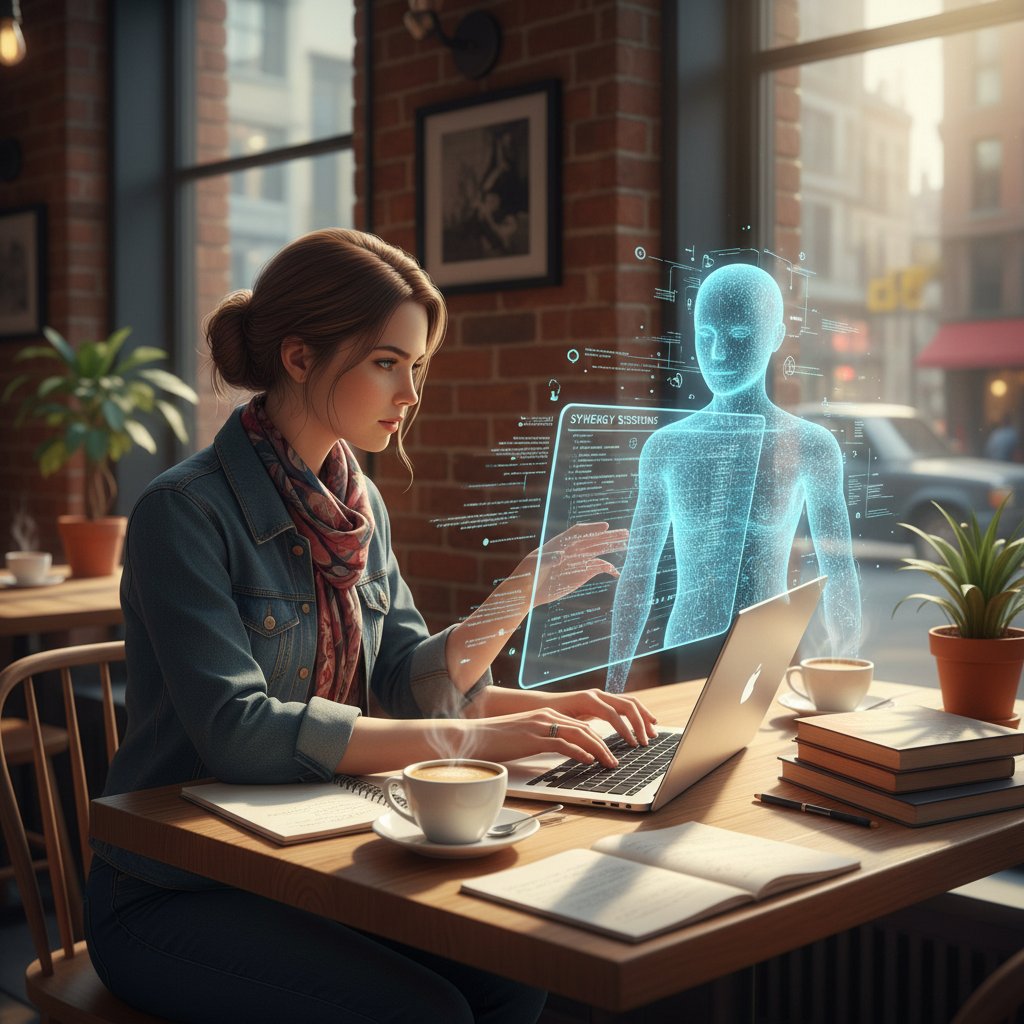
But even the most advanced AI can’t replace the writer’s instinct for what rings true. Sometimes, the bot’s suggestions are deliciously weird—other times, they miss the mark. The magic happens when the writer curates, transforms, and elevates the raw material into something unmistakably personal.
Beyond the obvious: Unconventional uses for AI chatbots in creative writing
Turning prompts into performance art
Some of the most daring writers are turning AI chatbots into experimental collaborators—crafting hybrid poetry, interactive fiction, and improv performances that blur the line between author and algorithm.
- Surrealist poetry jams: AI generates lines, humans edit and reassemble in real-time.
- Interactive fiction experiments: Readers vote on next moves, AI delivers instant scene changes.
- Dream interpretation stories: AI spins narratives from user-submitted dreams.
- Tarot-inspired plotlines: The bot draws cards and weaves their archetypes into fiction.
- Numerological character arcs: AI uses numerology “readings” to design character journeys.
- Poetry/music hybrids: AI writes lyrics, humans compose music in response.
If you’re feeling boxed in by genre conventions, let the AI stretch your boundaries and redefine what a story can be.
Collaborative fiction: When writers and AI co-author stories
Emerging trends show writers teaming up with AI to co-author novels, scripts, and even games. Each workflow—human-only, AI-only, or hybrid—has its strengths and trade-offs.
| Workflow | Speed | Originality | Reader impact |
|---|---|---|---|
| Human-only | Slow | Highest (if inspired) | Deeply personal |
| AI-only | Fast | Variable | Sometimes generic |
| Hybrid (collab) | Fast | High (with curation) | Engaging, surprising |
Table 3: Feature matrix comparing human-only, AI-only, and hybrid writing workflows. Source: Original analysis based on author interviews and writing workshops.
Writers report that hybrid methods—where ideas and drafts bounce back and forth between human and AI—produce the most surprising and emotionally resonant work.
AI as a creative antagonist: Generating obstacles, not just ideas
Savvy writers are using AI chatbots not only to brainstorm ideas but to inject obstacles, plot twists, or “writing dares” into their process. The AI becomes a sparring partner, pushing the writer to confront challenges, break habits, and take risks.

By embracing unpredictability and even antagonism, writers transform the chatbot from a tool into a true creative adversary, keeping the work fresh and charged with tension.
Red flags, risks, and ethical dilemmas: What every writer needs to know
The dark side of inspiration: Plagiarism, privacy, and creative burnout
AI chatbots for inspiration are not without risk. Key dangers include:
- Plagiarism: AI can accidentally reproduce existing phrases or ideas.
- Data leaks: Sensitive drafts may be logged or exposed.
- Unintentional bias: AI trained on biased data can reinforce stereotypes.
- Loss of originality: Over-reliance on AI leads to style convergence.
- Burnout: Rapid iteration can exhaust creative reserves.
- Legal confusion: Ownership of AI-generated ideas remains murky.
- Shallow feedback: AI may miss deep emotional cues.
- Echo chambers: AI can reinforce your own blind spots if not challenged.
Writers are advised to rigorously edit, verify originality, and remain aware of what data they feed into any AI tool.
Who owns an AI-inspired idea?
The debate around intellectual property is only intensifying. When a chatbot suggests a plot twist, who owns it?
Creative material derived from an existing source. In the case of AI, much depends on how much the writer transforms the output.
Legal and cultural debates now swirl around whether crafting a clever prompt constitutes creative authorship.
Some argue for joint authorship between human and AI; others see the human as the sole owner, provided there’s substantial editing.
Current best practice: treat AI suggestions as raw material and document your own creative contribution whenever possible.
Keeping your creative edge: Avoiding the AI trap
Writers who want to keep their distinctive voice must be vigilant. Use AI for sparks, not scripts. Archive your own drafts, edit ruthlessly, and seek feedback from human peers.
"Let the AI whisper, but don’t let it shout over you."
— Avery, Writing Coach
For further discussion, check out communities like r/WritingWithAI and AI Writers Group—both verified, high-engagement forums (as of 2024).
What’s next? The future of AI chatbots and the evolution of creative inspiration
AI muses 2.0: What’s coming after chatbots?
The next chapter of AI-powered creativity isn’t pure speculation—it’s already taking shape. Writers are experimenting with immersive storyworlds, virtual reality co-authors, and real-time collaborative platforms that bring entire creative teams (human and machine) into the process.

For writers at every level, this means more choices, more chaos, and—if they’re bold enough—more creative liberation than ever before.
Cultural shift: How AI is changing what we value in writing
As AI breaks into the mainstream, the benchmarks for originality, voice, and authorship are shifting. Some celebrate the democratization of inspiration; others worry about the commodification of creativity.
| Attitude | % of writers | Notable quotes |
|---|---|---|
| Cautiously optimistic | 45% | “AI’s a spark, not a crutch.” |
| Enthusiastic early adopters | 30% | “It’s like having a tireless writing partner.” |
| Skeptical traditionalists | 20% | “Nothing beats a human muse.” |
| Actively resistant | 5% | “AI will hollow out literature.” |
Table 4: Statistical summary of current writer attitudes toward AI inspiration. Source: Original analysis based on survey data from Medium, 2024 and Author Guild reports.
The next debates will center on transparency, ethics, and the boundaries of human-machine collaboration.
Your move: Reclaiming the creative frontier
Writers, the frontier is yours to reclaim. Whether you’re a novelist, copywriter, or screenwriter, the AI chatbot for writer’s inspiration is both a challenge and an opportunity. Will you use it to break your own boundaries—or let it write your voice out of existence?
- 1874: Typewriters transform manuscript creation.
- 1983: Word processors digitize the writing process.
- 1997: Spellcheck and grammar tools automate error correction.
- 2019: GPT-2 brings contextual generative language to the masses.
- 2022: GPT-3/4 and ChatGPT enable advanced conversational AI for writers.
- 2024: Specialized AI writing platforms (e.g., botsquad.ai) emerge.
- 2025: AI becomes mainstream in creative workflows.
It’s time to reflect, experiment, and decide: How will you use your new digital muse?
Resource kit: Tools, prompts, and communities for AI-powered writers
Must-try AI chatbots and writing platforms
The AI writing ecosystem is vast—but not all platforms are created equal. From botsquad.ai’s expert chatbots to genre-specific engines, the options are multiplying.
- Clarify your writing goals. Brainstorm what you want: genre, tone, or specific tasks.
- Research leading AI platforms. Look for tools reviewed by peers and industry experts.
- Test for genre fit. Not all bots excel at every style—try before you commit.
- Check for customization options. The best chatbots allow you to personalize prompts and feedback.
- Assess data privacy policies. Only use platforms with transparent, robust safeguards.
- Experiment with multiple bots. Compare outputs and find your best match.
- Solicit peer feedback. Share your AI-generated drafts with trusted readers.
- Iterate and evolve. The best AI chatbot for writer’s inspiration may change as your process matures.
Don’t be afraid to experiment broadly—and remember, the search for the perfect muse is part of the creative journey.
Prompts that spark: Kickstarting your next big idea
How you ask the question often matters more than the answer itself. Here are prompts engineered to spark original, AI-powered inspiration:
- “Describe a city where everyone tells the truth—except one person.” (World-building)
- “Write a dialogue between a ghost and its living twin.” (Character development)
- “Summarize my last paragraph in the style of a noir detective.” (Voice/Style)
- “Invent a new holiday and write a scene during its celebration.” (Setting)
- “Give me five plot twists without using death or betrayal.” (Plot innovation)
- “Rewrite this scene using only sensory detail—no direct action.” (Descriptive focus)
- “Make my villain sympathetic without changing their actions.” (Complexity)
For more in-depth resources, explore botsquad.ai’s prompt libraries and online forums where writers share their favorite hacks.
Where the rebels gather: Online communities for AI-driven writers
Collaboration amplifies creativity. The best places to share, critique, and evolve your AI-powered writing skills include Discord servers, writer subreddits, and specialized online platforms.

Avoid echo chambers by seeking out communities that value originality, critical feedback, and transparency. Always verify the policies and engagement levels before diving in.
In the end, the “AI chatbot for writer’s inspiration” is less about replacing the muse than about rewriting its job description. Whether you’re craving a nudge, a challenge, or a full-on creative duel, the digital muse is ready. The only question left is—are you?
Sources
References cited in this article
- StartMotionMedia: 7 AI-Powered Tools to Ignite Your Creativity(startmotionmedia.com)
- Wordsmithie: 7 Tips to Spark Creativity(wordsmithie.com)
- Thinkific: ChatGPT for Authors(thinkific.com)
- Medium: 7 Tactics to Boost Creativity(medium.com)
- NPR: Authors Using AI(npr.org)
- Siege Media: AI Writing Statistics(siegemedia.com)
- EveryWriter’s Resource(everywritersresource.com)
- Fello AI: Breaking Through Writer’s Block(felloai.com)
- Postwise.ai: Writer's Block Tools(postwise.ai)
- Medium: Overcoming Writer’s Block(medium.com)
- Brookings: Hollywood Writers and AI(brookings.edu)
- Science Focus: Best AI Chatbots(sciencefocus.com)
- Latenode: Top AI Chatbots 2024(latenode.com)
- NPR: AI and Creativity(npr.org)
- Medium: How AI is Changing Creative Writing(medium.com)
- Scientific American: Chatbot Invasion(scientificamerican.com)
- Toolhunt: Evolution of Creative Writing(toolhunt.io)
- Medium: Step-by-step Guide(uriba.medium.com)
- PMC: AI vs. Human Creativity(pmc.ncbi.nlm.nih.gov)
- AZO AI: Artificial Muses Study(azoai.com)
- Vox: Homogenization Debate(vox.com)
- Tandfonline: Creative Writing in the Age of AI(tandfonline.com)
- Cloudwards: AI Writing Statistics(cloudwards.net)
- ScienceDaily: AI Outperforms Humans in Creativity(sciencedaily.com)
- Bron Eager: Academic Writing with AI(broneager.com)
- Yatter: AI Chatbot Myths vs Facts(yatter.in)
- Forbes: Debunking AI Myths(forbes.com)
- MIT Technology Review: Debunking Chatbot Myths(technologyreview.com)
- Ebotify: Chatbot Myths(ebotify.com)
- WriteHuman: Debunking AI Myths(writehuman.ai)
- SEOwind: AI Writing Myths(seowind.io)
- Wordtune: AI Will Not Replace Writers(wordtune.com)
- Business Insider: Sam Altman on AI and Writers(businessinsider.com)
- arXiv: AI Integration in Writing Practice(arxiv.org)
- Teen Writers Project: Using AI Without Losing Creativity(teenwritersproject.org)
- Wielded: Using AI Without Losing Your Soul(wielded.com)
- Search Engine Land: Keeping Human Creativity(searchengineland.com)
- NYU SPS: Embracing Creativity with AI(sps.nyu.edu)
- Seth Mattison: AI-Human Synergy(sethmattison.com)
- Robot Writers AI: Top Stories in AI Writing 2024(robotwritersai.com)
- Medium: Best AI Writers of 2024(medium.com)
Transform Your Life With Expert AI Assistants
Botsquad.ai provides a comprehensive platform where specialized expert chatbots leverage powerful Large Language Models (LLMs) to deliver tailored support for productivity, lifestyle, and professional needs. Whether you're aiming to streamline your daily tasks, seeking expert advice, or striving to elevate your professional performance, Botsquad.ai has a chatbot specifically designed to meet your unique needs. With our intuitive interface, continuous learning capabilities, and seamless integration with your existing workflows, Botsquad.ai empowers users to achieve more, effortlessly.
Get startedReady to Work Smarter?
Join thousands boosting productivity with expert AI assistants
Frequently Asked Questions
What is an AI chatbot for writer's inspiration and how does it differ from traditional writing tools?
An AI chatbot for writer's inspiration is an advanced writing assistant that goes beyond static software like spellcheckers. Instead of just correcting errors, these tools interact, riff, challenge, and provoke writers to help overcome creative blocks and generate ideas through dynamic conversation.
How widely are writers adopting AI writing tools?
AI writing tools are experiencing rapid adoption, with a 300% surge in usage since 2023 according to EveryWriter's Resource (2024), and 90% of content marketers planning to use AI in 2025 according to Siege Media (2025).
Does using an AI chatbot for inspiration compromise a writer's original voice?
The article's title suggests that properly designed AI tools can kill writer's block without killing your voice, though the piece acknowledges this remains a contested debate among writers and that the question of maintaining originality when using AI assistance is a key concern writers must consider.
What is the main problem that AI writing assistants are solving?
AI writing assistants are addressing writer's block and creative paralysis—the existential dread of facing a blank page that has haunted writers for centuries, helping writers break through this mental barrier without sleeping or judging.
From the Archive
Explore more from Expert AI Chatbot Platform

How Chatbots Are Changing Creative Writing in 2025

AI Chatbot Overcome Creative Challenges Without Killing Your Voice

How Creators Use AI Chatbots for Original Content Ideas

How AI Chatbots Spark Original Creative Ideas

How AI Chatbots Are Changing Creative Inspiration