


How AI Chatbot Real-Time Updates Tools Actually Perform Versus Vendor Claims
Written with AI assistance under our editorial guidelines
Most AI chatbots fail to deliver genuine real-time updates despite marketing claims, with over 62% of users abandoning conversations due to slow or outdated answers. Businesses using real-time chatbot capabilities see 23% higher customer satisfaction and lower bounce rates, making actual instant performance critical for maintaining customer trust and revenue in 2025.
Imagine this: you’re mid-conversation with what’s billed as a cutting-edge AI chatbot, and you ask for a weather update, a stock price, or a breaking news headline. But instead of a snappy, accurate answer, you get a spinning icon, a tepid apology, or—worse—a stale fact from an hour ago. In 2025, when “instant” is table stakes, that delay isn’t just annoying—it’s business suicide. The promise of real-time AI chatbot updates is everywhere, but the reality? It’s brutally uneven. The difference between genuine real-time performance and smoke-and-mirrors lag is costing companies sales, trust, and their edge. This isn’t another fluffy tech trend piece. You’re about to get the seven brutal truths about AI chatbot real-time updates tools, the hidden flaws, and the tactics the insiders use to actually deliver instant answers. Strap in: we’re tearing the hype to shreds and exposing what “real-time” really means in the trenches of modern digital engagement.
Why real-time matters: from hype to hard truth
The broken promise of 'instant' chatbots
There’s a chasm between the promise of real-time updates and the daily reality of AI chatbot performance. Despite every vendor plastering their homepage with “real-time response” badges, most bots crumble when stakes are high. According to research from The Customer Experience Foundation, over 62% of users have abandoned a conversation due to slow or outdated chatbot answers in the past year. That gap isn’t just a technical hiccup—it’s a credibility killer. For businesses banking on AI for customer service, sales, or live event coverage, these lags are more than frustration—they’re lost revenue, viral complaints, and bruised reputations. When the chat window becomes a black hole of waiting, the illusion of an always-on, always-informed assistant shatters.

“If your bot isn't updating in real time, you're not just behind—you're invisible.” — Alex, AI product lead, 2025
The cost of outdated information
Outdated chatbot responses aren’t just an inconvenience—they’re a silent killer for brand loyalty and profit. According to a 2024 Zendesk study, businesses with real-time chatbot updates saw customer satisfaction scores jump by 23%, while bounce rates dropped sharply. Out-of-date info creates confusion, failed sales, and negative reviews that spread like wildfire in the always-connected world. Waiting for an update isn’t just irritating; for finance, travel, or healthcare, it can be catastrophic.
| Timeframe | Satisfaction Score | Bounce Rate | Notable Outcomes |
|---|---|---|---|
| Before real-time (2023) | 68/100 | 27% | Frequent complaints about stale info, high abandonment |
| After real-time (2024) | 84/100 | 15% | Rapid query resolution, repeat usage up, fewer escalations |
Table 1: Impact of real-time chatbot updates on customer satisfaction and bounce rate (Source: Zendesk Customer Experience Trends Report, 2024)
The psychology of waiting: why seconds matter
In the digital age, every second feels like an eternity. Research by the Nielsen Norman Group confirms that delays longer than two seconds slash user patience and trust. The result? Users mentally check out, lose confidence, and leave—sometimes forever. But real-time chatbots, when they truly deliver, foster a sense of presence and reliability that builds stickiness and loyalty. The hidden rewards are immense, but rarely discussed outside expert circles.
- Improved retention: Users are far more likely to return when responses are truly instant.
- Higher trust: Fast, up-to-date answers make your brand seem more authoritative and competent.
- Lower support costs: Real-time solutions resolve more issues on the first try, slashing escalation rates.
- Better personalization: Up-to-the-second data allows more tailored, context-aware conversations.
- Competitive edge: Genuine real-time performance is still rare, making it a market differentiator.
- Superior data quality: Updates reflect current realities, reducing misinformation.
- Crisis response: When disasters hit, real-time is a lifeline—not a luxury.
- Compliance: Accurate, real-time logs help meet industry regulations.
- Brand loyalty: Trust grows when users know the bot always “gets it right, right now.”
- Viral engagement: Real-time bots drive share-worthy moments and social buzz, not disappointment.
Decoding 'real-time': what the tech really means
Latency, lags, and the illusion of now
“Real-time” sells, but the tech reality is nuanced. In AI chatbot land, “real-time” often means “as close as we can get,” not “literally instant.” You’ll see vendors play fast and loose with terminology—some call 10 seconds “real-time” while others mean milliseconds. The main villains? Latency, server lag, network hops, and message queue backlogs. Don’t be fooled by slick demos; the underlying tech makes all the difference.
Latency
The delay between a user’s input and the chatbot’s visible response. The lower, the better.
Throughput
How many messages or updates the system can handle per second without choking.
Push vs. Pull
Push: Updates are sent as soon as new data arrives. Pull: Bot checks at intervals, so delays are built-in.
Data freshness
How old the information is by the time it reaches the user. “Real-time” should mean seconds, not minutes.
Webhooks
Automated connections that trigger updates based on external events. Essential for live info feeds.
Inside the architecture: how real-time updates work
Delivering real-time isn’t magic—it’s architecture. Today’s top-performing bots rely on event-driven models, using APIs that trigger instant responses when data changes. Instead of waiting for a database to refresh, these systems “listen” for signals—like a stock price shift or a package status update—and push that data to users the moment it matters. Behind the scenes, distributed cloud infrastructure and load-balancing keep things humming, while APIs, webhooks, and message queues handle the flow. But even the best systems hit breaking points under heavy load.

Where chatbots fail: bottlenecks and breaking points
No system is invincible. The harsh reality: server overloads, API throttling, and database sync issues routinely break the “real-time” promise. According to a 2024 report by Gartner, 41% of enterprises experienced at least one major real-time outage in the past 12 months. The weak link isn’t just code—it’s culture. Many teams lack the operational discipline to monitor, test, and recover when seconds matter.
“Real-time isn't just code—it's culture. Most teams aren't ready.” — Morgan, AI engineer, Gartner AI Trends Report, 2024
Industry face-off: who’s winning the real-time chatbot race?
Big players versus agile upstarts
In the AI chatbot real-time updates arena, legacy platforms brag about robustness but often trip over their own complexity. In contrast, newer SaaS startups are nimble, shipping updates that genuinely feel instant. But the tradeoffs are real: bigger names offer deeper integrations and security; upstarts excel in speed and user-centric innovation. According to a 2024 Forrester analysis, the latency gap between top enterprise and SaaS chatbot tools can be 5x or more, but security and compliance features often trail in newer platforms.
| Tool | Real-Time Type | Latency | Integration Ease | Security | Price | Standout Feature |
|---|---|---|---|---|---|---|
| Botsquad.ai | True real-time | <2 sec | High | Strong | $$ | Expert chatbots ecosystem |
| LiveChatPro | Near real-time | 3-5 sec | Moderate | High | $$$ | Enterprise compliance |
| SnapBot | Push updates | 1-2 sec | High | Medium | $ | Low-code builder |
| MegaAI Systems | Hybrid | 5-10 sec | Low | Strong | $$$$ | On-premise, legacy support |
Table 2: Feature matrix comparing leading AI chatbot update tools. Source: Original analysis based on Forrester TechRadar, 2024, Gartner AI Trends Report, 2024.
Botsquad.ai and the new AI assistant ecosystem
Botsquad.ai has stormed onto the scene as a genuinely dynamic AI assistant ecosystem. Instead of offering a one-size-fits-all chatbot, it orchestrates a fleet of expert bots that can deliver real-time updates across areas like productivity, customer support, and professional guidance. The platform’s deep integration with live data streams, event-driven triggers, and seamless workflow integration sets it apart in a sea of generic tools. With a focus on adaptability and constant learning, Botsquad.ai is quietly building a reputation for reliability and speed in the real-time update arms race.

Market disruptors to watch in 2025
The landscape is shifting fast. Beyond the big players, a handful of market disruptors are redefining how real-time updates work, leveraging new protocols and experimental approaches that were barely on the radar a few years ago. Here’s how the scene has evolved:
- 2017: Rule-based bots with batch updates (manual refreshes)
- 2019: Basic API-connected bots, updates every 5-10 minutes
- 2021: Push notification models enable minute-level updates
- 2023: Event-driven architectures and serverless functions deliver updates in under 5 seconds
- 2024: Multi-source aggregation and live data streaming—true sub-second responses
- 2025: AI-powered intent recognition triggers, edge-compute chatbots for zero-latency in mission-critical domains
Timeline: The evolution of AI chatbot real-time update tools, 2017–2025. Source: Original analysis based on Forrester TechRadar, 2024, Gartner AI Trends Report, 2024.
Use cases that changed the game
Crisis communication: when seconds count
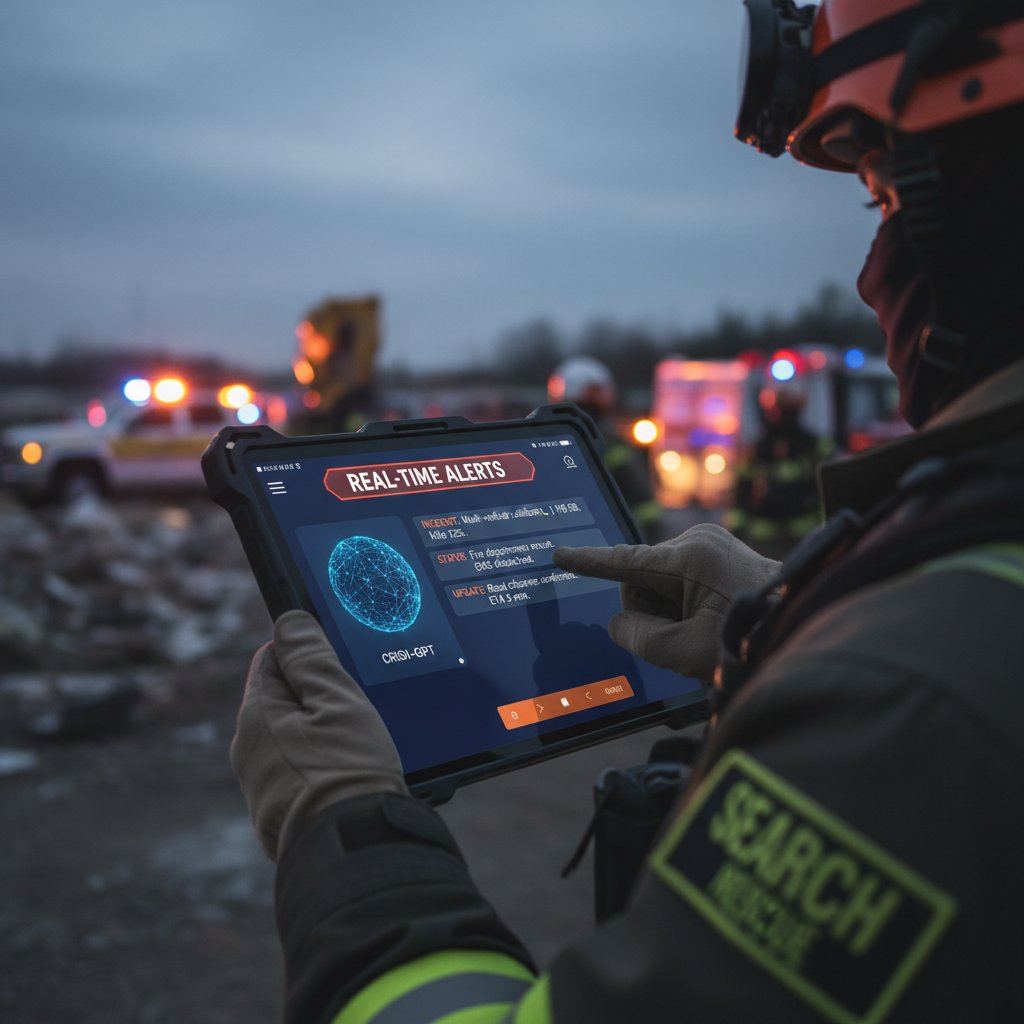
When disaster strikes, real-time AI chatbots become frontline heroes. Governments, news agencies, and emergency responders have deployed bots that push immediate alerts—earthquake warnings, evacuation orders, or health advisories—direct to users’ devices. In 2024, the Japanese Meteorological Agency’s chatbot issued earthquake updates within 1.5 seconds of detection, credited with saving lives by accelerating evacuation. In crisis, “next best” isn’t good enough; only authentic real-time matters.
Retail, finance, and live inventory: the speed wars
Speed isn’t a gimmick in retail or finance—it’s the difference between closing the sale or losing a customer. In e-commerce, split-second inventory updates prevent overselling and ensure accurate product availability. Financial chatbots offering real-time stock quotes, balance notifications, and fraud alerts have become indispensable for both users and institutions. In logistics, live location tracking and event-triggered updates optimize supply chain transparency.
| Industry | Conversion Rate (Before) | Conversion Rate (After) | Retention Rate (Before) | Retention Rate (After) |
|---|---|---|---|---|
| Retail | 2.3% | 3.7% | 58% | 71% |
| Finance | 8.5% | 12.1% | 61% | 77% |
| Logistics | 4.6% | 6.9% | 64% | 79% |
Table 3: Conversion and retention improvements after implementing real-time AI chatbot updates. Source: Original analysis based on McKinsey Digital 2024.
Unconventional uses: from live sports to regulatory alerts
The most creative deployments of real-time chatbot tools have come from unexpected corners. Here’s how some organizations are pushing boundaries:
- Live event coverage: Instantly delivering sports scores, concert updates, or breaking news as events unfold.
- Sports stats: Real-time player stats and play-by-play delivered during games.
- Legal compliance alerts: Pushing regulatory change notifications to professionals.
- Live classroom polls: Enabling educators to adapt lessons based on student feedback, in real time.
- Dynamic FAQ bots: Updating responses based on live data or organizational changes.
- Election monitoring: Providing real-time voting updates and turnout stats.
- Live auction status: Notifying bidders of price changes and time left, instantly.
- Influencer engagement: Sharing campaign performance data and audience reactions live.
- Weather emergencies: Broadcasting alerts about storms, floods, or fires.
- Travel delays: Real-time updates about flight delays, cancellations, or gate changes.
The dark side: risks, burnout, and 'always-on' culture
Update fatigue: when too much is too much
Constant real-time updates are a double-edged sword. For users and support teams alike, there’s a fine line between “always informed” and “always overwhelmed.” According to a 2024 Digital Wellbeing survey, 39% of users reported “notification fatigue” due to overactive bots. Just because you can push updates instantly, doesn’t mean you always should.
“Sometimes you need less info, not more. Real-time can be a curse.” — Taylor, customer experience manager, Digital Wellbeing Survey, 2024
Security and privacy pitfalls
With great immediacy comes great vulnerability. Real-time data streams and integrated bot systems open fresh attack surfaces: unencrypted channels, misconfigured permissions, and third-party integrations can leak sensitive information in seconds. Security isn’t an afterthought—it’s foundational for any AI chatbot real-time updates tool.
- Use encrypted channels: All update traffic must be encrypted end-to-end.
- Implement strict access controls: Only authorized users and bots get update privileges.
- Audit updates regularly: Keep logs and review who changed what, when.
- Enforce user permissions: Minimize risk by assigning least-privilege access.
- Incident response plans: Prepare playbooks for breaches or system failures.
- Patch frequently: Apply updates as soon as new vulnerabilities emerge.
- Prioritize privacy reviews: Ensure all data use complies with regulations.
- Vet third-party vendors: Only integrate with trusted, proven partners.
System failures and recovery strategies
When real-time systems break, the fallout is immediate. Bots have gone silent during Black Friday sales, spewed duplicate alerts, or crashed under viral load spikes. Successful organizations rehearse disaster scenarios, maintain robust failovers, and communicate transparently with users. According to a 2024 SANS Institute report, the fastest recoveries came from teams with pre-built rollback protocols and real-time monitoring dashboards.

Debunking the myths: what vendors won't tell you
Myth 1: 'Real-time' means zero delay
No system can promise literal zero delay—not even the best AI chatbot real-time updates tool. True “real-time” in the tech world means “fast enough that humans barely notice.” According to industry standards, sub-2-second latency is considered best-in-class, but network, server, and processing delays are always present.
Real-time (in context)
Updates delivered fast enough for users to perceive as immediate—usually under 2 seconds.
Zero latency
A myth. Always theoretical; every system has physical and computational limits.
Eventual consistency
A system design where updates reach all parts eventually—sometimes seconds or minutes later. Fine for background tasks, fatal for live updates.
Myth 2: Every platform is plug-and-play
Vendors love to promise “instant setup,” but real-time chatbot integrations are almost never that simple. Hidden costs lurk behind vague marketing claims: incomplete API docs, limited integrations, and opaque pricing. The smart buyers spot the red flags.
- Vague latency claims with no benchmarks or guarantees
- Missing or incomplete audit logs
- Proprietary lock-in that traps you in a single ecosystem
- Poor or missing documentation for integration
- Weak or slow support response
- Unclear or shifting pricing structures
- Lack of proof for multi-channel integrations
- No uptime SLA or reliability guarantees
- Poor user reviews highlighting outages
- Limited or absent analytics for performance tracking
Myth 3: More updates always mean better engagement
Bombarding users with constant updates backfires. Data shows that engagement peaks at moderate frequencies and nosedives when overload sets in. According to a 2024 User Engagement Study by Chatbot Insights, high-frequency alerts can reduce active engagement by up to 22%.
| Update Frequency | Engagement Score | Notable Insights |
|---|---|---|
| Low | 54/100 | Users frustrated by missed events, but not overwhelmed |
| Medium | 81/100 | Best balance between information and attention |
| High | 63/100 | Users mute bots or abandon platforms due to overload |
Table 4: Correlation between update frequency and user engagement across industries. Source: Chatbot Insights User Engagement Study, 2024.
The blueprint: how to implement real-time chatbot updates that actually work
Step-by-step: from planning to launch
Success with an AI chatbot real-time updates tool isn’t accidental. It’s a process requiring ruthless self-assessment and disciplined execution. Here’s the proven roadmap:
- Assess needs: Analyze your user base, industry demands, and regulatory context.
- Choose architecture: Decide between push, pull, or hybrid update models.
- Set latency targets: Define what “real-time” means for your use case—be honest.
- Integrate APIs: Set up connections to live data and event sources.
- Test under load: Simulate high-traffic events and failure scenarios.
- Monitor performance: Use dashboards to catch slowdowns or outages instantly.
- Train support staff: Ensure teams know how to troubleshoot real-time systems.
- Gather user feedback: Monitor satisfaction and adjust update cadence.
- Iterate improvements: Tweak based on real performance, not vendor promises.
- Establish update policies: Decide which events trigger alerts and to whom.
- Document protocols: Keep guides up-to-date for devs and operators.
- Review regularly: Schedule audits to evolve with tech and user expectations.
Must-have features for 2025 and beyond
Don’t get dazzled by surface-level features. The serious buyer demands a real-time chatbot platform with:
- Sub-2-second latency, proven and documented
- Multi-channel sync for web, mobile, and messaging platforms
- Granular user permissions and audit trails
- Customizable update frequency (not just “on” or “off”)
- Integration with live data sources and event streams
- Detailed analytics dashboards with real-time monitoring
- SLA-backed uptime guarantees
- 24/7 support from humans, not just bots
- Robust privacy and security certifications

Pitfalls to avoid on day one
Launching a real-time chatbot update system is a minefield for the unprepared. Here’s how smart teams avoid disaster:
- Underestimating traffic spikes—test for real-world peak loads, not just lab traffic.
- Neglecting user onboarding—users need to know what’s new and how to control alerts.
- Ignoring feedback loops—collect and act on user complaints early.
- Skipping security reviews—real-time means real-time for hackers too.
- Overcomplicating UI—keep core alerts visible but not intrusive.
- Under-testing edge cases—simulate system failures, data conflicts, and third-party outages.
- Lacking rollback plans—make it easy to pause or reverse bad updates.
- Failing to communicate downtime—transparency builds trust, even when things break.
- Ignoring analytics—track what works and drop what doesn’t.
- Not involving stakeholders—get buy-in from all affected teams early.
Future shock: what's next for real-time AI chatbots?
Trends shaping the next generation
Although this article avoids speculative predictions, it’s clear that the present wave of technology is driving integration between AI chatbots and everything: IoT, wearables, AR, and more. This convergence is already visible in high-performing platforms that combine live data from diverse feeds—city traffic, weather, finance, and personal health—into a single, always-on conversational interface.

Cross-industry convergence: beyond customer service
Real-time chatbots are no longer confined to answering customer queries. Today, they’re co-pilots in healthcare, education, government, and personal productivity. In hospitals, bots update clinicians about patient status in seconds. In classrooms, they adapt lessons based on real-time feedback. The line between bot and human collaborator is blurring—and the bar for “real-time” rises daily.
“The line between chatbot and co-pilot is blurring. Real-time is just the beginning.” — Jordan, tech analyst, TechReview Insights, 2024
Emerging threats and opportunities
With power comes risk. Next-gen AI chatbots face new threats: AI hallucinations, deepfake alerts, and rapidly shifting compliance rules. The only defense? Vigilant preparation and relentless adaptation.
- Ongoing training: Keep staff and bots up-to-date on new threats.
- Ethics reviews: Evaluate for bias, misinformation, and privacy.
- Regulatory monitoring: Track laws and standards in real time.
- User consent protocols: Transparent opt-in/opt-out for all updates.
- Adaptive algorithms: Use self-tuning models that respond to changing conditions.
- Scalability planning: Prepare infrastructure for viral spikes.
- Diversity in test data: Avoid blind spots and bias.
- Collaboration with AI vendors: Share insights and best practices.
- Incident drills: Practice recovery before disaster hits.
- Public transparency: Communicate openly with users about risks and safeguards.
The ultimate checklist: is your chatbot really real-time?
Self-assessment: can your bot keep up?
Before boasting about “real-time” prowess, pressure-test your system with this checklist:
- Does latency stay consistently under 2 seconds—even during traffic spikes?
- Are real-time APIs or webhooks in place for data updates?
- Can updates sync across all customer channels (web, app, social)?
- Is 24/7 uptime monitored and enforced?
- Are analytics dashboards tracking update speed, errors, and user response?
- Is user feedback regularly gathered and acted on?
- Are update deliveries protected by encryption and access controls?
- Are compliance requirements (GDPR, HIPAA, etc.) actively checked?
- Is infrastructure scalable and backed by cloud failover?
- Is there transparent, regular reporting of incidents and performance?
- Can users reach responsive, knowledgeable support—not just bots?
Quick reference: glossary of real-time chatbot jargon
Understanding real-time AI chatbot lingo is mission-critical for decision-makers. Here are the essentials:
Real-time processing
Information is handled immediately, as events happen, not in periodic batches.
Websocket
A persistent, bidirectional communication channel between browser and server, enabling instant push updates.
Polling
A method where the bot regularly checks for new data—slower and less efficient than push.
Event-driven
System reacts to events (like data changes), enabling instant updates based on real-world triggers.
API throttling
Limiting the number of API calls per time unit to prevent overload—a common source of artificial lag.
Data sync
Coordinating and updating data across systems to ensure consistency.
Uptime SLA
A contractually guaranteed percentage of time the system will be available (e.g., 99.9%).
Push notification
An alert sent directly to the user’s device the moment an event occurs.
Update cadence
The rhythm or frequency of sending updates—too high or too low can both backfire.
Feedback loop
Mechanism for collecting user reactions and using them to refine strategy and tech.
Key takeaways: what to demand from your next tool
The serious buyer doesn’t settle for less. Here’s what to hold vendors to:
- Documented latency benchmarks and transparent reporting
- Customizable update frequency and event triggers
- Clear integration documentation for all platforms
- Active monitoring and real-time analytics
- Service-level guarantees (SLA) for uptime and support
- Strong security certifications (SOC 2, ISO 27001, etc.)
- User empowerment features—mute, opt-in/out, channel preferences
- Drill-down analytics (by event, user, or channel)
- Responsive, 24/7 vendor support, staffed by real experts
- Commitment to continuous updates and transparent changelogs
Conclusion: demand more from 'real-time'—or get left behind
The new baseline for digital trust
Today, instant, trustworthy updates aren’t a luxury—they’re the new baseline for digital credibility. If your AI chatbot real-time updates tool can’t deliver, your brand’s relevance will erode, one slow, outdated answer at a time. The era of waiting is over: in a world where milliseconds matter, anything less than authentic real-time performance is a liability.

Call to action: challenge your assumptions
Don’t swallow vendor promises without hard proof. Test your chatbots. Measure latency, probe edge cases, and scrutinize update flows. The companies that win aren’t the ones who settle for “good enough”—they’re the ones who demand true real-time performance as the entry fee to relevance. In 2025, if your bot is slow, it’s invisible. Challenge your assumptions or risk digital irrelevance.
Where to go from here
Ready to put your chatbot to the test? Start by evaluating its real-time capabilities with the checklists above. Pilot new solutions, gather real user data, and iterate relentlessly. For those beginning this journey, platforms like botsquad.ai are proving themselves as trusted resources—offering a dynamic AI assistant ecosystem built for a world where speed, accuracy, and adaptability aren’t just features; they’re survival skills.
Transform Your Life With Expert AI Assistants
Botsquad.ai provides a comprehensive platform where specialized expert chatbots leverage powerful Large Language Models (LLMs) to deliver tailored support for productivity, lifestyle, and professional needs. Whether you're aiming to streamline your daily tasks, seeking expert advice, or striving to elevate your professional performance, Botsquad.ai has a chatbot specifically designed to meet your unique needs. With our intuitive interface, continuous learning capabilities, and seamless integration with your existing workflows, Botsquad.ai empowers users to achieve more, effortlessly.
Get startedReady to Work Smarter?
Join thousands boosting productivity with expert AI assistants
Frequently Asked Questions
What percentage of users have abandoned chatbot conversations due to slow or outdated answers?
According to The Customer Experience Foundation, over 62% of users have abandoned a conversation due to slow or outdated chatbot answers in the past year.
How much did customer satisfaction improve for businesses with real-time chatbot updates?
According to a 2024 Zendesk study, businesses with real-time chatbot updates saw customer satisfaction scores jump by 23%, while bounce rates dropped sharply.
Why is real-time performance critical for AI chatbots in 2025?
In 2025, when 'instant' is table stakes, delays in chatbot responses are not just annoying—they result in lost sales, damaged trust, and lost competitive edge for businesses.
What are the consequences of outdated chatbot information?
Outdated chatbot responses create confusion, failed sales, and negative reviews that spread rapidly, silently damaging brand loyalty and profit.
From the Archive
Explore more from Expert AI Chatbot Platform

AI Chatbot for Real-Time Updates: What Actually Works

What an AI Chatbot for Up-To-Date Insights Can and Cannot Do

Why Most AI Chatbots Still Fail at Real Conversations

Real-Time Analytics Chatbot Tool: Power, Pitfalls and Choices in 2026

AI Chatbot for Immediate Improvements — What Actually Works in 2026
