
Chatbot Onboarding Best Practices That Reduce User Drop-Off: Nine Key Strategies
Written with AI assistance under our editorial guidelines
Effective chatbot onboarding is critical in 2025 because users form judgments in milliseconds and quickly abandon poorly designed experiences. Personalized, well-structured onboarding increases user retention by 82% and completion rates by 70%, while generic or clunky onboarding causes rapid churn before users discover the chatbot's actual value.
Forget the lifeless “welcome to our chatbot” cliché. In 2025, chatbot onboarding is a high-stakes game—users show up with sky-high expectations, zero patience for friction, and an arsenal of experience with smarter, sharper AI. Brands that still treat onboarding as a box-ticking afterthought are hemorrhaging engagement, credibility, and, ultimately, revenue. This isn’t hyperbole; research demonstrates that personalization in onboarding skyrockets new hire retention by 82% and boosts efficiency by up to 70% (Master of Code, 2024). Meanwhile, a single clunky interaction can torch a user’s trust in seconds, sending them straight into the arms of your competitors.
This article rips the curtain off chatbot onboarding best practices. We’ll unravel the myths, expose the red flags, and lay out 9 brutal truths reshaping how AI onboarding is done—right now. You’ll find the evidence, the screw-ups, the hidden costs, and the actionable strategies to make your onboarding not just functional, but magnetic. Ready to confront the hard truths? Let’s get into the anatomy of chatbot onboarding success—and disaster—in 2025.
Why chatbot onboarding is make or break in 2025
The hidden stakes of first impressions
The digital world runs on expectations—expectations that only escalate year after year. In 2025, users judge a chatbot in milliseconds. If the onboarding feels generic, robotic, or confusing, most won’t stick around long enough to see its true value. According to a recent report by Master of Code, chatbots with well-designed, personalized onboarding flows can increase new user retention by 82% and drive onboarding efficiency up by 70%. On the flip side, users exposed to clunky onboarding often churn before they even complete registration.

| Year | Onboarding Type | Average User Retention | Average Completion Rate |
|---|---|---|---|
| 2024 | Generic onboarding | 48% | 44% |
| 2024 | Optimized onboarding | 78% | 68% |
| 2025 | Generic onboarding | 45% | 40% |
| 2025 | Optimized onboarding | 82% | 70% |
Table 1: User retention and completion rates for chatbots with generic vs. optimized onboarding flows.
Source: Original analysis based on Master of Code, 2024, DemandSage, 2024
These numbers don’t just tell a story of minor improvements—they spell out the difference between scaling up and spiraling down.
How onboarding failures tank your ROI
A bot that fails at onboarding is more than a user experience embarrassment—it’s a financial sinkhole. Every dollar invested in user acquisition is at risk if onboarding can’t convert curious users into engaged advocates. According to research by DemandSage, brands lose not only immediate conversions but also long-term customer lifetime value when onboarding falters (DemandSage, 2024). It’s a cascading effect: users bounce out, support tickets spike, and your brand credibility erodes.
“If you fumble onboarding, you’re basically setting fire to your user acquisition budget.” — Jenna
The fallout is more than just numbers on a spreadsheet. Support teams become swamped with preventable queries, customer loyalty takes a nosedive, and your AI’s reputation becomes fodder for negative word of mouth. Brands with weak onboarding often spend months in damage control, while their competitors quietly reap the rewards of higher engagement and stickier user relationships.
Red flags most teams overlook
- One-size-fits-all flows: Users crave relevance. Drop the cookie-cutter scripts—if onboarding doesn’t adapt, engagement tanks.
- Endless, irrelevant questions: Users don’t want to feel like they’re filling out a tax form. Every unnecessary question is a loyalty leak.
- Invisible KPIs: If you can’t measure onboarding success in real time, you’re flying blind.
- No clear human handoff: According to DemandSage, 2024, 46% of customers still want real humans—bots that dead-end or stall without escalation are a recipe for frustration.
- Opaque data practices: Users are hypersensitive to privacy. Any lack of transparency triggers distrust.
Consider the infamous 2024 food delivery bot that bombarded users with irrelevant dietary questions—users dropped off in droves, social media roasted the brand, and the bot was pulled within weeks. The lesson? Every overlooked detail in onboarding is a potential brand crisis-in-waiting.
The myths that sabotage chatbot onboarding
Myth #1: Onboarding is just a welcome message
Many teams equate onboarding with a cheery “Hi, I’m your new bot!” and call it a day. In reality, this is onboarding malpractice. Greeting users is the barest minimum—true onboarding orchestrates a sequence of micro-interactions that orient, educate, and excite. A simple “hello” without meaningful context is the digital equivalent of dumping someone in a maze and locking the door.

Effective onboarding is a multi-phase journey. It begins with a warm, branded greeting—but it must quickly progress into goal discovery, feature highlighting, permission requests, and trust-building, all tailored to real human needs. Only then can users find their footing and start to see value.
Myth #2: Users don’t want guidance
There’s a stubborn myth that users want to “just get started” with zero hand-holding. But research tells a different story. As ProProfs’ 2024 survey points out, 64% of businesses hesitate to deploy chatbots because customers are reluctant to engage with bots—often due to lack of clarity and poor guidance. Users hate being left adrift in a digital void.
“Nobody wants to feel stupid talking to a bot. Guidance is respect.” — Marcus
The worst onboarding flows ask users to guess at next steps, leading to confusion and drop-off. The best ones offer contextual tips, gentle nudges, and helpful microcopy at every turn—transforming onboarding from a hurdle into a collaborative experience.
Myth #3: More features means better onboarding
Feature bloat is the silent killer of engagement. Teams pile on buttons, options, and flows in the name of comprehensiveness, only to create onboarding labyrinths that exhaust and repel users. According to recent industry analysis, streamlining onboarding to its core essentials dramatically improves completion rates.
| Onboarding Approach | Avg. Features Introduced | Completion Rate |
|---|---|---|
| Feature-bloated | 8-12 | 38% |
| Streamlined/minimalist | 3-5 | 67% |
Table 2: Impact of feature bloat vs. streamlined onboarding on user completion rates.
Source: Original analysis based on Master of Code, 2024, Botpress, 2024
For instance, a minimalist fintech bot that onboards users with just three core questions saw completion rates double compared to a full-featured rival—proof that clarity trumps complexity.
The anatomy of high-converting chatbot onboarding
Mapping the ideal onboarding journey
Every user’s onboarding journey is a psychological tightrope walk—balancing curiosity, confusion, skepticism, and, hopefully, emerging trust. The most effective onboarding flows guide users through these stages with surgical precision.
- Acknowledge and orient: Start with a branded, relatable greeting. Show users you know who they are (without being creepy).
- Clarify the value: Clearly state what the chatbot can—and can’t—do. Set expectations to reduce friction.
- Contextual discovery: Use adaptive flows to learn about the user’s goals and tailor subsequent steps accordingly.
- Early quick win: Offer an immediate, tangible benefit (e.g., a personalized suggestion or answer) to hook the user.
- Transparent data practices: Openly explain what data the bot will access or store and why.
- Progress indicators: Show users how far they’ve gone and what’s next—eliminate ambiguity.
- Seamless handoff: Provide a clear path to a human agent if needed, as nearly half of users still prefer humans at key moments (DemandSage, 2024).
- Feedback loop: Nudge users to share thoughts on the onboarding experience for continuous improvement.
Most teams get lost by either overwhelming users up front, hiding value behind confusing menus, or ignoring the emotional arc of onboarding entirely.
Personalization: From buzzword to baseline
Personalization is not a luxury; it’s the price of entry. Bots that dynamically adapt onboarding flows based on real-time signals—location, intent, previous interactions—make users feel seen and valued. According to Master of Code, 2024, personalized onboarding can boost efficiency by up to 70%.

Platforms like botsquad.ai lead by example, empowering teams to craft onboarding experiences that flex around user preferences, behaviors, and goals. This isn’t just “nice to have”—it’s a non-negotiable for retention and satisfaction in 2025.
Microcopy and tone: The silent persuaders
The words your bot uses—microcopy, error messages, confirmations—shape the user’s emotional journey and trust level. A single misplaced phrase can kill the vibe, while empathetic, brand-aligned language turns skeptics into converts.
Onboarding Microcopy Glossary
The first impression—should be warm, clear, and on-brand. “Hey Alex, ready to master your schedule?”
Short notes like “Step 2 of 4” or “Almost there!” reduce anxiety and encourage completion.
Clear, blame-free guidance. “Hmm, I’m missing your email—could you try again?”
Honest statements like “We’ll keep your info private and never share without permission” build trust.
Compelling, actionable prompts. “Show me how!” beats “Start.”
When writing onboarding copy for 2025, ditch the robotic and embrace the human: use plain English, show empathy, inject subtle humor, and always give users a sense of progress.
Case studies: Onboarding wins and trainwrecks
SaaS onboarding done right
Picture this: a B2B SaaS provider launches a new AI assistant. Instead of throwing users into the deep end, the onboarding bot opens with a personalized greeting, asks two key questions about role and goals, and instantly delivers a “quick win” feature demonstration. The results? Onboarding completion rates spike from 38% to 74%, and support ticket volume drops by 30% within a month.

The key lessons? Ruthless focus on user intent, tight feedback loops, and progressive disclosure of features—never all at once.
The hall of shame: Onboarding gone wrong
In contrast, consider a notorious 2024 retail bot that required users to fill out a 10-step form before offering a single value prop. User outrage hit social platforms, abandonment surged, and the company spent months regaining trust.
| Year | Major Fail | Solution Implemented | Outcome |
|---|---|---|---|
| 2022 | Overlong form | Reduced steps, contextual help | +22% retention |
| 2023 | No progress bar | Added visual indicator | -15% drop-off |
| 2024 | Feature overload | Streamlined onboarding | +30% completion rate |
Table 3: Timeline of chatbot onboarding best practices evolution, with key fails and fixes.
Source: Original analysis based on Master of Code, 2024, DemandSage, 2024
What’s the bottom line? Ignore user frustration at your peril—brands that own up, simplify, and optimize survive the backlash.
Cross-industry inspiration: Learning from gaming & edtech
Some of the smartest onboarding tricks come from outside tech. Gaming uses guided “first missions,” while edtech platforms break onboarding into bite-sized micro-lessons.
- Progressive unlocking: Only reveal features as users need them—keeps engagement high.
- Reward loops: Offer small rewards (points, badges, early access) for each onboarding milestone.
- Personal story arc: Adapt onboarding to reflect the user’s background or goals, turning routine steps into a narrative.
For enterprise bots, these lessons translate to micro-milestones, adaptive flows, and onboarding “missions” that keep even skeptical users hooked.
Psychology and engagement: The science behind onboarding
Cognitive load and user drop-off
The human brain has limits. Overwhelming users during onboarding triggers cognitive overload—a leading cause of chatbot abandonment. If users face too many choices, cryptic jargon, or unclear next steps, their instinct is to hit the exit.

To cut onboarding friction:
- Chunk information into digestible steps.
- Use clear, action-oriented language.
- Display progress indicators and offer undo/skip options.
- Pre-fill data where possible to reduce input fatigue.
Research from Botpress, 2024 confirms that onboarding flows with 3-5 steps see 40% greater completion rates than those with 8+ steps.
Motivation, reward, and habit formation
Onboarding isn’t a cold funnel; it’s a ritual. The best chatbots trigger dopamine by delivering small victories—“Nice work, you’re set up!” moments that reinforce positive behavior.
“Great onboarding isn’t just a funnel—it’s a ritual that sticks.” — Priya
Tie onboarding steps to meaningful rewards, whether it’s a personalized dashboard, instant help, or even a celebratory message. According to behavioral science, these micro-rewards lay the foundation for long-term engagement—and brand loyalty.
Trust-building in the age of AI skepticism
AI anxiety is real. Users are wary of bots asking for personal data, skeptical of “too good to be true” promises, and quick to bail at the first sign of manipulation.
The antidote? Ruthless transparency, immediate opt-outs, and explicit explanations of how data is used. According to Botpress, 2024, users who understand why a bot requests certain info are 2.5x more likely to complete onboarding.
Key onboarding trust signals
Clearly state what’s being collected and why.
Offer a direct line to a human agent whenever needed.
Show users their status and what’s next.
Human, approachable language builds comfort and credibility.
Avoiding disaster: Common onboarding pitfalls
Dark UX patterns and ethical landmines
Some teams play dirty: hidden opt-outs, forced disclosures, endless loops, or “accidentally” subscribing users to marketing. But today’s users are too savvy for unethical onboarding. Backlashes are swift and often go viral.

Ethical onboarding in 2025 means clear consent, honest disclosures, and fair choices. Anything less is asking for regulatory headaches and PR disasters.
When personalization backfires
There’s a fine line between “helpful” and “creepy.” Over-personalization—like referencing sensitive info or making unwarranted inferences—can push users away fast.
- Hidden benefits of chatbot onboarding best practices that experts won’t tell you:
- Builds long-term trust and brand loyalty.
- Reduces support ticket volume and costs.
- Generates actionable analytics for ongoing optimization.
- Supercharges word-of-mouth and organic referrals.
Striking the right balance requires constant testing and open channels for user feedback.
The risks of ignoring accessibility
Ignoring accessibility in chatbot onboarding isn’t just exclusionary—it’s risky business. Legal frameworks increasingly demand digital inclusivity, and users will call out anything less.
| Accessibility Feature | Mobile Support | Visual Support | Cognitive Support |
|---|---|---|---|
| Screen reader friendly | Yes | Yes | Yes |
| Keyboard navigation | Yes | Yes | Yes |
| Color contrast options | Yes | Yes | Yes |
| Simplified language | Yes | Yes | Yes |
Table 4: Accessibility features checklist for chatbot onboarding (mobile, visual, cognitive).
Source: Original analysis based on Botpress, 2024
Quick wins? Test with real users, offer alternate text for images, and keep flows as simple as possible.
The future of chatbot onboarding: Trends redefining 2025
AI-driven onboarding and adaptive flows
AI is rewriting the rules, turning onboarding into a living, breathing experience that learns on the fly. Platforms now leverage real-time user data, predictive analytics, and LLM-powered dialogue to personalize every touchpoint.
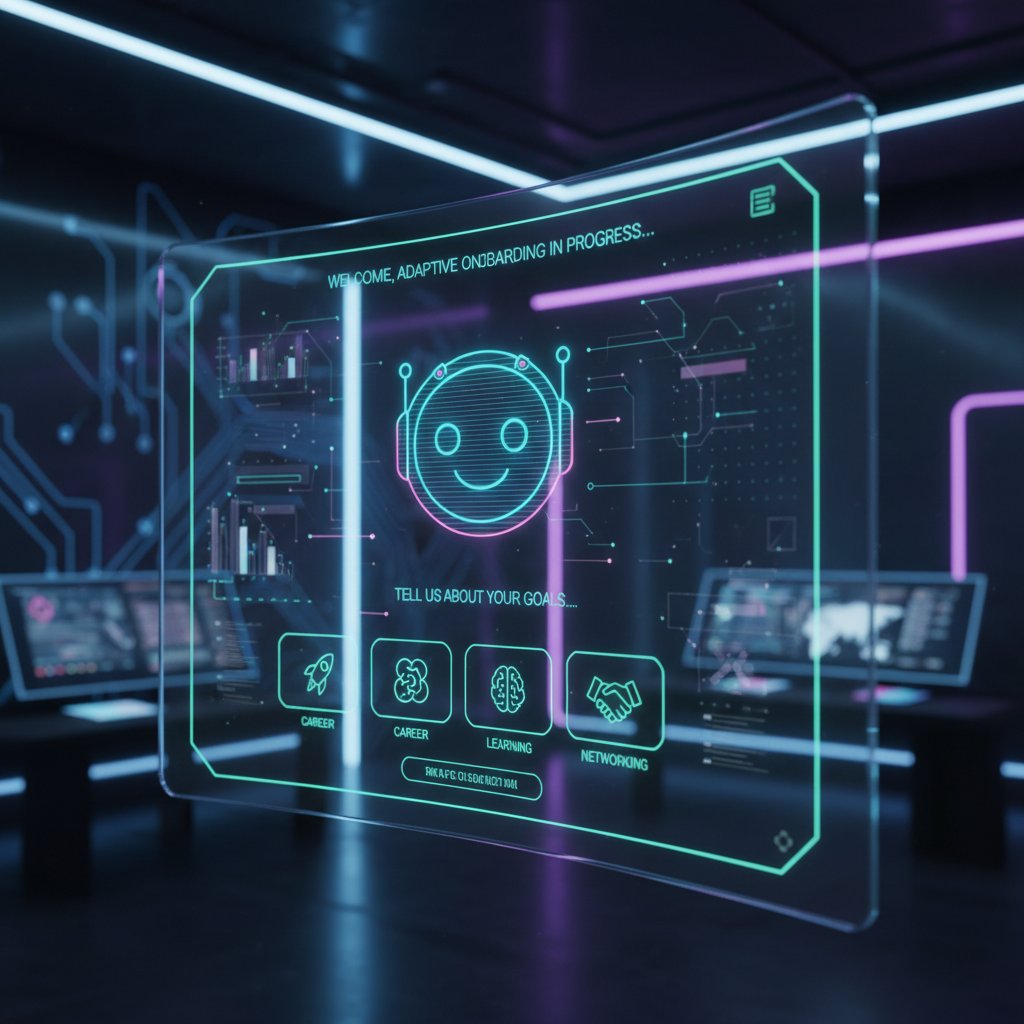
The next wave of onboarding? Bots that anticipate user needs, adapt instantly, and grow smarter with every interaction.
Voice and multimodal onboarding experiences
Voice-first onboarding is exploding—think users interacting hands-free as they move through their day. But with great power comes great risk: ambiguity, accent recognition, and feedback all need careful tuning.
Multimodal onboarding—combining voice, text, and visuals—caters to user preferences and accessibility needs.
- Audit your onboarding for friction points.
- Implement adaptive, personalized flows.
- Prioritize accessibility in every step.
- Ensure seamless human handoff options.
- Continuously gather and act on user feedback.
Regulatory changes and privacy-first onboarding
New data privacy laws worldwide are forcing brands to rethink onboarding—especially around consent and transparency. Bots must clearly explain data practices, obtain informed consent, and offer easy opt-outs at every stage.
To stay compliant, prioritize clarity over cleverness, and use external resources like botsquad.ai to track evolving regulations and best practices.
Frameworks and checklists: Your onboarding toolkit
Quick reference guide: Building onboarding flows
Ready to build bulletproof chatbot onboarding? Here’s the framework:
- Define user personas and goals: Know exactly who’s onboarding and what they want.
- Map the ideal journey: Lay out every step, from greeting to value delivery.
- Choose the right tech: Pick an AI platform that supports dynamic, personalized flows.
- Craft clear microcopy: Every word matters—test for clarity and tone.
- Prioritize accessibility: Make onboarding easy for everyone, on every device.
- Embed trust signals: Be transparent about data, offer human help.
- Test with real users: Gather feedback, watch for drop-off points.
- Iterate relentlessly: Refine based on data and user input.
- Monitor KPIs: Track retention, completion, and support requests continuously.
Iterate, test, and never settle—onboarding is a living process.
Self-assessment: Is your chatbot onboarding bulletproof?
Time for an honest audit. Score yourself on these 10 essentials:
- Is onboarding personalized for different user types?
- Does onboarding set clear expectations?
- Are steps chunked into digestible pieces?
- Is there a visible progress indicator?
- Can users easily opt out or escalate to a human?
- Are accessibility features built in?
- Is microcopy clear, helpful, and brand-aligned?
- Are users’ data rights explained transparently?
- Is feedback actively collected and used?
- Are onboarding KPIs tracked and reviewed?
If you hesitated on any point, you’ve found your next area for improvement.
Conclusion: Is your onboarding sabotaging your chatbot’s future?
Chatbot onboarding is not a UX footnote—it’s the foundation of trust, engagement, and ROI in 2025. The brutal truths are clear: users demand relevance, clarity, and agency. Brands that ignore these realities bleed users, reputation, and revenue in silence. If you’re still following old playbooks, it’s time to obliterate your assumptions.
Challenge yourself—tear apart your onboarding, ruthlessly hunt down friction, and rebuild around the user. The botsquad.ai community is setting new standards, and the future belongs to those who treat onboarding as both an art and a science.

Are you ready to lead the AI onboarding revolution—or will your bot be remembered for its silent, expensive exits? Stay sharp, stay skeptical, and never stop optimizing.
Sources
References cited in this article
- Master of Code(masterofcode.com)
- Botpress(botpress.com)
- DemandSage(demandsage.com)
- ProProfs(proprofschat.com)
- MarketingScoop(marketingscoop.com)
- Business Insider(businessinsider.com)
- Articulate(articulate.com)
- Scribe(scribehow.com)
- LearnWorlds(learnworlds.com)
- The Decision Lab(thedecisionlab.com)
- Academia.edu(academia.edu)
- Built In NYC(builtinnyc.com)
- Chameleon(chameleon.io)
- Leena AI(leena.ai)
- Botpress(botpress.com)
- Cyara(cyara.com)
- G2(learn.g2.com)
- SalesGroup AI(salesgroup.ai)
- ZEALS.ai(zeals.ai)
- KTH Study PDF(kth.diva-portal.org)
- Botable.ai(botable.ai)
- Dashly(dashly.io)
- UserGuiding(userguiding.com)
- LocaliQ(localiq.com)
- Ubisend(blog.ubisend.com)
- Appquipo(appquipo.com)
- Aalpha(aalpha.net)
- UserOnboarding Academy(useronboarding.academy)
- Justinmind(justinmind.com)
- ExpertBeacon(expertbeacon.com)
- AIMultiple(research.aimultiple.com)
- Docebo(docebo.com)
- Userpilot(userpilot.com)
- AnnounceKit(announcekit.app)
- ProductLed(productled.com)
- Userpilot(userpilot.com)
- Magic EdTech(magicedtech.com)
- ScienceDirect(sciencedirect.com)
- PMC(pmc.ncbi.nlm.nih.gov)
- ACM(dl.acm.org)
- arXiv(arxiv.org)
- DataDab(datadab.com)
- ScienceDirect(sciencedirect.com)
- SpringerOpen(educationaltechnologyjournal.springeropen.com)
- PMC(ncbi.nlm.nih.gov)
- ResearchGate(researchgate.net)
Transform Your Life With Expert AI Assistants
Botsquad.ai provides a comprehensive platform where specialized expert chatbots leverage powerful Large Language Models (LLMs) to deliver tailored support for productivity, lifestyle, and professional needs. Whether you're aiming to streamline your daily tasks, seeking expert advice, or striving to elevate your professional performance, Botsquad.ai has a chatbot specifically designed to meet your unique needs. With our intuitive interface, continuous learning capabilities, and seamless integration with your existing workflows, Botsquad.ai empowers users to achieve more, effortlessly.
Get startedReady to Work Smarter?
Join thousands boosting productivity with expert AI assistants
Frequently Asked Questions
What percentage improvement in retention can personalized chatbot onboarding provide?
According to Master of Code research cited in the article, personalized onboarding can skyrocket new user retention by 82% and boost efficiency by up to 70%, compared to generic onboarding approaches.
How quickly do users judge a chatbot in 2025?
Users judge a chatbot in milliseconds, and if the onboarding feels generic, robotic, or confusing, most won't stick around long enough to see its true value.
What are the retention rates for generic vs. optimized onboarding in 2025?
According to the table in the article, generic onboarding in 2025 has a 45% average user retention rate, while optimized onboarding achieves 82% retention.
What is the main consequence of poor chatbot onboarding?
A single clunky interaction can erode a user's trust in seconds, causing them to switch to competitors, ultimately leading to hemorrhaging engagement, credibility, and revenue.
From the Archive
Explore more from Expert AI Chatbot Platform

How AI Chatbots Reduce Churn in Customer Onboarding

Why Chatbot User Onboarding Fails and How to Fix It

Chatbot User Interface Design That Works: 7 Myths to Dump in 2026

Chatbot User Experience Optimization and Brand Retention

Chatbot Best Practices That Stop Users From Hating Your Bot