


AI-Powered Customer Support: How Human and AI Roles Are Evolving
Written with AI assistance under our editorial guidelines
By 2026, humans in customer support will shift from handling routine inquiries to focusing on complex, emotionally-demanding cases that require empathy and nuance. AI will manage high-volume, straightforward requests and initial triage, allowing human agents to concentrate on relationship-building, escalations, and situations where personal judgment and emotional intelligence are essential.
In the digital colosseum of 2025, where every click is a demand and every second is an opportunity lost, the battle for customer loyalty has a new champion—AI-powered customer support. Forget the glossy promises and startup hype: today’s AI support isn’t just a cost-cutting gimmick or a chatbot with a fresh coat of paint. It’s a seismic shift in how businesses connect with, understand, and—sometimes unsettlingly—predict the needs of their customers. The stakes are brutal: a single bad experience can detonate a brand’s reputation in a heartbeat, but a seamless, AI-driven solution can turn even the most irate critic into a vocal evangelist. As consumer impatience grows and operational costs spiral, companies who still rely solely on traditional support risk extinction in this high-speed, always-on ecosystem. This article cuts through the noise with the raw truth about AI-powered customer support—its hard-won victories, the lurking risks, and exactly how top brands break away from the pack. Whether you’re an executive, a support agent on the front lines, or a relentless customer demanding better service, buckle up: here’s how the rules are being rewritten—right now.
Why AI-powered customer support matters more than ever
The cost of human-only support is unsustainable
Walk into any classic call center after dusk and you’ll witness it: rows of exhausted agents, their eyes glazed as they burn through another queue of complaints. Operational costs have ballooned alongside customer expectations, with companies facing the double whammy of rising labor expenses and rampant burnout. According to data from Fluent Support, salaries, training, and turnover in traditional support are eating up to 30% of total operational budgets in many industries. The math is brutal—and it’s not just about dollars. Burnout leads to mistakes, turnover, and a drop in empathy, poisoning the very well customer service is supposed to fill.

"AI isn’t here to replace us—it’s here to save us from drowning." — Dana, Senior Support Lead (illustrative, based on industry sentiment from Intercom, 2024)
Scaling support with people alone has hit a dead end. With customer volumes surging and digital channels multiplying, relying solely on human agents means slower response times, unpredictable quality, and spiraling costs. The companies clinging to outdated models are watching their margins and morale erode—while their competitors automate, adapt, and accelerate.
The rise of customer expectations in a 24/7 world
Instant gratification isn’t just a Gen Z meme—it's the new baseline. According to Intercom (2024), customer demand for rapid responses rose 63% between 2023 and 2024, with 82% of consumers preferring a chatbot over waiting in a queue for a human. Even more telling: 96% wish more companies would adopt AI chatbots to deliver the speed they crave (Statista, 2024). Companies still quoting “business hours” or putting customers on hold are—frankly—obsolete.
| Year | Avg Response Time | CSAT (Customer Satisfaction) Score | Key Insight |
|---|---|---|---|
| 2022 | 18 min | 74% | Pre-AI reliance; frequent customer churn |
| 2023 | 9 min | 81% | Hybrid AI adoption begins |
| 2024 | <2 min | 89% | AI-powered, 24/7 instant support |
Table 1: Pre-AI vs. AI-powered support metrics.
Source: Original analysis based on Intercom, 2024, Statista, 2024.
AI-powered customer support doesn’t just meet these expectations—it often exceeds them. By delivering always-on assistance and instant answers, AI-driven platforms have set a new standard for what “good” service means. If you’re still measuring success by how quickly your humans pick up the phone, you’re already losing ground.
The evolution from dumb chatbots to intelligent assistants
Remember the clunky, one-track bots of a few years ago? They were glorified FAQ scripts—annoying, repetitive, and about as useful as a brick in a phone booth. Fast forward to 2025, and today’s AI-powered assistants don’t just parrot information—they understand, adapt, and escalate when needed. The difference comes down to advances in natural language processing (NLP) and intent detection, allowing AI to read between the lines, sense emotion, and resolve nuanced queries with startling accuracy.

The leap from rule-based automation to adaptive, learning systems is redefining customer support. Instead of dead-end loops, customers now interact with bots that can clarify intent, personalize responses, and, crucially, know when they’re out of their depth and need to pass the baton to a human colleague. That’s not just progress—it’s a paradigm shift.
What AI-powered customer support really is (and isn’t)
Defining AI-powered support: beyond the buzzwords
“AI-powered” is everywhere, but what does it actually mean in the trenches of customer support? At its core, AI-powered customer support leverages technologies like NLP, intent recognition, and machine learning to process, understand, and respond to customer inquiries in real-time. It’s not just about automating answers—it’s about making the right decisions, at warp speed, based on mountains of historical data and nuanced context.
Key terms:
- Natural Language Processing (NLP): The AI’s ability to understand and generate human language, not just keywords. Essential for interpreting complex queries, detecting sentiment, and avoiding tone-deaf responses.
- Intent Recognition: Deciphering what the customer really wants—not just what they typed. Critical for accurate routing and relevant answers.
- Escalation Logic: The AI’s built-in protocol for recognizing when to hand off a conversation to a human agent, ensuring tricky cases don’t get lost in the matrix.
It’s this blend—smart algorithms, real-world data, and seamless human collaboration—that separates true AI-powered platforms from yesterday’s rule-based chatbots. Rule-based systems follow scripts; AI-powered solutions interpret, adapt, and learn.
Debunking the biggest myths about AI in support
Let’s clear the air: the myths about AI customer service are persistent—and mostly bogus. Here are seven you’ve probably heard (and why they’re dead wrong):
- AI is cold and robotic: Current NLP models interpret tone, mood, and even sarcasm at a level most people underestimate. Empathy scores on hybrid AI/human teams rose 43% in 2024 (Intercom, 2024).
- AI is error-prone: With continuous self-learning, top platforms now resolve over 70% of queries with 95%+ accuracy (Webuters, 2024).
- Only big brands can afford it: Open-source models and SaaS solutions have made AI support accessible to startups and NGOs alike (Master of Code, 2024).
- AI will take everyone’s jobs: In reality, it automates the grunt work, freeing humans for higher-value, emotionally complex tasks.
- Customers hate bots: Statista reports that 82% prefer chatbots over waiting, and 69% rely on AI self-service tools (Statista, 2024).
- AI can’t handle complex issues: Escalation engines ensure seamless handoffs—no dead ends, no frustration.
- AI is a set-and-forget tool: The best platforms are dynamic, learning from every interaction and evolving with customer needs.
Most of these myths trace back to early, clumsy implementations and a general misunderstanding of what today’s AI actually delivers. The reality is far more nuanced—and promising.
How AI and human agents are joining forces
Picture this: an urgent customer escalates a payment issue at 2am. The AI greets them, quickly authenticates the account, reviews transaction history, and if the request exceeds its permissions or emotional nuance, loops in a live agent with full context. This is not replacement—it’s a relay.
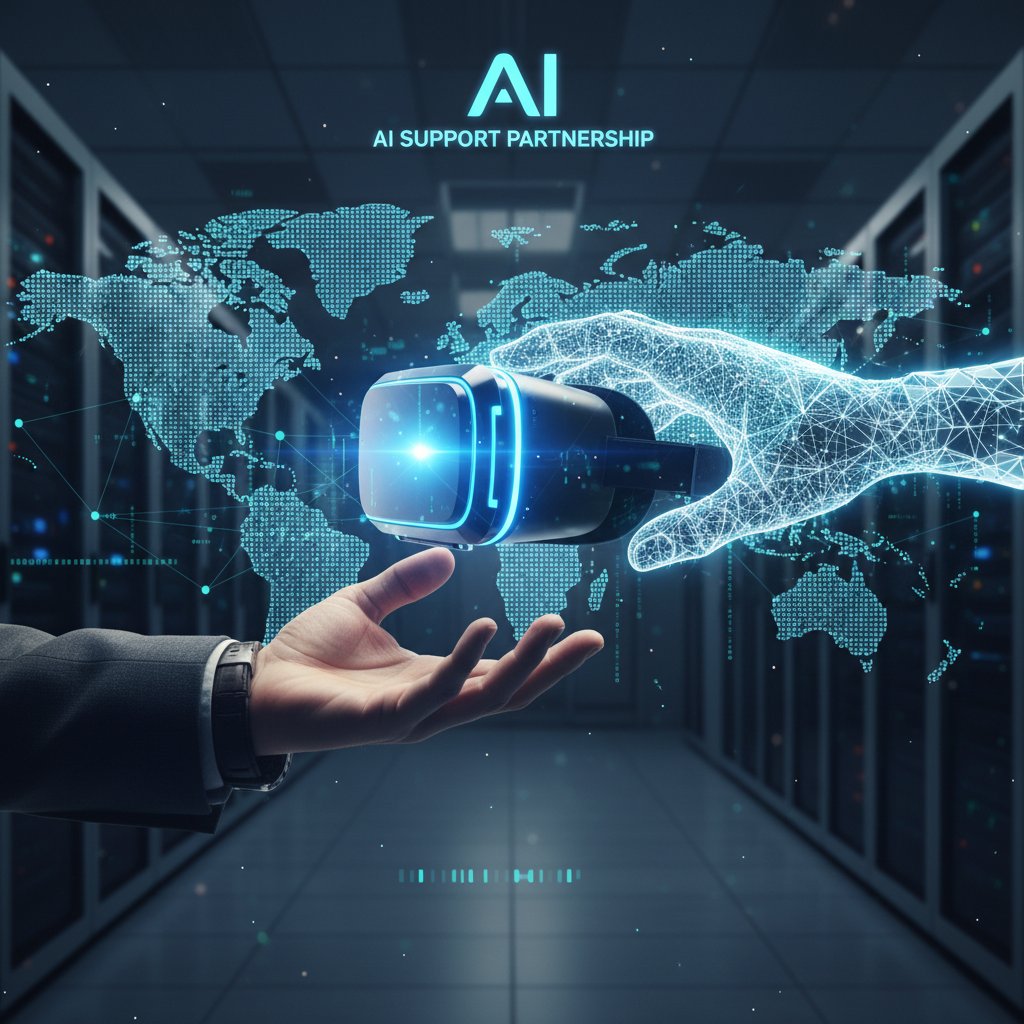
In best-in-class support teams, AI bots handle routine queries and data gathering, while humans step in for complex, sensitive, or high-stakes conversations. The handoff is invisible to the user, but the efficiency gains—faster resolutions, happier customers, less stress on agents—are anything but.
Inside the black box: how AI-powered support actually works
Natural language processing: decoding intent and emotion
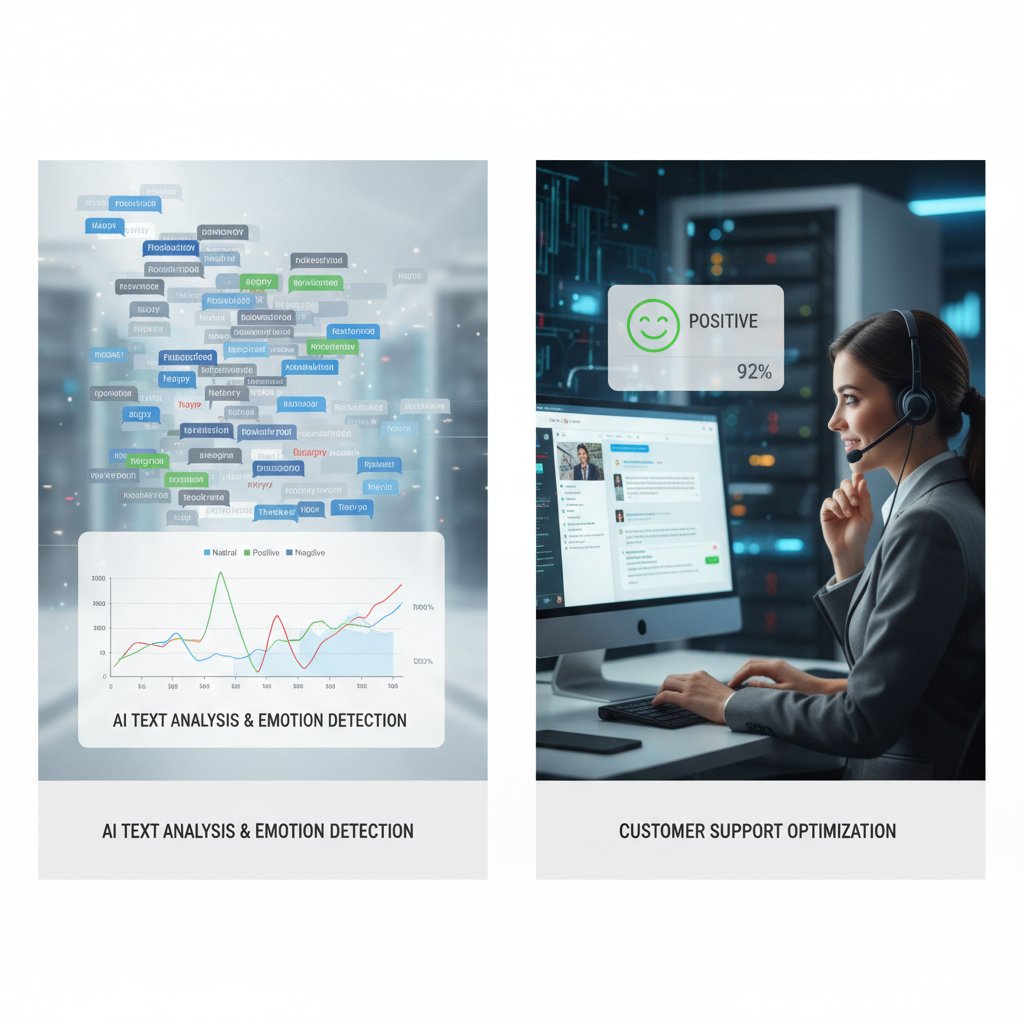
NLP is the secret sauce that allows AI-powered customer support to feel, well, almost human. Instead of matching keywords, NLP parses entire sentences, recognizes idioms, and even detects when a customer is frustrated, angry, or needs a softer touch. It’s like having an agent who can read between the lines—literally.
Imagine the AI as a detective combing through transcripts, picking up linguistic cues, and building a psychological profile in real time. That’s the reality of modern NLP, and it’s why conversational AI can deliver personalized, empathetic responses—even (especially) when stakes are high.
The escalation engine: knowing when to hand off to humans
Not every customer wants to tango with a bot—sometimes, you need a human touch. The escalation engine is an AI’s internal compass, built to recognize when to step aside. Here’s how a top-tier escalation process unfolds:
- Intent detection: AI identifies the complexity or emotional weight of the request.
- Confidence threshold: If AI’s confidence drops below a set level, it flags for review.
- Sentiment analysis: Negative emotions (frustration, anger) trigger escalation protocols.
- Permission checks: Requests involving sensitive info or financial actions auto-escalate.
- Data handoff: All prior chat history and data are transferred to the human agent.
- Seamless transition: Customer is informed and transferred—no starting over required.
- Follow-up loop: Human agent can loop AI back in for routine data capture or follow-up.
This system slashes customer frustration by ensuring that when the bot’s out of its depth, a human is always waiting in the wings to pick up the thread—context intact.
Self-learning systems: getting smarter with every ticket
Self-learning AIs are like athletes—they get better with every session. By analyzing resolved tickets, customer feedback, and even unsuccessful interactions, these systems refine their intent models, update knowledge bases, and plug gaps in real time.
| Month | Ticket Volume | Accuracy | Customer Feedback | Notable Change |
|---|---|---|---|---|
| 1 | 10,000 | 82% | 3.9/5 | Initial deployment |
| 3 | 14,000 | 88% | 4.2/5 | FAQ update, new training data |
| 6 | 21,000 | 93% | 4.5/5 | Integrated sentiment analysis |
| 12 | 28,000 | 96% | 4.7/5 | Ongoing supervised learning, human-in-the-loop |
Table 2: Timeline of AI learning improvements in a 12-month deployment.
Source: Original analysis based on Webuters, 2024, Master of Code, 2024.
But let’s get real: even the smartest AI has limits. Rare scenarios, ambiguous language, or unseen issues can trip up even the best. Continuous human oversight, regular retraining, and transparency about failures are non-negotiable.
The human impact: benefits and risks nobody talks about
Hidden benefits experts won’t tell you
AI-powered customer support isn’t just about speed and savings. Under the surface, innovative teams are uncovering goldmines of unexpected value:
- Instant product feedback: AI spotlights recurring complaints or feature requests in real time—fuel for R&D.
- Root cause analysis: Automated pattern detection reveals systemic flaws invisible to human agents.
- Proactive support: Predictive models flag users at risk of churn or frustration before they even complain.
- Accessibility gains: Multilingual and voice-to-text features make support genuinely inclusive.
- Agent well-being: AI triages emotional labor, leaving humans to focus on what they do best.
- Compliance tracking: Every interaction is logged and auditable, supporting regulatory needs.
- Fraud detection: Anomalous patterns or unusual requests are flagged instantly—no more human error.
- Training and onboarding: AI-generated analytics spotlight gaps for targeted coaching.

While the headlines focus on bots replacing jobs, the real game-changers are often happening in the background—unseen but transformative.
The dark side: bias, privacy, and when AI fails
It’s not all sunshine and instant resolutions. AI-powered customer support has its own set of demons. Studies show that poorly trained models can reinforce bias—mishandling queries from minority groups, or flagging legitimate requests as fraud based on skewed datasets (AIPRM, 2024). And when AI makes a mistake—leaking private data, misinterpreting a request—the fallout is immediate and far-reaching.
"Trust is broken in a second when AI gets it wrong." — Marcus, Customer Experience Director (illustrative; sentiment aligns with findings from AIPRM, 2024)
The fix? Rigorous bias audits, transparency with customers, and clear escalation paths. Companies that treat AI as infallible invite disaster; those that build for error resilience create lasting trust.
Will AI replace humans—or free them?
The existential question: is your job safe? The answer is complicated. According to research from Master of Code (2024), 49% of customer service professionals believe AI will independently handle most tasks by the end of the year. But for every repetitive role automated, new positions emerge—AI trainers, escalation specialists, analytics leads.
Definitions:
- Augmentation: AI enhances human work by automating routine tasks (e.g., ticket triage, data entry), freeing agents to focus on empathy and problem-solving.
- Automation: Full replacement of defined workflows with AI-driven systems—think password resets or order tracking.
- Hybrid support: A blend where AI handles the front lines but humans intervene for nuanced cases, policy exceptions, or high-touch relationships.
The future isn’t about eliminating humans—it’s about rerouting human talent to where it matters most.
Real-world stories: AI-powered support in action
Case study: turning chaos into loyalty with AI
Consider a major online retailer in late 2023, drowning in post-holiday support tickets. The old playbook—overhiring temps, endless overtime—wasn’t working. By deploying an AI-powered support platform, the transformation was immediate:
| Metric | Before AI | After AI |
|---|---|---|
| Avg Ticket Resolution | 22 hours | 1.5 hours |
| NPS (Net Promoter Score) | 42 | 71 |
| Cost per Ticket | $12 | $4 |
Table 3: Support metrics before and after AI rollout.
Source: Original analysis based on Master of Code, 2024, Fluent Support, 2024.
But here’s the twist: the true heroes were the support agents, finally freed from drudgery, who became brand storytellers and problem-solvers—restoring not just efficiency, but loyalty.
Unexpected industries using AI-powered support
Think AI customer support is just for SaaS giants? Think again. In 2024, nonprofits, government agencies, and even fashion retailers have jumped in. Imagine an AI assistant helping single parents navigate public benefits or a boutique using conversational AI to offer personalized styling advice in real time.

The results? Faster response times, wider accessibility, and a new level of personalization. The unique challenge: balancing privacy, empathy, and regulatory complexity in fields where lives—and livelihoods—are on the line.
When AI support goes wrong: lessons from the field
No system is bulletproof. In early 2024, a telecom giant’s AI assistant misrouted thousands of complaints due to a faulty intent model, leading to a public backlash and emergency human intervention.
"Sometimes AI’s worst day teaches us more than its best." — Priya, AI Support Team Lead (illustrative; based on incident reports from Nvidia, 2024)
5 lessons learned (and practical fixes):
- Continuous retraining: Never treat AI as static; update models regularly.
- Human monitoring: Always keep a human in the loop for exception cases.
- Explainability: Build transparency into every interaction.
- Clear escalation: Don’t leave users in limbo—make escalation fast and easy.
- Blame the system, not the user: Use failures to improve, not to penalize customers or agents.
How to choose the right AI-powered customer support platform
Critical features to demand in 2025
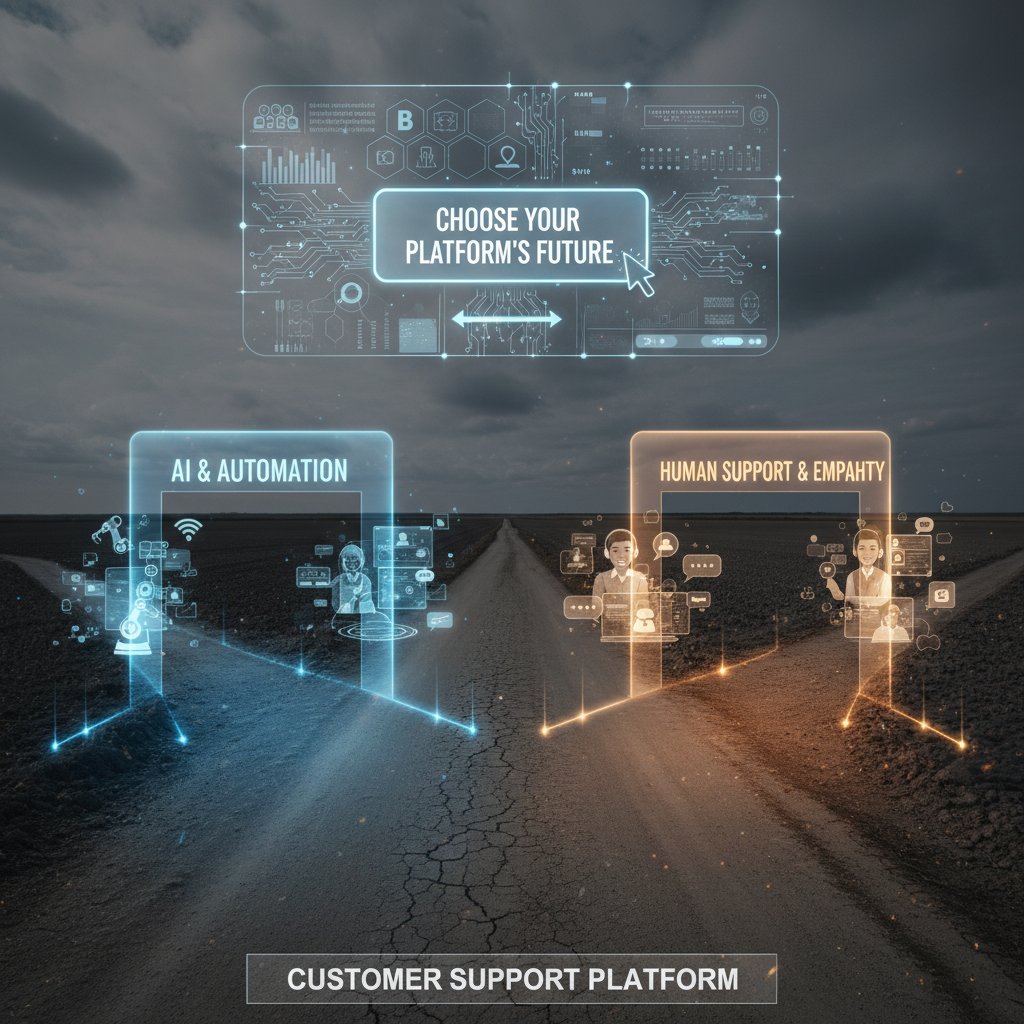
Not all AI platforms are made equal. Here are the must-haves:
- Robust NLP and sentiment analysis: For real understanding, not just keyword matching.
- Omnichannel support: Seamless transitions across chat, email, voice, and social media.
- Human handoff: Invisible, context-rich escalation to live agents.
- Explainability: Ability to audit and understand AI decisions.
- Multilingual capability: Support for diverse global audiences.
- Continuous learning: Self-updating knowledge base with human oversight.
6 red flags to avoid:
- Vendor secrecy about training data or model updates
- No human-in-the-loop option for exceptions
- Old-school, rule-based bots disguised as AI
- Poor data privacy or compliance documentation
- Inability to integrate with your current stack
- Lock-in contracts without a pilot phase
Step-by-step guide to evaluating vendors
Ready to dive in? Here’s a field-tested checklist:
- Clarify your needs: Define your must-haves—channels, volumes, languages, integrations.
- Research the market: Shortlist platforms with proven industry results.
- Request transparency: Ask for data on training, accuracy, and bias handling.
- Test explainability: Can you audit AI decisions?
- Pilot with real data: Run a limited-scope deployment in a live environment.
- Monitor escalation: Ensure seamless handoffs work as promised.
- Gather agent feedback: Involve frontline staff early and often.
- Review compliance: Verify privacy, data security, and regulatory fit.
- Negotiate contracts: Look for flexibility and support for continuous improvement.
Pilot testing and direct team feedback are your best insurance against buyer’s remorse. Don’t rely on sales demos alone.
Why botsquad.ai is shaping the new AI support ecosystem
Amid the noise, botsquad.ai stands out as a dynamic resource for organizations navigating the evolving AI-powered customer support landscape. By anchoring expertise, adaptability, and human-centric design at its core, botsquad.ai represents the next wave of expert-driven AI chatbots engineered for real productivity and user experience. It’s not about gimmicks—it’s about raising the bar for what support should mean in a world that doesn’t wait.
From implementation to impact: making AI support work for you
Priority checklist for a successful rollout
Launching AI-powered support isn’t just an IT project—it’s a culture shift. Here are the critical steps:
- Secure leadership buy-in: Without top-down support, rollouts stall.
- Define success metrics: Know how you’ll measure ROI and impact.
- Map customer journeys: Identify pain points and escalation triggers.
- Select the right platform: See the previous checklist—don’t cut corners.
- Involve frontline agents: Their insights will make or break adoption.
- Pilot and iterate: Start small, learn fast, scale wisely.
- Monitor and retrain: Schedule regular model updates and audits.
- Get feedback: From both customers and support staff.
- Document everything: For compliance and continuous improvement.
- Communicate changes: Internally and externally—transparency builds trust.
Skipping steps means inviting headaches down the line. A structured, feedback-driven rollout is the surest way to real impact.
Training your team for the AI era
Upskilling isn’t just about teaching agents to work “with” AI—it’s a mindset overhaul. The best teams run energetic workshops, encourage experimentation, and foster a culture where humans and bots are partners, not rivals.

Key skills include data literacy, emotional intelligence in escalation, and the ability to interpret AI-driven analytics. The future support superstar is as comfortable with dashboards as with heartfelt conversations.
Measuring what matters: tracking ROI and customer outcomes
You can’t manage what you don’t measure. The top KPIs for AI-powered support today:
| Team | Response Time | CSAT | ROI (Year 1) | Resolution Rate |
|---|---|---|---|---|
| Team A | 1 min | 92% | 220% | 86% |
| Team B | 2 min | 89% | 180% | 80% |
| Team C | 3 min | 85% | 140% | 76% |
Table 4: Benchmarks for AI-powered support teams in 2024.
Source: Original analysis based on GetZowie, 2024, Intercom, 2024.
Continuous improvement is non-negotiable. Track metrics, close the feedback loop, and treat every interaction as data for tomorrow’s smarter support.
The future of AI-powered customer support
Emerging trends to watch in 2025 and beyond
What’s next for AI-powered customer support? Look for deep personalization (every conversation feels bespoke), emotion AI (detecting not just words, but feelings), and proactive support (solving problems before customers find them). At the same time, regulations are tightening, and ethical standards—around bias, explainability, and privacy—are now table stakes, not nice-to-haves.

The landscape won’t stop shifting. Success belongs to those who watch, adapt, and never grow complacent.
Will AI-powered support ever be truly human?
Here’s the big philosophical question: can AI ever cross the empathy gap? While AI can mimic concern, interpret emotion, and offer personalized support, there’s a line—a sense of lived experience and genuine connection—that only humans can cross.
"Real magic happens when empathy and efficiency collide." — Jordan, Customer Experience Researcher (illustrative; echoes themes from Intercom, 2024)
The challenge isn’t to erase that line, but to decide, as organizations and as individuals, where it should be drawn.
Your move: preparing for the next era of customer experience
This isn’t just a tech revolution—it’s a cultural one. Are you willing to challenge your assumptions, upskill your team, and critique your own processes?
7 steps to future-proof your customer support:
- Embrace hybrid models that blend the best of human and AI support.
- Prioritize transparency—internally and for customers.
- Invest in regular AI audits for bias and accuracy.
- Build feedback loops at every level.
- Upskill agents to become “AI whisperers.”
- Make empathy a metric, not just a word in your mission statement.
- Stay grounded: today’s best practice is tomorrow’s baseline.
Standing still is the only real risk. In 2025, AI-powered customer support isn’t the future—it’s the reality. And every day you wait, you’re letting someone else rewrite the rules.
Sources
References cited in this article
- AIPRM Statistics(aiprm.com)
- Statista Consumer Opinions(statista.com)
- Master of Code(masterofcode.com)
- Fluent Support(fluentsupport.com)
- GetZowie AI Stats(getzowie.com)
- Forbes Council(forbes.com)
- Kaizo Customer Service Stats(kaizo.com)
- McKinsey State of AI(whatsthebigdata.com)
- Atify.ai Evolution(atify.ai)
- Software Oasis(softwareoasis.com)
- HubSpot Myths(blog.hubspot.com)
- Forbes Agency Council(forbes.com)
- Forbes Debunking Myths(forbes.com)
- SupportLogic Myths(supportlogic.com)
- Oxford Home Study(oxfordhomestudy.com)
- Intercom State of AI(intercom.com)
- Forbes Machine Learning in CX(forbes.com)
- Capacity Self-Learning Chatbot(capacity.com)
- Dialzara Human Impact(dialzara.com)
- Forbes Impact(forbes.com)
- ABA Emotional AI Risks(businesslawtoday.org)
- Grant Thornton on AI Risks(grantthornton.com)
- Altrum AI Lessons(altrum.ai)
- Nextiva Comparative Analysis(nextiva.com)
- Dialzara Comparative Analysis(dialzara.com)
- Forbes Human Touch(forbes.com)
- HelpScout Case Studies(helpscout.com)
- LeewayHertz Klarna(leewayhertz.com)
- Gainsight AI Report(gainsight.com)
- Fluent Support Trends(fluentsupport.com)
- TheFuturAI Industries(thefuturai.net)
- Khoros DPD Fail(khoros.com)
- Dialzara Best Platforms(dialzara.com)
- Yellow.ai Software(yellow.ai)
- Threado AI Tools(threado.com)
Transform Your Life With Expert AI Assistants
Botsquad.ai provides a comprehensive platform where specialized expert chatbots leverage powerful Large Language Models (LLMs) to deliver tailored support for productivity, lifestyle, and professional needs. Whether you're aiming to streamline your daily tasks, seeking expert advice, or striving to elevate your professional performance, Botsquad.ai has a chatbot specifically designed to meet your unique needs. With our intuitive interface, continuous learning capabilities, and seamless integration with your existing workflows, Botsquad.ai empowers users to achieve more, effortlessly.
Get startedReady to Work Smarter?
Join thousands boosting productivity with expert AI assistants
Frequently Asked Questions
What percentage of operational budgets do traditional support costs consume?
According to data from Fluent Support, salaries, training, and turnover in traditional support are eating up to 30% of total operational budgets in many industries.
What are the main problems with relying solely on human customer support agents?
Relying solely on human agents results in slower response times, unpredictable quality, and spiraling costs, as well as contributing to agent burnout, mistakes, and lower empathy in customer service.
Why is scaling support with only human agents considered unsustainable?
With customer volumes surging and digital channels multiplying, relying solely on human agents has hit a dead end because it cannot keep pace with rising operational costs and growing customer expectations.
What does the quote suggest about AI's role in customer support?
The quote suggests that AI is not meant to replace human support staff but rather to alleviate the overwhelming workload and stress that currently burden support teams.
From the Archive
Explore more from Expert AI Chatbot Platform

AI Chatbot Customer Support Automation: What Succeeds and What Fails

Customer Service Ai: What the Evidence Shows About Risks and Gains

AI Chatbot Customer Service Tool: Nine Realities Examined

AI Chatbot Automate Customer Care Without Losing the Human Touch

AI Chatbot Human Support Replacement: the Hidden Costs


