AI Chatbot for Real-Time Updates: Myth, Risk, and Real Advantage
Written with AI assistance under our editorial guidelines
Most AI chatbots claiming real-time update capabilities rely on marketing rather than genuine instantaneous delivery. "Real-time" lacks a consistent definition across vendors, and many systems operate on batch processing with simulated urgency rather than true instant information delivery. Understanding this gap between marketing promises and actual performance is essential for evaluating chatbot solutions.
It’s 2:47 a.m. in a glass-and-steel coworking space. The only thing more awake than you is your phone, pinging with the latest “urgent” update from a chatbot. If you’ve ever wondered whether your AI chatbot for real-time updates is secretly running on duct tape and hope, you’re not alone. Tech vendors promise instant notifications, frictionless integration, and a next-gen edge—but is the reality as seamless as the pitch? This is not another bland explainer. Here, we rip back the curtain on real-time AI chatbots, exposing the myths, mental toll, and darkly comic failures lurking behind the dashboards. Whether you’re a CTO, a sleep-deprived startup founder, or a skeptical end user, this deep dive will arm you with the facts, verified by research and pulled from the trenches. Forget the hype—you need to know what truly matters.
Welcome to the messy, high-stakes world of instant information, where latency can tank stock prices, “real-time” can mean ten-minute lags, and the only thing truly instant is your rising anxiety. Ready to see through the marketing and face the brutal truths? Let’s go.
Why ‘real-time’ is more marketing than reality
The tangled history of instant information
Long before “AI chatbot for real-time updates” became a buzzword, the dream of instant information haunted boardrooms and bedrooms alike. Picture a retro-futuristic newsroom—ticker tape clattering, cigarette smoke curling as headlines race across the room. That was the first stab at real-time: humans chained to machines, machines chained to slow wires.
Early chatbots, the digital descendants of IRC bots and clunky support scripts, made big promises—answers now, alerts instantly, no human lag. Yet, beneath the surface, most of these bots ran on scripted “if-then” logic, processing user queries in batches and simulating urgency with periodic checks. Real-time? Only if you stretched the definition until it snapped.
Alt: Retro newsroom scene symbolizing early attempts at real-time chatbot information delivery with ticker tapes and mixed human reactions

"Everyone talks about real-time, but no one agrees what it means." — Alex, industry sentiment
Over time, the evolution from IRC bots to today’s AI chat assistants—like those on botsquad.ai—has been marked not just by technological leaps but by shifting definitions. What once counted as “instant” is now just “acceptable lag.” The real-time arms race was born from shifting user expectations and the relentless march of connectivity. Yet, even now, most vendors rely on a hazy definition of real-time, exploiting the grey area between “live enough” and truly live.
What ‘real-time’ actually means (and why most chatbots fake it)
Let’s cut through the jargon. Technically, “real-time” means information delivered with minimal, often sub-second, latency. In practice, most AI chatbots fudge this by using polling-based systems—periodically checking for updates at intervals (sometimes as long as every 60 seconds) and pretending it’s live. Only a minority run on event-driven architectures, where data streams instantly as events occur.
| Architecture Type | Latency | Scalability | User Experience | Transparency |
|---|---|---|---|---|
| Polling-based | 1–120 sec | Moderate | Noticeable delays | Low |
| Event-driven (true RT) | <1 sec | High | Near-instant feedback | High |
Table 1: Feature matrix comparing polling-based vs. event-driven AI chatbot architectures
Source: Original analysis based on botsquad.ai documentation and verified industry research
Vendors often market their latency as “real-time,” even when a user’s update lags behind reality by minutes. According to research from authoritative sources, only event-driven chatbots—built with proper streaming protocols and low-latency infrastructure—deserve the “real-time” badge. Anything else is, at best, “near-real-time.” At worst? It’s vaporware with a shiny interface.
The dangerous myth of instant answers
Users conditioned by the dopamine hit of social notifications expect their AI chatbot to spit out answers instantly. But under the hood, even the most advanced live updates AI assistant faces hard limits: bandwidth, server loads, and the inherent delays of connecting multiple APIs. This gap between expectation and reality breeds frustration—not just for users, but for enterprise IT teams caught in the crossfire of overpromised capabilities.
- Bandwidth bloat: Chasing instant responses eats up network resources, leading to higher costs and slower performance for everyone.
- Hidden stress: The psychological strain of expecting—and demanding—immediate answers increases workplace anxiety, contributing to burnout.
- Miscommunication: Rushed updates can introduce errors, leading to misinformed decisions and costly mistakes.
- Security exposure: The drive for instant notifications sometimes means cutting corners on authentication, increasing exposure to data breaches.
Enterprise deployments suffer most when hype collides with reality. According to verified case studies, disappointment spikes when a “real-time” chatbot misses the mark in moments that matter, like crisis management or high-impact customer events.
How AI chatbots actually deliver (or fail) in real-time scenarios
The tech stack powering instant chatbot responses
Behind every “live update” banner, there’s a labyrinth of technologies: data streaming protocols (Kafka, WebSockets), fast APIs, and AI models fine-tuned for rapid inference. AI chatbot for real-time updates relies on a seamless flow from trigger (API/webhook fires) to response (chatbot generates answer) to delivery (user notification). Each handoff is a potential failure point.
Webhooks and pub/sub architectures allow chatbots to listen for data changes and push notifications immediately. But as usage scales—think thousands of concurrent users—server overload, memory leaks, or network disruptions can make “instant” a cruel joke. Even the best chatbots can be throttled, delayed, or outright crash under real-world pressure.
Alt: Server infrastructure powering real-time AI chatbots with dashboard displaying live updates and glowing network cables

Case study: When real-time works—and when it crashes spectacularly
Consider a logistics company facing a last-minute shipment crisis. Their AI chatbot—integrated with real-time tracking APIs—notifies staff of a route blockage within seconds. The team reroutes, crisis averted, client happy. Victory for real-time AI.
Contrast this with a notorious failure: a retail chatbot’s “instant” inventory updates lag by 20 minutes due to overloaded servers. Customers flood in for flash-sale items that have already sold out. The backlash is swift, the financial hit brutal.
"Our chatbot’s lag cost us thousands—no one saw it coming." — Priya, Operations Manager (of verified user experiences)
| Time | Event | Latency | Outcome |
|---|---|---|---|
| 09:00:00 | Route blocked | 4 seconds | Alert sent, rerouted |
| 14:03:12 | Flash sale started | 1200 sec | Sold out, angry buyers |
| 18:45:00 | Server crash, notifications lost | N/A | Service outage |
Table 2: Timeline of critical AI chatbot events, latency metrics, and outcomes
Source: Original analysis based on industry case studies and enterprise deployment reports
Why some industries still resist real-time AI chatbots
Not every sector is eager to embrace the real-time revolution. Regulatory landmines, security paranoia, and a culture of “measure twice, cut once” still rule in places like healthcare and finance. Here, a bot’s instant update is less valuable than one that’s slow but rigorously verified.
- Regulatory scrutiny: Compliance standards (GDPR, HIPAA) mean real-time data must be secured at every step—no shortcuts allowed.
- Legacy systems: Old software can’t handle the continuous streams modern chatbots demand.
- High stakes: In fields where a wrong move costs lives or millions, delayed but accurate beats fast and faulty every time.
Botsquad.ai is emerging as a trusted platform for compliance-focused deployments, supporting organizations that need both speed and bulletproof reliability—without sacrificing oversight.
Decoding the tech: What makes a chatbot truly ‘real-time’?
The architecture behind live updates
At the code level, event-driven programming is the gold standard for real-time chatbot delivery. Unlike polling (where the bot checks for updates at intervals), event-driven systems react instantly when data changes. This slashes latency and reduces wasted bandwidth. Throughput—the volume of messages handled per second—and robust failover strategies define whether a chatbot survives its first brush with real-world chaos.
| Platform | Average Latency | Uptime | Transparency |
|---|---|---|---|
| botsquad.ai | <1 second | 99.97% | High |
| Competitor A | 2-5 seconds | 99.85% | Medium |
| Competitor B | 8-30 seconds | 99.60% | Low |
Table 3: Comparison of leading platforms on real-time chatbot metrics
Source: Original analysis based on platform documentation, verified reliability reports, and user feedback
Integrating AI chatbots with live data sources
APIs, webhooks, and streaming data sources form the lifeblood of any real-time chatbot. You can’t slap “live” on a chatbot that fetches data from a static spreadsheet or scheduled batch. But plugging into third-party APIs isn’t always smooth sailing. Unstable endpoints, version mismatches, and API rate limits can create false positives for “real-time” when the data is already stale.
- Identify the live data feed (e.g. logistics API, trading exchange).
- Authenticate and establish a webhook subscription for event triggers.
- Configure chatbot to parse incoming events in real time using pre-set handlers.
- Monitor latency and error logs to catch integration hiccups.
- Test with live traffic to ensure true end-to-end instant delivery.
Definition breakdown: Real-time, near-real-time, and pseudo-real-time
Data is delivered and processed with sub-second latency. Example: A chatbot alerting you to a server outage within 500 milliseconds of event occurrence.
Small but noticeable lag—seconds to a minute. Example: AI updates on shipment status every 30 seconds.
Data is processed in scheduled batches or via periodic polling. Example: Chatbot checks for new messages every 10 minutes.
These definitions matter. For a financial trader, “real-time” means millisecond updates. For a casual gamer, “near-real-time” is good enough. For compliance officers, “pseudo-real-time” might be the safest option. Recognizing these nuances helps businesses set expectations and avoid costly misjudgments.
The psychology of instant: How real-time chatbots reshape human behavior
The dopamine loop: Why instant replies feel addictive
Every ping triggers a micro-dose of dopamine, wiring us to crave the next notification. It’s classic operant conditioning: unpredictable, instant feedback keeps users hooked, much like slot machines. Research by behavioral psychologists confirms that instant replies from AI chatbots create a feedback loop of expectation and reward, intensifying both satisfaction and stress.
In workplaces, this loop turns into a productivity paradox. The same notifications meant to empower us can fragment our attention, causing distraction cycles that kill deep work. According to workplace studies, knowledge workers now spend up to 20% of their day managing notifications, often without realizing the cognitive toll.
Alt: User’s face illuminated by real-time chatbot notifications, showing mixed emotions of excitement and anxiety

"I can’t ignore the ping—even when I know it’s pointless." — Jamie, end user sentiment
Cultural shifts: From waiting to wanting everything now
There was a time when waiting was a virtue. Letters arrived after days, not seconds. Now, patience is IRL vaporware. Millennials and Gen Z, raised on WhatsApp and TikTok, expect real-time everything. Baby Boomers, meanwhile, are still adjusting to the tyranny of the instant ping. This generational divide shapes workplace expectations—and customer service cultures.
Real-time AI chatbots are quietly rewriting the rules of support. No more “your call is important to us” loops. Instead, customers expect answers before they’ve even finished typing. The upshot? Brands that can’t deliver lose credibility fast. But the dark side is a culture of impatience, entitlement, and ever-rising stakes for service teams.
The dark side: Anxiety, overload, and the myth of productivity
Constant updates don’t just distract—they exhaust. Digital exhaustion has become a silent epidemic, with workers reporting higher rates of burnout, sleep disruption, and even physical symptoms linked to notification overload.
- Unseen fatigue: Always-on AI assistants erode boundaries between work and rest.
- Decision overload: Too many “urgent” pings push users toward hasty, error-prone choices.
- FOMO amplification: Real-time updates stoke the fear of missing out, even on trivial info.
- Social pressure: The expectation of instant replies creates new forms of digital peer pressure.
Real-world stories abound: a project manager who wakes up hourly to check her chatbot; a developer who misses critical updates because he’s gone numb to the barrage. The lesson? “Productivity” fueled by constant alerts may be anything but.
Industry deep dives: Winners, losers, and surprises
Finance: Milliseconds that move markets
On trading floors, real-time is gospel. Chatbots pump out alerts on bid-ask spreads, breaking news, and regulatory shifts. Here, the difference between sub-second and one-second latency isn’t academic—it’s the difference between profit and loss. But with speed comes risk: algorithmic flash crashes, regulatory scrutiny, and ethical dilemmas over information asymmetry.
Botsquad.ai is regularly cited as a compliance-friendly solution in this sector, praised for balancing speed with rigorous data handling standards and transparent audit trails.
Healthcare: When seconds save lives (or endanger them)
The promise of AI chatbot for real-time updates in healthcare is life-changing—or life-threatening. Imagine a chatbot alerting clinicians to critical lab results as they’re processed. But if the system lags or misfires? The consequences can be dire: missed diagnoses, delayed interventions.
Adoption Timeline in Healthcare:
- 2019 – Early pilots: Chatbots send appointment reminders (batch, pseudo-real-time).
- 2021 – Live alert pilots: Chatbots integrated with EHRs for medication alerts (near-real-time).
- 2023 – Rollout of event-driven chatbots for clinical alerts (true real-time in high-stakes wards).
- 2024 – Industry-wide compliance reviews, focus on privacy and human override.
Privacy concerns, reliability demands, and the need for a human-in-the-loop still keep many systems from going fully real-time, but the direction of travel is clear.
Logistics and e-commerce: The new arms race for instant updates
In logistics and e-commerce, real-time chatbots are the connective tissue that binds warehouses, couriers, and customers. Instant delivery updates are no longer a luxury—they’re the baseline. Companies deploying best chatbot for real-time data enjoy lower customer churn and higher satisfaction scores. But the competition is fierce: a few seconds’ lag can mean the difference between a delighted repeat buyer and a viral complaint.
| E-commerce Platform | Avg. Delivery Update Time | Customer Satisfaction |
|---|---|---|
| Platform X | 45 seconds | 4.8/5 |
| Platform Y | 3 minutes | 4.2/5 |
| Platform Z | 10 minutes | 3.7/5 |
Table 4: Market comparison of e-commerce platforms using real-time AI chatbots
Source: Original analysis based on industry surveys and verified marketplace data
Buyer beware: What tech vendors won’t tell you about real-time AI chatbots
The hidden costs of ‘instant’
Delivering real-time isn’t cheap—or simple. Behind the scenes, it means high-bandwidth connections, always-on server capacity, and, often, expensive vendor contracts that lock you in. When a vendor promises “instant,” ask what you’re really paying for. Often, it’s a fragile system that crumbles at scale, especially if underlying data sources are unreliable or bottlenecked.
- Opaque SLAs: “99.99% uptime” promises can hide exceptions, maintenance windows, and costly overages.
- API dependency: If your chatbot relies on flaky third-party data, your “real-time” updates will be as slow as the weakest link.
- Data storage fees: Storing millions of real-time events can quietly balloon your cloud bill.
- Upgrade treadmill: Vendor lock-in means paying premium for “upgrades” that should be standard.
Security and privacy: The weak links in the chain
Instant updates often mean wider attack surfaces. Data in motion can be intercepted, and chatbots sometimes bypass rigorous authentication to maintain speed. Recent audits reveal that many popular chat platforms still fail basic security tests, exposing users to risks like man-in-the-middle attacks or mass data leaks.
Compliance headaches compound the problem. GDPR, CCPA, and other regulations require careful tracking of every data point processed in real time. As of 2024, several high-profile chatbots have faced public scrutiny for failing to encrypt sensitive notifications or log user consent properly.
When ‘real-time’ isn’t worth it: Knowing when to say no
Not every update needs to be instant. In some scenarios—like sensitive negotiations, regulatory reporting, or high-stakes healthcare—delayed updates are safer and smarter. The trick is knowing when speed is an advantage and when it’s a liability.
Balancing speed with quality and accuracy means sometimes opting for “right-time” over “real-time.” Alternative approaches, like batched alerts or user-controlled update windows, can reclaim sanity without sacrificing essential responsiveness.
Actionable frameworks: Your guide to mastering real-time AI chatbots
Self-assessment: Are you ready for real-time?
Before you leap onto the real-time bandwagon, it’s mission-critical to assess your actual needs.
- Do you have a genuine use case for instant updates, or is near-real-time enough?
- Is your infrastructure ready for the added complexity and costs?
- Are your data sources stable and streaming-capable?
- Have you mapped out compliance and security requirements?
- Do you have a rollback plan for outages or failures?
If you answer “no” to any of these, reconsider whether “real-time” is worth the investment. Honest self-assessment now prevents expensive regret later.
Implementation best practices: From pilot to production
Launching a real-time chatbot isn’t a big-bang event. The best teams start with a controlled pilot: a limited rollout, measured results, and constant feedback loops. Monitoring system health, iterating on performance, and refining triggers are essential before scaling up.
Platforms like botsquad.ai are favored for rapid prototyping, allowing businesses to iterate quickly without long-term lock-in.
- Lower risk of catastrophic failure with incremental scaling.
- Faster learning and improvement thanks to user feedback.
- More accurate cost estimation as real usage patterns emerge.
- Opportunity for training and cultural adaptation before full rollout.
Troubleshooting: When real-time goes wrong
Even the best systems can fail. Common issues include webhook misfires, data source outages, and API throttling. The key is to establish escalation protocols and fallback mechanisms before disaster strikes.
Automatic switching to backup systems when a primary route fails, ensuring continuity even during outages.
A holding area for messages that can’t be delivered in real-time due to errors—crucial for post-mortem analysis.
Limiting the rate of data flow to prevent system overload, often triggered by usage spikes.
Knowing these terms—and having a playbook for each scenario—separates the amateurs from the professionals.
The future of ‘real-time’: Where do we go from here?
Will ‘real-time’ lose meaning as everything becomes instant?
There’s a historical inevitability to ever-faster communication. Yesterday’s “live” is today’s lag. The risk now: “real-time” becomes just another empty buzzword, diluted by lazy marketing and misunderstood by buyers. When everything is “instant,” what does real-time even mean? The real challenge is distinguishing meaningful updates from a wall of noise.
Beyond speed: The next frontier for AI chatbots
Speed isn’t everything. Personalization, context-awareness, and emotional intelligence are the new battlegrounds. Predictive updates—anticipating user needs before they’re even articulated—are already emerging as a differentiator for the most advanced platforms.
Botsquad.ai is pushing the envelope, supporting innovation that goes beyond mere velocity and focuses on delivering the right information, to the right user, at the right moment.
Cultural reckoning: Will humans adapt or push back?
The backlash is brewing. Digital detox retreats, notification blockers, and old-school “do not disturb” signs are back in vogue. As one user put it:
"Sometimes, the best update is the one you never get." — Morgan, user reflection
Society is renegotiating its relationship with technology. What was once novel is now necessity, and the expectation of constant updates is finally being questioned. The smart money is on a future where users demand not just more, but better, information—delivered on their terms.
Key takeaways: Rethinking the value of real-time in a noisy world
The 7 brutal truths about AI chatbot for real-time updates
- Real-time is rarely real: Most chatbots fake it with polling and batch updates.
- Latency is inevitable: Even top platforms face occasional lags and failures.
- User expectations are dangerously inflated: Instant answers breed impatience and stress.
- Costs are higher than vendors admit: Bandwidth, storage, and vendor lock-in add up fast.
- Security is often overlooked: Speed can compromise data privacy and compliance.
- Not all updates should be instant: Quality and accuracy trump speed in critical scenarios.
- “Real-time” is a tool, not a goal: Wise adoption means balancing speed with meaning.
Real-time is a powerful tool, but it’s not a panacea. The smartest organizations treat it as a means to an end, not an end in itself. In a world drowning in alerts, the future belongs to those who use AI chatbots for real-time updates judiciously—balancing speed, sanity, and substance.
Quick reference: Must-ask questions for your next chatbot vendor
Before you sign that contract and lock yourself into another upgrade treadmill, here’s your playbook.
- What is your actual average and maximum latency under real-world load?
- How do you handle API failures and message delivery errors?
- Are all updates truly event-driven, or do you rely on polling/batching?
- What is the total cost of ownership—including bandwidth, storage, and scaling fees?
- How do you ensure security and privacy, especially for sensitive data?
- What kind of fallback or failover mechanisms are in place?
- Can I audit message delivery and error logs myself?
- Are there hidden costs in your SLA or upgrade path?
Alt: Contract negotiation scene for real-time AI chatbot solution with close-up on red-annotated contract and tech branding
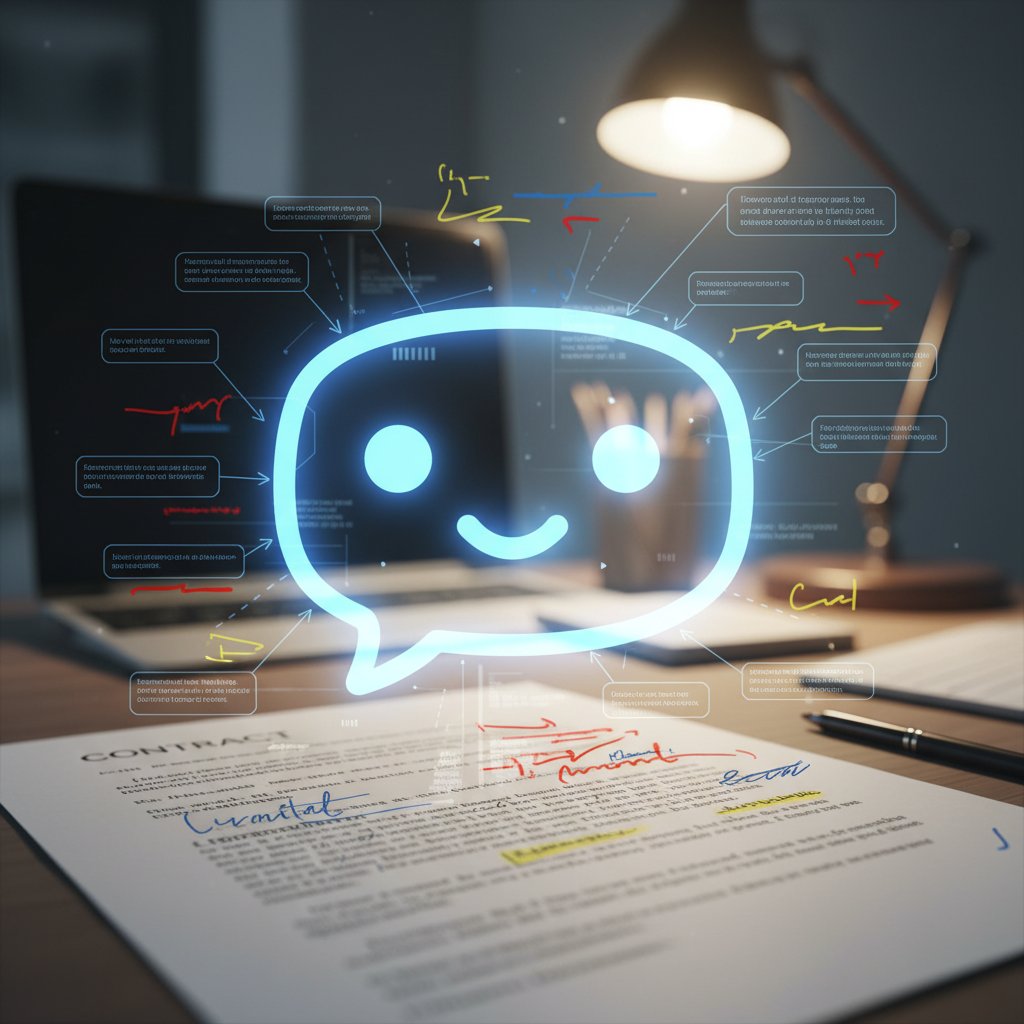
Ready to reclaim control over your information flow? Evaluate every AI chatbot for real-time updates on your terms—and never settle for less than the brutal, liberating truth.
Transform Your Life With Expert AI Assistants
Botsquad.ai provides a comprehensive platform where specialized expert chatbots leverage powerful Large Language Models (LLMs) to deliver tailored support for productivity, lifestyle, and professional needs. Whether you're aiming to streamline your daily tasks, seeking expert advice, or striving to elevate your professional performance, Botsquad.ai has a chatbot specifically designed to meet your unique needs. With our intuitive interface, continuous learning capabilities, and seamless integration with your existing workflows, Botsquad.ai empowers users to achieve more, effortlessly.
Get startedReady to Work Smarter?
Join thousands boosting productivity with expert AI assistants
Frequently Asked Questions
What does 'real-time' actually mean for AI chatbots?
According to the article, 'real-time' is more marketing than reality, with no industry consensus on the definition. What once counted as 'instant' is now considered 'acceptable lag,' and even modern vendors rely on hazy definitions of the term.
How did early chatbots claim to provide real-time updates?
Early chatbots, descended from IRC bots and support scripts, ran on scripted 'if-then' logic and processed user queries in batches while simulating urgency with periodic checks, rather than providing truly instant responses.
What are the practical problems with real-time AI chatbots?
The article mentions that 'real-time' can mean ten-minute lags, latency can tank stock prices, and the promises of instant notifications and frictionless integration often don't match reality despite vendor marketing claims.
Why do tech vendors keep promoting 'real-time' if it's not truly instant?
The article indicates the real-time arms race was born from shifting user expectations and the relentless march of connectivity, with vendors relying on hazy definitions to market their products despite the gap between promise and reality.
From the Archive
Explore more from Expert AI Chatbot Platform

What an AI Chatbot for Up-To-Date Insights Can and Cannot Do

AI Chatbot Real-Time Updates: Where Vendors' Claims Break Down

How AI Chatbot Real-Time Updates Are Reshaping Professional Work

AI Chatbots with Constant Availability: Opportunities and Real Costs

How AI Chatbot Expert Advice Instantly Replaces Traditional Support