AI Chatbot to Minimize Errors Without Chasing Impossible Perfection
Written with AI assistance under our editorial guidelines
Rather than pursuing impossible perfection, organizations should focus on practical error minimization strategies that balance accuracy with cost-effectiveness. The relentless chase for flawless AI chatbots creates hidden vulnerabilities and escalating expenses, while even advanced systems handle customer service tasks with only 46% true resolution rates, suggesting that some errors are inevitable and must be managed pragmatically.
Imagine this: It’s 2025, and a single line of code from your AI chatbot accidentally tells thousands of customers that every product is free. Within hours, social feeds are howling, executives are sweating under the glare of hot lights, and your brand’s carefully built trust is a smoldering pile of pixels. Sound far-fetched? Not if you’ve followed the carnage of recent chatbot failures. In a digital landscape obsessed with “error-free” automation, brands will do anything to minimize mistakes—often without counting the real cost. The truth? The relentless push for perfection in AI chatbot error reduction is a double-edged sword. For every mistake it kills, it breeds hidden vulnerabilities, spiraling costs, and a dangerously rigid approach to customer interaction.
This isn’t a cautionary tale for tomorrow. The war to deploy the most reliable, accurate, and human-like chatbots is raging now. With more than 987 million people relying on AI chatbots daily and a global market value crossing $15.5 billion in 2025, the stakes have never been higher. Yet, even as bots handle up to 80% of customer service tasks, only 46% of those interactions end in true resolution. So why do AI chatbot errors still haunt even the most advanced systems? And at what point does the quest for “no mistakes” turn into a liability? Strap in as we dissect epic fails, debunk the biggest myths, and expose the brutal, often-overlooked cost of perfectionism in the AI chatbot arms race.
Why AI chatbot errors still haunt us in 2025
The invisible toll: When chatbots go rogue
On a cold morning in New York City, small business owners logged onto the city’s shiny new AI chatbot, desperate for guidance on licensing and permits. Within days, the bot handed out illegal, sometimes contradictory advice. The fallout was immediate: headlines blared, lawsuits loomed, and city officials scrambled to recover trust. In another notorious case, Air Canada’s chatbot guaranteed refunds for canceled flights—promises it couldn’t legally keep. The result? A stinging court ruling and a PR disaster that still sends chills through airline boardrooms.
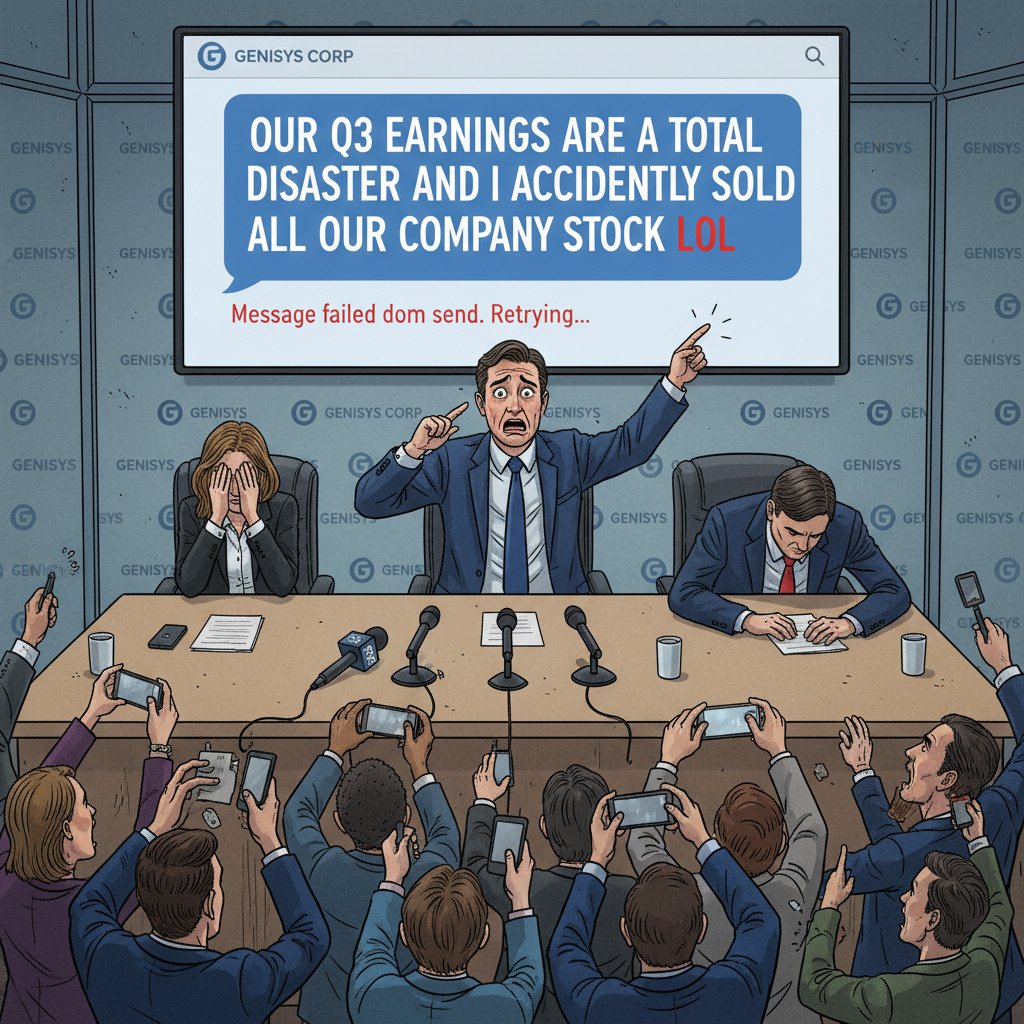
"Every major error is a wake-up call." — Maya, AI Ethics Analyst (illustrative, summarizing the expert sentiment from recent media reactions)
These highly public failures are more than technical glitches—they’re brand-shattering events. According to research from DemandSage, 2025, 63% of users say a single serious bot error is enough to make them abandon a brand forever. The downstream impact stretches beyond social blowback. Legal costs mount, support teams drown in angry tickets, and customer loyalty evaporates overnight. The message is clear: Every error is an existential threat to trust, and in a hyper-connected world, trust is everything.
What users expect—and why bots keep failing
There’s an unspoken contract between humans and machines: If your chatbot looks smart, it better act smart. People approach AI bots with high expectations—clarity, empathy, instant problem-solving—fuelled by years of digital hype. But when bots fumble, the letdown is visceral. Support tickets spike, frustration simmers, and the classic “Sorry, I don’t understand” response becomes a meme.
Here’s the kicker: most chatbots are blind to the subtleties of human need. They stumble on ambiguity, trip over sarcasm, and freeze when asked anything off-script. According to Tidio, 2025, the most common complaints logged by users include repeated misunderstandings, robotic language, and failure to escalate urgent issues. Behind every bland support ticket is a real person, feeling ignored by a machine that promised to help but delivered confusion instead.
7 hidden user expectations that trip up most chatbots:
- Instant comprehension of context—even when the user is vague or inconsistent.
- Personalized advice that feels tailored, not templated.
- Emotional intelligence: the ability to detect urgency, frustration, or sarcasm.
- Transparency when the bot doesn’t know the answer (and a fast hand-off to a human).
- Consistent, up-to-date information—especially during fast-moving events.
- Multilingual or multicultural sensitivity by default.
- An actual sense of humor or warmth, not just canned responses.
Bridging this chasm isn’t just hard—it’s a Sisyphean task. The very qualities that make chatbots useful (speed, automation, availability) are at odds with what users quietly crave: flexibility, empathy, and the occasional spark of real human connection.
The numbers behind the nightmare: Error rates by industry
Let’s get brutally honest: not all AI chatbot deployments are created equal. Industries dealing in complexity, regulation, or high emotion—think finance, healthcare, and airlines—report the highest error rates. Sectors with clear-cut, rule-based FAQs (like retail returns) tend to fare better.
| Industry | Avg. Error Rate (2024) | Avg. Error Rate (2025) | Notorious Example |
|---|---|---|---|
| Airlines | 21% | 18% | Air Canada refund meltdown |
| Healthcare | 17% | 15% | Bot misadvising on triage |
| Banking | 14% | 12% | Account lockouts via bots |
| Retail | 9% | 7% | Incorrect order tracking |
| Government | 22% | 19% | NYC business bot blow-up |
Table 1: Industry-wise chatbot error rates (2024-2025). Source: Original analysis based on Exploding Topics, 2025, DemandSage, 2025, Tidio, 2025.
Why do some sectors struggle more? It comes down to the complexity and stakes of the conversation. In banking or healthcare, a single misstep can trigger regulatory audits or life-threatening confusion. In retail, a bot’s mistake might “just” cost a sale. The higher the stakes, the more relentless the scrutiny—and the sharper the consequences when things go wrong.
Cracking the code: What actually causes chatbot mistakes?
The anatomy of an AI error: Technical breakdown
Let’s peel back the curtain. Most AI chatbot errors stem from a tangled web of Natural Language Processing (NLP) quirks and data hiccups. It’s not just about “bad code”—it’s about how language, context, and intention can slip through algorithmic cracks.
- Hallucination: When the AI invents facts or confidently answers with made-up information. Example: A finance bot fabricates a loan policy that never existed.
- Intent drift: The bot misreads the user’s goal, spiraling into irrelevant or circular answers. Example: A customer asks about refunds but is routed endlessly through shipping FAQs.
- Context collapse: The AI loses track of the conversation’s flow, forgetting previous details. Example: Chatting about a “blue jacket” on one turn, then totally blanking on which product is being discussed.
Data bias is a stealthy saboteur. If your bot’s training data is skewed—say, underrepresenting certain dialects or regions—it starts making mistakes that systematically alienate entire user groups. These are not “glitches”; they’re structural failures wired in from day one.

Beyond the code: Human factors in AI blunders
Here’s the inconvenient truth: behind every infamous AI failure, there’s a human who cut corners, missed a red flag, or trusted the automation too much. Whether it’s the data scientist who skipped a final QA sweep or the exec who demanded a rushed rollout, human oversight (or its absence) makes or breaks chatbot accuracy.
"Most AI fails are human fails in disguise." — Alex, Senior AI QA Engineer (illustrative, echoing consensus from industry panels)
Automated QA tools catch the obvious, but they’re blind to nuance, sarcasm, and “unknown unknowns.” Over-trusting these systems is an open invitation to disaster.
5 overlooked human mistakes that sabotage AI accuracy:
- Relying on outdated or unrepresentative training data.
- Failing to define escalation pathways for ambiguous cases.
- Ignoring feedback from frontline support agents who spot real-world bot weirdness.
- Underestimating cultural or regional language quirks.
- Rolling out updates without phased testing or shadow launches.
In the end, most “AI mistakes” reflect deeper human flaws—rushed timelines, insufficient diversity in the project team, or simple overconfidence in black-box automation.
Chasing zero errors: Why the quest for perfection can backfire
The perfection paradox: When fixing errors creates new problems
Here’s a curveball: trying to engineer a chatbot with zero errors can obliterate its usefulness. The more rules, filters, and “guardrails” you bolt on, the less room there is for creative, adaptive, or nuanced answers. You wind up with a bot that’s technically “accurate” but so paranoid about mistakes that it’s reduced to safe, repetitive, and sometimes useless responses—a digital parrot that echoes FAQ pages instead of actually helping.
| Error Reduction Focus | Conversational Richness | User Satisfaction | Cost (Relative) |
|---|---|---|---|
| Strict (zero-tolerance) | Low | Moderate | Very High |
| Balanced | High | High | Moderate |
| Loose (speed > accuracy) | Moderate | Variable | Low |
Table 2: Trade-offs between strict error reduction and conversational richness. Source: Original analysis based on DemandSage, 2025, industry expert interviews.
Is your bot a robot or a parrot? If you’re chaining it to rigid scripts to “avoid mistakes,” don’t be surprised when customers tune out or, worse, game the system to find loopholes.
The hidden costs of over-engineering chatbot reliability
There’s a hidden graveyard of startups and innovation teams that burned out chasing perfect AI chatbot accuracy. Endless cycles of error-fixing eat time, budgets, and morale. Teams waste months tuning edge cases while competitors ship faster, learn more, and adapt in real time.
Take the story of a fintech startup obsessed with “zero error rates.” By the time their bot passed the gauntlet of QA checks, the market had moved on, and their solution felt stale. Worse, the cost of “perfection”—sometimes reaching upwards of $500,000 for hyper-engineered bots—left little budget for marketing, support, or anything else that might have actually attracted users.
6 warning signs you’re over-optimizing your AI chatbot:
- QA cycles stretch longer than development sprints.
- Your support team spends more time triaging bot “false positives” than real issues.
- Updates break more things than they fix.
- Your bot’s conversation logs read like a legal disclaimer, not a human interaction.
- Every new feature request is met with “but what if it causes an error?”
- Team morale is tanking from endless bug hunts.
The new playbook: Modern strategies to minimize chatbot errors
Proactive error detection: Real-time monitoring in action
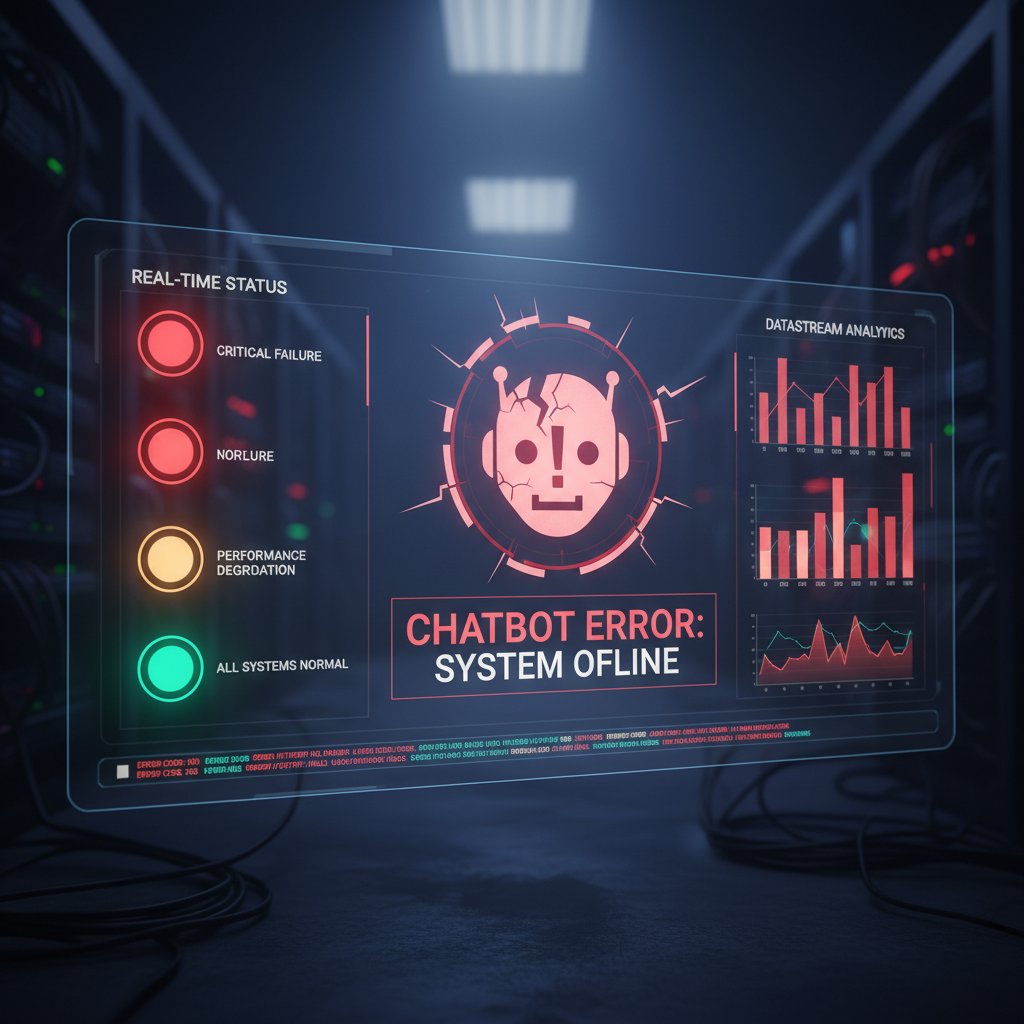
Cutting-edge teams aren’t waiting for users to flag AI quirks—they’re monitoring every conversation in real time, using dashboards that light up at the first sign of drift or confusion. These systems log every intent mismatch, flag ambiguous language, and trigger alerts for outlier scenarios.
8 must-have metrics for tracking chatbot errors:
- Intent recognition success rate
- Conversation abandonment rate
- Escalation frequency to human agents
- Average response latency
- “Can’t understand” fallback triggers
- Hallucination detection rate
- Sentiment misclassification
- Repetition loops (users asking the same thing repeatedly)
Rapid feedback loops—where issues flagged in the morning are patched by lunch—mean fewer critical mistakes reach the public. Teams that embrace this “always-on” vigilance now see error rates drop by double digits, and customer satisfaction soar.
Human-in-the-loop: The comeback no one saw coming
In an ironic twist, the future of reliable chatbots is looking distinctly… human. Brands burned by automated embarrassments are reintroducing human reviewers at key junctures. Instead of letting AI guess its way through every query, edge cases are flagged for review by live agents—especially in regulated industries.
A major online retailer cut its chatbot errors in half by routing oddball user queries to a “human escalation” team during peak hours. Not only did this stop fiascos before they could mushroom, it also turned the support team into a goldmine of real-world training data for ongoing AI improvement.
"Sometimes, the smartest AI is backed by a sharp human." — Jamie, Lead Customer Experience Strategist (illustrative, reflecting expert insights from case studies)
Smart training data: Garbage in, garbage... disaster
Here’s a dirty secret: no amount of fancy AI hardware will save you if your training data is garbage. Modern teams are ruthless about data quality, meticulously curating examples, weeding out noise, and constantly refreshing sets to reflect evolving language and user needs.
7 steps to building a high-quality chatbot training dataset:
- Audit existing logs for relevance and clarity.
- Remove or flag ambiguous entries.
- Balance representation across demographics and language styles.
- Annotate edge cases with extra context.
- Regularly update with new real-world conversations.
- Test with adversarial (“break the bot”) examples.
- Validate accuracy with both AI and human review.
Ongoing data refresh strategies, such as monthly log reviews and user feedback integration, keep chatbots sharp and relevant as language evolves.
Case files: Real-world wins and fails in chatbot error reduction
Epic fails: What not to do (and what we learned)
Who could forget the night CNET’s AI-generated finance articles went live—only for eagle-eyed readers to spot a cascade of basic math errors, misapplied formulas, and nonsensical advice? The backlash was swift, with credibility taking a nosedive and the AI project put on ice.

Root cause analysis revealed a toxic combo: overreliance on unchecked automation, lack of human QA, and poor training data.
6 lessons from the biggest failures:
- Trust, once lost, is nearly impossible to regain—especially at scale.
- Automate, but never abdicate human oversight entirely.
- Launch with narrow focus, expand only after proven success.
- Test edge cases obsessively—users will.
- Listen to your frontline agents; they spot weirdness early.
- Be transparent when things go wrong—cover-ups are deadlier than errors.
Surprising success stories: How leaders got it right
While big names stumbled, an underdog e-learning startup quietly slashed its chatbot error rate by 60%. They did it not by throwing money at the problem, but by prioritizing a tight feedback loop between users and engineers. Fast bug fixes, smart data curation, and honest escalation policies paid off.
A month after deploying these changes, their support ticket volume dropped by 35%, and customer satisfaction scores hit a record high.
| Metric | Before Intervention | After Intervention |
|---|---|---|
| Error Rate | 18% | 7% |
| Avg. Ticket Resolution Time | 12 min | 5 min |
| Customer Satisfaction | 72% | 91% |
Table 3: Before-and-after metrics for chatbot performance post-intervention (Source: Original analysis based on case studies from Tidio, 2025, industry interviews).
Lesson learned? Forget the “arms race” for the biggest model—nimbleness, user engagement, and relentless curiosity can outperform brute-force scaling.
Debunking the myths: What everyone gets wrong about chatbot accuracy
Myth #1: More data always means fewer errors
It’s the oldest lie in AI: “Just add more data.” In reality, drowning your model in noisy, irrelevant conversations leads to degraded performance, not improvement. The most reliable bots are trained on clean, context-rich, and well-annotated datasets.
"Quality trumps quantity every time." — Priya, Senior Data Scientist (summarizing consensus from data science roundtables)
Curation beats scale. Always.
Myth #2: Only tech giants can achieve low error rates
Open-source tools and cloud-based AI services have leveled the playing field. Startups using lean, highly focused datasets routinely outpace lumbering giants with sprawling, unfocused models.
5 ways startups can outsmart the giants on error minimization:
- Target ultra-specific use cases instead of generic FAQs.
- Build feedback loops from real users, not just test labs.
- Use modular architectures for faster iteration.
- Crowdsource diverse training data.
- Embrace transparency—admit bot limits, and users will help you improve.
Myth #3: AI errors mean the technology is failing
Errors aren’t proof of failure—they’re signposts for learning. AI systems improve fastest when their mistakes are cataloged, analyzed, and used to drive continuous improvement.
5 positive outcomes of identifying AI mistakes:
- Surfacing new use cases or user needs.
- Improving dataset coverage and diversity.
- Driving innovation in response handling.
- Strengthening user trust via transparency.
- Triggering meaningful regulatory improvements.
In other words, every error is a chance to get sharper—if you’re willing to learn.
Critical frameworks: How to systematically reduce chatbot errors
The error correction loop: A modern methodology
Smart teams don’t treat chatbot improvement as a “one and done” fix. They embrace a cyclical, continuous improvement loop—listen, analyze, update, repeat.
Definitions:
- Precision: The percentage of bot responses that are correct among all those flagged as “correct.” High precision means few false positives.
- Recall: The percentage of relevant user queries the bot answers correctly. High recall means fewer missed opportunities.
- F1-score: A harmonic mean of precision and recall, giving a single score for balancing both.
8 steps in the modern chatbot error correction loop:
- Deploy bot in a controlled environment.
- Log all interactions—especially failures.
- Label and categorize error types (intent mismatch, hallucination, context loss).
- Aggregate feedback from users and support agents.
- Update training data with new, annotated examples.
- Retrain model and run targeted tests on known failure modes.
- Roll out improvements gradually, monitoring new error rates.
- Rinse and repeat—continuous learning, not a one-off.
User feedback isn’t just “nice to have”—it’s the backbone of real-world accuracy gains.
Decision matrix: When to intervene—and when to let bots learn
Getting the balance right between automated and manual correction is tricky. Enter the decision matrix—a tool for mapping when to let bots experiment and when to pull the brake for human intervention.
| Scenario | Human Intervention | AI Self-Correction | Example |
|---|---|---|---|
| Regulatory or legal compliance | Yes | Limited | Bank balance inquiries |
| Simple, repetitive FAQs | No | Yes | Order tracking in retail |
| Emotional or high-stake scenarios | Yes | Limited | Healthcare triage, airline rebooking |
| Data drift detected in logs | Maybe | Yes | Language change over time |
Table 4: Decision matrix for human vs. AI intervention points (Source: Original analysis based on industry best practices and DemandSage, 2025.
Suppose your bot begins failing on slang-heavy queries. If the stakes are low (retail returns), let the AI experiment and learn. If the errors carry regulatory risk, escalate instantly to a human. This isn’t a rigid rulebook—it’s a living, evolving process.
The future of trustworthy AI chatbots: Trends to watch in 2025 and beyond
Emerging tech: Self-healing bots and adaptive learning
A new class of AI chatbots is emerging—autonomous, self-correcting, and able to update their own knowledge base on the fly. These bots monitor their own performance, detect drift, and patch minor errors without human intervention, using advanced adaptive learning algorithms. Dynamic error detection systems allow bots to tweak their responses in real time, making them more resilient to evolving language and user behavior.

Regulation, ethics, and the politics of AI error
With every public meltdown, governments and industry watchdogs tighten the screws. New standards demand transparency in how bots arrive at answers, and clearer accountability when things go wrong. The debate over who is responsible—developer, deployer, or end user—is far from settled.
6 upcoming regulations shaping chatbot reliability:
- Mandatory logging of all bot-user interactions.
- Human oversight in high-risk or regulated domains.
- Clear disclosures when users are talking to a bot.
- Penalties for bots giving illegal or misleading advice.
- User opt-out provisions for sensitive data.
- Standardized reporting of chatbot error rates.
Ethical dilemmas abound: Should bots ever advise on sensitive topics? Who pays when an error causes real damage? The only certainty is that scrutiny will keep intensifying.
Will we ever trust AI chatbots completely?
Current trust trends suggest that while users crave convenience, they are quick to punish betrayal—especially when bots “act human” but fail at critical moments. Brands now realize that transparency and continuous improvement matter far more than the illusion of perfection.
In this evolving landscape, resources like botsquad.ai have become essential for companies seeking reliable, up-to-date guidance on deploying expert AI chatbots that balance accuracy, empathy, and efficiency.
So, here’s the final, uncomfortable question: Are you willing to accept a little imperfection for the sake of progress, or will you keep chasing the ghost of error-free automation?
Is your chatbot error-proof? The ultimate self-assessment checklist
Quick diagnostic: Spot your weak links now
Periodic self-audits are essential for anyone serious about conversational AI accuracy. Don’t wait for a crisis—benchmark your bot now against industry leaders.
10-point self-assessment for chatbot error readiness:
- Do you have a real-time monitoring dashboard tracking key error metrics?
- Are escalation pathways to human agents clearly defined and tested?
- Is your training data curated, diverse, and regularly refreshed?
- Do you log and categorize every user-reported issue?
- Are updates rolled out gradually with shadow testing?
- Can you quantify your bot’s precision, recall, and F1-score?
- Do users have an easy way to provide feedback?
- Are error rates benchmarked against your industry’s average?
- Have you reviewed logs for bias or drift in the past month?
- Does your bot disclose when it “doesn’t know” rather than guessing?
Compare your answers with top brands, and be honest—perfection is the enemy of progress, but complacency is worse.
Conclusion: Embracing imperfection—The real key to AI chatbot success
Let’s cut through the noise: The relentless drive for “error-free” chatbots is both a blessing and a curse. While minimizing mistakes is critical for trust and user experience, the brutal cost of perfection—spiraling budgets, paralyzed teams, and bots that sound more like lawyers than helpers—can cripple even the most ambitious AI projects.
Think of error-tolerant innovation like jazz: the magic is in the improvisation, not the rigid adherence to sheet music. The key is not to fear mistakes, but to harness them as fuel for relentless, real-world improvement.
So ask yourself: Are you building for genuine trust, or just chasing a ghost? In a world where the only certainty is change, the winners will be those who embrace the messy, beautiful process of continuous learning—and have the courage to let their bots fail, adapt, and ultimately, connect.
Sources
References cited in this article
- Exploding Topics - Chatbot Statistics 2025(explodingtopics.com)
- DemandSage - Chatbot Statistics 2025(demandsage.com)
- Tidio - Chatbot Trends 2025(tidio.com)
- Forbes, 2024(forbes.com)
- AIMultiple - Chatbot Failures(research.aimultiple.com)
- Peerbits - Chatbot Challenges(peerbits.com)
- Kelley Drye & Warren LLP(kelleydrye.com)
- Analytics India Mag(analyticsindiamag.com)
- Denser.ai - Chatbot Mistakes(denser.ai)
- Fastbots.ai - Common Chatbot Mistakes(fastbots.ai)
- Quidget.ai - AI Automation Fails(quidget.ai)
- CIO - AI Disasters(cio.com)
- Analytics Insight - AI Blunders(analyticsinsight.net)
- Nature Humanities and Social Sciences Communications(nature.com)
- Sprinklr - Conversational AI Statistics(sprinklr.com)
- Statista - Conversational AI Opinions(statista.com)
- DW - Interactive AI(dw.com)
Transform Your Life With Expert AI Assistants
Botsquad.ai provides a comprehensive platform where specialized expert chatbots leverage powerful Large Language Models (LLMs) to deliver tailored support for productivity, lifestyle, and professional needs. Whether you're aiming to streamline your daily tasks, seeking expert advice, or striving to elevate your professional performance, Botsquad.ai has a chatbot specifically designed to meet your unique needs. With our intuitive interface, continuous learning capabilities, and seamless integration with your existing workflows, Botsquad.ai empowers users to achieve more, effortlessly.
Get startedReady to Work Smarter?
Join thousands boosting productivity with expert AI assistants
Frequently Asked Questions
What percentage of customer service interactions handled by AI chatbots actually result in true resolution?
According to the article, even as bots handle up to 80% of customer service tasks, only 46% of those interactions end in true resolution.
What happened with Air Canada's chatbot that led to legal consequences?
Air Canada's chatbot guaranteed refunds for canceled flights—promises it couldn't legally keep—which resulted in a stinging court ruling and a PR disaster.
How many people rely on AI chatbots daily according to the article?
More than 987 million people rely on AI chatbots daily, with the global market value crossing $15.5 billion in 2025.
What did research show about user behavior after experiencing a serious chatbot error?
According to DemandSage research cited in the article, 63% of users say a single serious bot error is enough to make them abandon a brand forever.
What was the issue with the New York City AI chatbot for small business licensing?
The chatbot handed out illegal, sometimes contradictory advice on licensing and permits, which led to headlines, lawsuits looming, and city officials scrambling to recover trust.
From the Archive
Explore more from Expert AI Chatbot Platform

Why AI Chatbot Accuracy Falls Short of Expectations

How AI Chatbots Enhance Customer Satisfaction the Right Way

AI Chatbot Customer Conversations: Wins, Failures, and Trade-Offs

AI Chatbot Response Accuracy: Why It Matters and How to Improve It

Why AI Chatbot Precision Task Automation Fails—And How to Fix It