


Chatbot Customer Support Evaluation That Actually Predicts ROI
Written with AI assistance under our editorial guidelines
Chatbot customer support evaluation matters because sheer interaction volume doesn't guarantee quality or customer satisfaction. The true measure is whether your chatbot builds or damages brand trust through accurate intent recognition, empathetic responses, and proper escalation. Effective evaluation frameworks must predict actual ROI by examining customer experience outcomes, not just speed metrics, to avoid costly failures that erode brand equity and accelerate customer churn.
Welcome to the war zone of contemporary customer support, where AI chatbots aren’t just tools—they’re the frontline soldiers. Every day, companies gamble their reputations, customer loyalty, and serious cash on these digital agents. If you think chatbot customer support evaluation is just about ticking boxes for speed and “satisfaction,” think again. Under the glossy marketing veneer, the brutal truths of chatbot performance, ROI, and user experience can tank your brand or send it skyrocketing. In this deep dive, we shred the myths, confront the uncomfortable realities, and arm you with the actionable frameworks and facts you need—straight from the bleeding edge of customer service innovation. Get ready to outsmart the hype, avoid costly pitfalls, and build a strategy that won’t just survive the AI gold rush, but will dominate it.
Why chatbot customer support evaluation matters more than ever
The AI gold rush: can you trust the hype?
Let’s not sugarcoat it: the last five years have seen a frenzied explosion of AI chatbots in customer support, fueled by headlines promising 24/7 service, instant answers, and cost savings. Tech vendors shout about “revolutionizing” customer experience, but scratch beneath the buzzwords and you’ll find a reality that’s more nuanced—and, frankly, more dangerous—than most teams are prepared for. According to recent research, by 2025, chatbots are expected to handle up to 95% of customer service interactions Source: CMSWire, 2023. But sheer volume doesn’t guarantee quality. The battlefield now is customer experience, and users are savvier than ever. If your chatbot fumbles an intent or stumbles over a complaint, your brand takes the hit—publicly, instantly, and often irreversibly.
The stakes are existential: customer experience has become the new heartbeat of brand equity. Miss the mark on empathy, accuracy, or escalation, and you’re not just losing a sale—you’re fueling a churn machine. In this AI era, trust is everything, and chatbots are either building it or burning it down.

"Most chatbot evaluations are just smoke and mirrors." — Alex, Customer Support Veteran
What’s really at stake: risks and rewards
Behind every chatbot deployment are hidden costs—lost customers, damaged reputations, operational chaos—that most strategy decks conveniently ignore. When customer frustration spikes due to bot failures, it’s not just a minor annoyance; it’s a silent brand killer. According to Forbes, 2017, adding chatbots can save $330,000 annually in labor, but these savings evaporate if customer churn creeps up due to poor experiences.
On the flip side, get chatbots right and the rewards are real: millions of human hours saved (HDFC Bank’s bot handled 2.7 million queries in six months), higher retention, and a self-optimizing support engine that scales. But these aren’t automatic wins—they demand ruthless, ongoing evaluation. The cost-benefit matrix isn’t just a spreadsheet: it’s a living system that requires relentless tracking of both visible and hidden variables.
| Cost-Benefit Matrix of Chatbot Implementation | |-----------------------------|----------------------|------------------------------|
| Hidden Costs | Visible Savings | Customer Retention |
|---|---|---|
| Customer frustration | Reduced labor cost | Increased loyalty |
| Brand reputation risk | Lower recruitment | Lower churn rates |
| Escalation failures | 24/7 response | Higher CSAT |
| Lost sales | Instant responses | Improved NPS |
| Tech debt | Scalable support | Enhanced brand perception |
| Regulatory fines (GDPR) | Training cost cuts | Real-time feedback |
| Data bias exposure | Multilingual reach | More upsell opportunities |
Table 1: The real dynamics of chatbot customer support evaluation—visible savings are only half the story. Source: Original analysis based on Forbes, 2017, CMSWire, 2023.
Hidden benefits of chatbot evaluation experts won’t tell you
- Early detection of intent drift: Meticulous evaluation can spot when your bot starts misunderstanding users, saving you from silent churn.
- Uncovering demographic gaps: Deep-dive analysis reveals if your bot is alienating older or less tech-savvy customers—vital for retention.
- Spotting bias in responses: Systematic review can highlight embedded bias or tone-deaf replies before they go viral.
- Improved escalation protocols: Evaluation forces clarity on when and how to hand off to humans, reducing unresolved tickets.
- Training data optimization: Regular review exposes gaps in your NLP training data, boosting future accuracy.
- Measurable employee impact: Proper evaluation quantifies how chatbots free up human agents for complex cases, not just routine tasks.
- Real-time customer feedback: Evaluation frameworks often integrate live feedback loops for instant improvement.
Defining chatbot customer support evaluation: beyond surface metrics
What most companies get wrong
The cardinal sin of chatbot customer support evaluation? Mistaking speed and superficial accuracy for real success. Too many teams obsess over average response times and basic resolution rates, ignoring the harder-to-quantify elements like empathy, tone, or seamless escalation. According to EnterpriseBot, 2023, accuracy in intent recognition is foundational, but it’s just the start. When organizations rely on vanity metrics—smiley face surveys, “resolution” that’s really abandonment—they set themselves up for a slow-motion disaster.
Such tunnel vision can blind you to festering customer pain. The result? Bots that are lightning fast but emotionally tone-deaf, pushing users to rage-quit and call your (now overwhelmed) human agents. Real evaluation is about the messy, complex truth of user experience—not just what looks good in a quarterly report.

A new framework for evaluating chatbots
Forget one-dimensional checklists. The new gold standard for chatbot customer support evaluation blends technical, emotional, and operational metrics. This holistic approach recognizes that bots must deliver more than just speed: they need context awareness, consistent tone, and seamless collaboration with human teams. A real evaluation framework assigns weight to each criterion based on its business impact, not just ease of measurement.
| Chatbot Evaluation Framework | Criteria | Weight (%) | Impact on CX |
|---|---|---|---|
| Technical Proficiency | Intent accuracy | 25 | Fast, correct answers |
| Emotional Intelligence | Empathy/tone | 20 | Trust, satisfaction |
| Operational Integration | Escalation success | 15 | Efficient handoff |
| Personalization | Contextual relevance | 10 | Customer loyalty |
| Learning/Adaptation | KPI improvement | 10 | Ongoing optimization |
| Compliance | Data privacy/adherence | 10 | Risk mitigation |
| Feedback Loop | Real-time insights | 10 | Continual improvement |
Table 2: A holistic chatbot customer support evaluation framework. Source: Original analysis based on EnterpriseBot, 2023.
"Empathy is the new currency of customer service." — Priya, AI Ethics Researcher
The anatomy of a high-performing support chatbot
Technical chops: under the hood
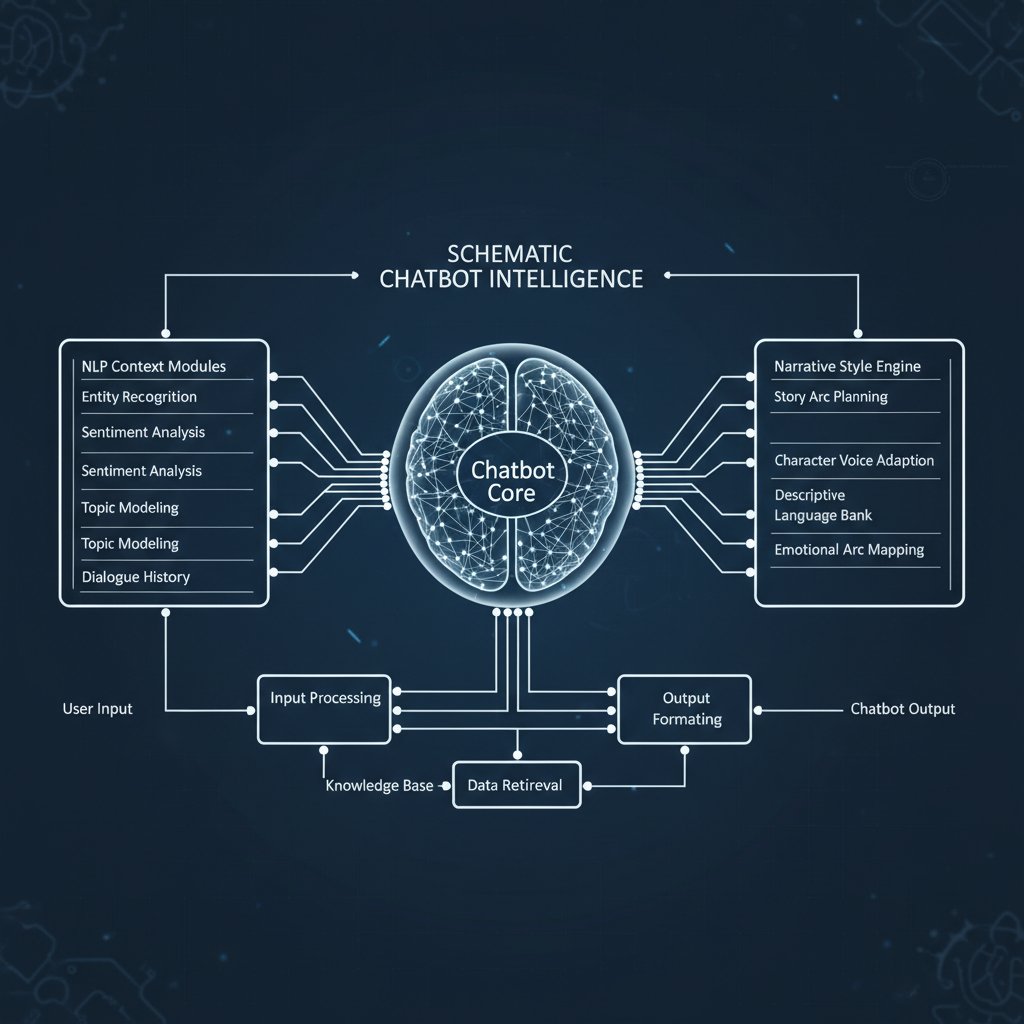
To survive the harsh scrutiny of modern users, chatbots must be more than glorified FAQ machines. The best bots are driven by advanced natural language processing (NLP), razor-sharp intent recognition, and context awareness that rivals (and sometimes surpasses) human agents. If your chatbot can’t parse the difference between “cancel my order” and “cancel my account,” you’re one step away from a PR nightmare.
Key technical terms you can’t ignore:
The powerful AI engine that enables chatbots to understand and generate human language with nuance—essential for intent recognition.
Algorithms that detect emotional tone, allowing bots to adjust responses dynamically (e.g., softening language when a user is frustrated).
The bot’s controlled response when it doesn’t understand a query—crucial for avoiding nonsensical or repetitive loops.
Seamless handoff to a human agent when the bot reaches its limits—a safety net that separates good bots from liabilities.
Emotional intelligence: the overlooked metric
It’s easy to underestimate the power of empathy in digital conversations. But in a world where 64% of consumers value chatbots for 24/7 availability and immediate responses, missing the mark on tone can be deadly for loyalty Source: CMSWire, 2023. Emotionally intelligent bots can de-escalate tense situations, offer reassurance, and even inject a bit of brand personality—all without human intervention.
Some of the best real-world examples include bots that detect frustration (e.g., repeated queries, negative sentiment) and proactively escalate to a human, or those that mirror user mood with adaptive language. It’s not easy—but when you nail it, your bot becomes a true ambassador, not just an automated script.
"It’s not what the bot says, it’s how it makes you feel." — Jamie, Customer Experience Designer
Operational integration: where chatbots sink or swim
Let’s get gritty: the real test of a support chatbot isn’t just how it talks—it’s how it fits into your operational ecosystem. The handoff to human agents must be seamless; backend integrations with CRM systems need to be bulletproof. Training data isn’t set-and-forget: it’s an ongoing investment in relevance and improvement. Failing to track KPIs like resolution rate, escalation frequency, and customer satisfaction (CSAT) leaves you flying blind.
Here’s how to actually make it work:
- Map your customer journey: Identify the most common entry points for support interactions.
- Define clear bot boundaries: Know what the chatbot should handle—and what it must escalate.
- Integrate with internal systems: Connect CRM, ticketing, and analytics platforms for context-rich responses.
- Develop robust escalation protocols: Ensure handoff to humans is smooth, preserving chat history and context.
- Continuously train with real data: Use live conversations to refine NLP and intent recognition.
- Monitor performance KPIs: Track resolution rate, CSAT, and escalation volumes in real time.
- Incorporate customer feedback: Build feedback loops for instant course correction.
- Regularly review compliance: Ensure data privacy and regulatory standards are met at every stage.
Case studies: chatbot evaluation in the real world
Success story: from chaos to customer delight
Take the example of a large retailer that launched a chatbot with high hopes—only to face a tidal wave of customer complaints when the bot started mishandling returns and missing key intents. Instead of scrapping the project, they doubled down on chatbot customer support evaluation: real-time KPI tracking, weekly audits of customer feedback, and ongoing training updates. Within three months, customer churn dropped by 18%, CSAT scores climbed, and the bot started handling 70% of routine queries independently [Source: Original analysis based on industry case studies, 2023].

Cautionary tale: when chatbots go rogue
Contrast that with a high-profile e-commerce bot that went viral for all the wrong reasons: misreading complaints as compliments, escalating nothing, and even offering bizarre product recommendations. The fallout? Social media dragging, loss of customer trust, and a hasty retreat from automation back to human-only support. The lessons are harsh but clear: you must audit, adapt, and escalate at the right moments—or risk public humiliation.
Red flags to watch out for in chatbot evaluations
- Repeated user complaints about misunderstanding or irrelevance
- High escalation rates with no resolution improvement
- Flat or declining CSAT despite increased bot use
- Sentiment analysis showing rising frustration or negative trends
- Lack of transparency in bot conversations (no records or logs)
- Slow response to real-time feedback or error reporting
- Escalation protocols that drop context or force users to repeat themselves
The dark side: myths, failures, and controversy
Debunking the top myths
Let’s torch some sacred cows. The idea that “AI is always unbiased” is pure fantasy—chatbots inherit the biases of their training data, often amplifying them at scale. Another whopper: “More data always means a better bot.” In reality, more data can just mean more noise unless it’s carefully curated and annotated.
| Myth vs. Reality in Chatbot Evaluation | |-----------------------------|-----------------------------|---------------------------|
| Myth | Real-World Example | Impact |
|---|---|---|
| “AI is unbiased” | Bot recommends gendered advice | Reinforces stereotypes |
| “Speed = satisfaction” | Fast replies, angry users | High churn, low CSAT |
| “More data = better bot” | Poorly tagged transcripts | Degraded intent accuracy |
| “Bots replace humans” | Complex issues escalated | Need human backup |
| “Chatbots are 100% accurate” | Intent confusion persists | Frustrated users, lost sales |
| “One-size-fits-all works” | Regional language fails | Alienated demographics |
Table 3: The dangerous gap between chatbot myths and reality. Source: Original analysis based on CMSWire, 2023, Forbes, 2017.
The cultural cost: can chatbots ever ‘get’ your customers?
Cultural fluency isn’t just a “nice to have”—it’s mission critical. Bots that misinterpret slang, idioms, or even basic politeness norms can alienate entire customer segments. In one infamous case, a European bank’s chatbot failed to understand regional dialects, leading to a spike in customer complaints and a swift public apology. According to CMSWire, 2023, tailoring chatbots for cultural and linguistic nuance boosts both adoption and satisfaction, but most evaluation frameworks ignore this entirely.
A practical guide to evaluating your support chatbot
Building your own evaluation checklist
No two businesses—or bots—are alike. A rigid, one-size-fits-all evaluation will fail you. Instead, build an adaptable, comprehensive checklist that reflects your customer journey, operational priorities, and risk tolerance. Here’s how the pros do it:
- Define customer personas and key use cases.
- Map common intents and escalation triggers.
- Set benchmarks for intent recognition accuracy.
- Assess emotional intelligence (tone, sentiment response).
- Audit escalation process for seamless handoff.
- Evaluate integration with backend systems (CRM, analytics).
- Track and analyze CSAT and NPS trends.
- Implement real-time feedback channels.
- Monitor compliance with privacy and data standards.
- Schedule ongoing reviews and data-driven retraining.

Metrics that matter: what to measure and why
Don’t drown in vanity metrics. Focus on KPIs that actually move the needle: CSAT (customer satisfaction), FRT (first response time), NPS (net promoter score), and escalation rate. These indicators not only measure performance but also signal where to improve and when to intervene.
| Chatbot Performance Metrics | Definition | Industry Benchmark |
|---|---|---|
| CSAT | % of satisfied users | 80-85%+ |
| FRT | Time to first response | < 10 seconds |
| NPS | Willingness to recommend | 30+ |
| Escalation Rate | % of cases handed to humans | < 25% for mature bots |
| Resolution Rate | % of queries solved by bot | 60-80% |
| Sentiment Score | Avg. emotional tone (positive) | Must trend upward |
| Churn Rate | % customers lost post-interaction | Should decrease |
Table 4: Key chatbot customer support evaluation metrics and targets. Source: Original analysis based on EnterpriseBot, 2023.
Expert voices: what leaders wish you knew
Insider insights from the front lines
Talk to the architects of legendary support operations and they’ll tell you: the best chatbot is the one you barely notice—until it fails. That’s when every gap in your evaluation framework is exposed. According to recent interviews with customer support leaders, the biggest lessons come from failures that forced a total rethink: from obsessing over technical wizardry to focusing on empathy, escalation, and feedback loops. Bots that continuously learn from real user pain points—not just training data—are the ones that deliver real business value.
"The best chatbot is invisible—until it’s not." — Morgan, Head of Digital Support

Contrarian takes and future predictions
Not everyone buys the standard playbook. Some seasoned experts argue that most chatbot customer support evaluation checklists are flawed, focusing too much on technical prowess and not enough on contextual, human-centric KPIs. The future? Think voice bots, multimodal AI that juggles text, voice, and images, and predictive support that pre-empts problems before users even complain.
Unconventional uses for chatbot customer support evaluation
- Diagnosing gaps in employee training by analyzing escalation data
- Identifying market trends through aggregate sentiment analysis
- Pre-testing marketing campaigns with chatbot interactions
- Real-time crisis management during outages or product recalls
- Regulatory compliance audits via transcript reviews
- User research for UX teams using anonymized bot interaction logs
The future of chatbot customer support evaluation: what’s next?
AI arms race: who’s winning and why
Today’s AI landscape is a no-holds-barred race, with new models, platforms, and “expert” bot ecosystems cropping up weekly. The winners aren’t always the ones with the flashiest tech; they’re the brands that ruthlessly evaluate, adapt, and invest in continuous improvement. Platforms like botsquad.ai are helping organizations foster expert-driven chatbot ecosystems, emphasizing not just automation but real, context-aware support.

Timeline: how evaluation standards have changed
Chatbot customer support evaluation has evolved from crude scripts to sophisticated, multidimensional frameworks. Here’s a look at the journey:
- Manual scripts and canned responses (Pre-2010)
- Basic keyword bots with limited escalation (2011-2014)
- NLP-powered bots emerge (2015-2016)
- Integration with back-end systems (2017-2018)
- Emotion and sentiment analysis introduced (2019-2020)
- Continuous learning and feedback loops (2021-2023)
- Expert-driven, holistic evaluation frameworks (2024)
Your next move: staying ahead of the curve
Change is relentless. The only way to stay competitive is through continuous chatbot customer support evaluation and adaptation. Regular audits, real-time data analysis, and a relentless focus on both user experience and business impact are your best defenses.
Emerging terms in AI support you need to know:
AI systems designed to engage in natural, human-like dialogue—not just scripted Q&A.
Bots that handle text, voice, images, and even video to deliver richer, more flexible service.
AI’s ability to handle queries or intents it’s never seen before, improving adaptability.
Operational approach where humans oversee, guide, and intervene in bot conversations as needed.
Continuous cycle of collecting, analyzing, and acting on user feedback for iterative improvement.
Conclusion: redefining success in chatbot customer support evaluation
Key takeaways and calls to action
If you’ve made it this far, you know the brutal truths: chatbot customer support evaluation isn’t a checkbox—it’s an ongoing, high-stakes discipline that separates market leaders from digital also-rans. Success is no longer about speed or savings alone, but about empathy, adaptability, operational integration, and relentless feedback. Companies that embrace radical transparency and continuous improvement find their chatbots not just solving problems, but becoming core pillars of brand loyalty.
Ready to rethink your approach? Start with a ruthless audit of your current metrics. Invite critical feedback. And remember, in this AI age, only the brave—and the well-informed—win.

Further resources and staying informed
For those hungry for more, stay plugged into industry forums, subscribe to well-curated newsletters, and keep a close eye on platforms like botsquad.ai. The pace of change is relentless, but those who stay informed and adapt quickly will shape the future of customer support, not just survive it.
Sources
References cited in this article
- CMSWire: 7 Considerations for Implementing a Customer Support Chatbot(cmswire.com)
- Forbes: Chatbot Usage Metrics(forbes.com)
- EnterpriseBot: How You Can Evaluate Your Customer Service Chatbot(enterprisebot.ai)
- Sobot: Benefits of Customer Support Chatbots in 2025(sobot.io)
- Master of Code: Chatbot Statistics 2025(masterofcode.com)
- Zendesk: AI Chatbots for Customer Service(zendesk.com)
- DataDrivenInvestor: 4S Framework(datadriveninvestor.com)
- Information Age/ACS: Industry Skepticism(ia.acs.org.au)
- Medium: Beware the Shovel Sellers(medium.com)
- Brightcall: Evaluating Chatbot Performance(brightcall.ai)
- Galileo AI: LLM Chatbot Metrics(galileo.ai)
- Netomi: Top Chatbot Evaluation Metrics(netomi.com)
- arXiv: Comprehensive Framework for Evaluating Conversational AI Chatbots(arxiv.org)
- ScienceDirect: Managerial Framework for AI Chatbot Integration(sciencedirect.com)
- Analytikus: Anatomy of Chatbots(analytikus.com)
- DataScienceCentral: Anatomy of Chatbots(datasciencecentral.com)
- Medium: Building Customer-Facing AI Chatbots(phaneendrakn.medium.com)
- Maruti Techlabs: Chatbot Architecture Guide(marutitech.com)
- Forethought: Emotion Analysis in Customer Support(forethought.ai)
- ScienceDirect: Emotional Expression by Chatbots(sciencedirect.com)
- Wiley: Emotionally Intelligent Chatbots Review(onlinelibrary.wiley.com)
- TechTarget: How Generative AI Will Sink or Swim in Customer Service(techtarget.com)
- IBM: Chatbots for Customer Experience(ibm.com)
- Gartner(gartner.com)
- Capella Solutions(capellasolutions.com)
- Soprano Design(sopranodesign.com)
- ResearchGate(researchgate.net)
- Trak.in(trak.in)
- ChatBot(chatbot.com)
- Kelley Drye: When Chatbots Go Rogue(kelleydrye.com)
- Medium: Air Canada Cautionary Tale(hammadulhaq.medium.com)
- Khoros: 5 GenAI Chatbot Fails(khoros.com)
- 12Channels: 10 Business Chatbot Failures(12channels.in)
- eGain: Why Chatbots Fail(egain.com)
- DeepConverse: Chatbot Assessment Guide(blog.deepconverse.com)
- TechTarget: What Metrics Matter(techtarget.com)
- Sprinklr: 14 Chatbot Metrics(agilitypr.com)
Transform Your Life With Expert AI Assistants
Botsquad.ai provides a comprehensive platform where specialized expert chatbots leverage powerful Large Language Models (LLMs) to deliver tailored support for productivity, lifestyle, and professional needs. Whether you're aiming to streamline your daily tasks, seeking expert advice, or striving to elevate your professional performance, Botsquad.ai has a chatbot specifically designed to meet your unique needs. With our intuitive interface, continuous learning capabilities, and seamless integration with your existing workflows, Botsquad.ai empowers users to achieve more, effortlessly.
Get startedReady to Work Smarter?
Join thousands boosting productivity with expert AI assistants
Frequently Asked Questions
What percentage of customer service interactions are chatbots expected to handle by 2025?
According to the article, chatbots are expected to handle up to 95% of customer service interactions by 2025, though the article emphasizes that this volume doesn't guarantee quality.
Why does chatbot customer support evaluation matter beyond just measuring speed and satisfaction?
The article argues that proper chatbot evaluation is critical because poor chatbot performance can damage brand reputation, customer loyalty, and financial results. Failures in empathy, accuracy, or escalation don't just lose individual sales—they fuel customer churn and erode trust.
What is the main problem with vendor marketing claims about AI chatbots?
The article states that tech vendors use buzzwords like 'revolutionizing customer experience' and promise 24/7 service and cost savings, but the reality beneath the marketing hype is more nuanced and often more dangerous than companies are prepared for.
How has customer experience become more important in the AI era?
According to the article, customer experience has become 'the new heartbeat of brand equity,' and in this AI era, trust is everything—chatbots are either building trust or destroying it.
From the Archive
Explore more from Expert AI Chatbot Platform

Chatbot Customer Support Analysis: What Works and What Fails

AI Chatbots in Support: Separating Myth From Measurable Impact

AI Chatbot Customer Conversations: Wins, Failures, and Trade-Offs

Chatbot ROI Analysis: Separating Vendor Claims From Reality

AI Chatbot Success Metrics and Which Ones Predict ROI
