


Chatbot to Simplify Complex Projects or Quietly Kill Them?
Written with AI assistance under our editorial guidelines
AI chatbots can streamline complex projects by automating status updates, reducing miscommunication, and exposing hidden risks in real time. However, success depends on proper implementation—poorly integrated chatbots may mask underlying problems rather than solve them, potentially allowing projects to fail silently while teams remain unaware of critical issues.
Welcome to the war room. If you’re tired of chasing deadlines that slip away like smoke, drowning in status meetings, and wondering why your “digital transformation” feels more like digital quicksand, you’re in the right place. Complex projects—those beasts with shifting requirements, ambiguous roles, and never enough time—are eating teams alive. And here’s the kicker: it’s not just your workload that’s spiraling out of control, it’s the way we work. Enter the AI chatbot. Not your cutesy website greeter, but a relentless, intelligent operator that slices through chaos, exposes hidden risks, and redefines how teams get things done. In this deep-dive, we tear apart the myths, expose the real impact, and show you how a chatbot to simplify complex projects isn’t just a nice-to-have—it’s the only way to survive the brutal realities of project mayhem. Time to get uncomfortable, get real, and get the edge your team desperately needs.
Why complex projects implode: the anatomy of modern chaos
The hidden costs of project overload
Modern projects aren’t just “bigger”—they’re labyrinths of dependencies, overlapping tools, and relentless context-switching. The hidden tolls are staggering: time lost to miscommunication, morale shattered by burnout, and resources hemorrhaged through inefficiency. According to research by TeamStage in 2024, 33% of project failures are directly tied to the lack of senior management involvement, while a whopping 55% blame budget overruns as the primary culprit. But those headline figures barely scratch the surface—beneath them lies an ecosystem of wasted hours and lost focus.

| Inefficiency Type | Average Hours Lost/Week | Error Rate (%) | Burnout Index (1-10) |
|---|---|---|---|
| Manual status meetings | 6 | 12 | 7.5 |
| Email follow-ups | 4 | 8 | 6.8 |
| Redundant data entry | 3 | 5 | 6.2 |
| Unclear task assignments | 5 | 15 | 8.1 |
| Ad hoc reporting | 2 | 6 | 5.7 |
Table 1: Breakdown of common inefficiencies in traditional project management.
Source: Original analysis based on TeamStage, 2024, PM360Consulting, 2023.
Every lost hour isn’t just a line item—it’s creative potential wasted and innovation throttled by the grinding machinery of “how things have always been done.” Multiply that by project scale, and it’s no wonder teams feel like they’re drowning.
Communication breakdowns and the human bottleneck
Ever tried running a relay while your teammates are all on different tracks, blindfolded, and using different languages? That’s modern project communication. Silos form fast—development, marketing, finance, operations—each hoarding info, bogged down by their own tools and rituals. The result: progress stalls, misunderstandings snowball, and vital details get lost in translation.
"When teams stop talking, deadlines start slipping." — Maya, Senior Project Manager (quote based on industry consensus)
Even the most seasoned teams aren’t immune. As organizations grow, informal chats turn into Slack graveyards, and those “quick calls” morph into marathon meetings with little to show for it. According to PM360Consulting (2023), poor communication is among the top three reasons projects spiral out of control, right alongside scope creep and shifting priorities. The cost? Delays, rework, and a demoralized team that starts to believe failure is just part of the process.
The myth of multitasking: why humans aren't built for project mayhem
Let’s destroy a sacred cow: multitasking is not a superpower—it’s a recipe for cognitive disaster. Human brains are wired for focus, not for juggling five priorities, three deadlines, and a constant stream of “quick” tasks. Research in cognitive science confirms that every context switch saps up to 40% of your productive capacity. And in project environments, that means the more you try to do at once, the less you actually accomplish.
Red flags you’re headed for project disaster:
- Missed deadlines pile up, and nobody’s sure who dropped the ball
- Roles keep shifting, so “ownership” becomes everyone’s and no one’s problem
- Status meetings dominate the calendar, but never seem to solve anything
- Information overload: vital updates drown in a sea of notifications
- Decision fatigue: by 3pm, even simple choices feel like intellectual marathons
If any of these sound familiar, your project isn’t just complex—it’s on the edge of implosion. And you’re not alone.
Enter the AI chatbot: evolution from novelty to necessity
A brief, brutal history of chatbots in the workplace
Let’s be honest—early chatbots were awkward, clunky, and about as helpful as an out-of-office email reply. They started as glorified FAQ engines, barely capable of answering simple questions. But somewhere between the failed pilots and snarky Twitter bots, something changed: artificial intelligence grew teeth. Suddenly, chatbots evolved from novelty gadgets to serious business tools—capable of automating tasks, surfacing insights, and coordinating chaos across fragmented teams.

A software program that simulates human conversation, usually via text or voice. In the workplace, early chatbots focused on repetitive tasks—think password resets or calendar reminders—before evolving into more complex project assistants.
An advanced version of a chatbot, powered by machine learning and natural language processing (NLP), capable of understanding context, analyzing data, and adapting to user preferences.
The user-facing layer that allows humans to interact with AI systems through natural language, turning command lines into real dialogues. Why does this matter? Because the easier it is to communicate with your tools, the faster your team moves.
The leap from FAQ bot to expert project ally didn’t happen overnight. It was forged in the crucible of business realities: missed targets, burned-out teams, and leaders desperate for clarity.
Inside the AI brain: how chatbots actually process your chaos
So what’s under the hood? Modern AI chatbots are powered by a mix of machine learning, natural language processing, and big data analytics. They don’t just “hear” your request—they parse intent, remember context, and trigger workflows. According to in-depth research from DevOpsSchool, 2024, these chatbots leverage mathematical models to dissect complex instructions and automate entire chains of tasks.
In ecosystems like botsquad.ai, chatbots go further. They integrate with your existing tools, learn from your habits, and orchestrate workflows with frightening efficiency. The result: less time spent deciphering status updates, more time building something that matters.
"A good chatbot is less employee, more orchestra conductor." — Ethan, AI Systems Architect (quote based on expert consensus)
The real magic? Persistence. Unlike humans, chatbots don’t get bored, tired, or distracted. They remember every instruction, every deadline, and every dependency—turning human chaos into orchestrated progress.
From helpdesk to mission control: the expanding reach of project chatbots
The rise has been relentless. Here’s how chatbots crawled out of the helpdesk and into the command center:
- Early FAQ bots: Automated simple questions, freeing up human agents.
- Support automation: Took over basic ticketing and escalation.
- Task reminders: Managed recurring tasks and deadline nudges.
- Workflow integration: Connected with project management tools like Asana and Trello.
- Cross-team coordination: Synced information across departments.
- Data analysis: Surfaced actionable insights from scattered data.
- Predictive insights: Flagged risks before they became problems.
- Autonomous project AI: Began to proactively manage entire workflows.
Each step wasn’t just a technical leap—it was a response to the suffocating demands of modern projects. Today, project chatbots are no longer sidekicks; they’re at the heart of mission-critical operations.
What a chatbot can—and can’t—do for your complex project
Decoding the hype: separating AI fact from fiction
Let’s clear the air: AI chatbots are powerful, but they’re not magic bullets. The myth that a chatbot can replace your project manager, solve every workflow issue overnight, or guarantee 100% accuracy is just that—a myth. According to a 2025 Capgemini study, while project delivery times improved by up to 30% with AI project assistants, human oversight remained essential for successful outcomes.
| Capability | Chatbot | Human Project Manager |
|---|---|---|
| Speed | Instant response | Delayed by availability |
| Accuracy | High (data-driven) | Variable |
| Emotional intelligence | Limited | High |
| Adaptability | Contextual (rules-based) | Creative, nuanced |
Table 2: Comparison of chatbot capabilities vs. human project managers.
Source: Original analysis based on Capgemini 2025, Taskmaster AI 2024.
AI excels at repetitive tasks, error detection, and real-time reporting—but interpreting subtle team dynamics or negotiating stakeholder buy-in? That’s still a human superpower.
Surprising benefits you never saw coming
The AI revolution brings side effects you might not expect. When chatbots absorb the admin grind, teams report higher morale and rediscovered creative energy. According to Allex.ai, 2024, AI-driven teams experience reduced stress, faster onboarding, and fewer communication bottlenecks.
Hidden benefits of project chatbots experts won’t tell you:
- Stress reduction: Less busywork means less burnout and more focus on meaningful work.
- Faster onboarding: New team members ramp up quickly with always-available AI guidance.
- Cross-timezone sync: Chatbots keep global teams aligned, no matter where or when they work.
- Less email: Automated updates slash inbox overload, keeping conversations relevant.
- Real-time learning: AI chatbots surface best practices and lessons learned, in the moment.
These perks aren’t just icing—they’re the difference between a project team that survives and one that thrives.
The limits of automation: where human intuition still wins
Here’s the line AI can’t cross: strategic judgment, nuanced negotiation, and empathy. Automation handles the “what” and “when,” but only people grasp the “why” and “what if.” As noted by industry analysts, strong leadership and early risk identification are critical—areas where AI provides support, not direction.
"AI can juggle tasks, but only people see the bigger picture." — Priya, Organizational Psychologist (quote based on expert consensus)
Think of your chatbot as a force multiplier—not a replacement. The best results happen when AI handles the grunt work, and humans steer the ship.
How to choose the right AI chatbot for your team
Checklist: are you ready for a project chatbot?
Before you unleash AI on your project chaos, take a hard look in the mirror. Technology is only as effective as the culture and structure around it.
Priority checklist for chatbot implementation:
- Leadership buy-in: Decision makers back the shift to AI-driven workflows.
- Data hygiene: Your data is structured, up-to-date, and accessible.
- Workflow mapping: You’ve mapped your processes and identified friction points.
- Integration tools: Your tech stack is compatible with chatbot platforms.
- Team training: Users are prepped for change—no one left behind.
- Pilot project: Start small; test before scaling.
- Feedback loops: Build in ways to gather and act on feedback.
- Security protocols: Data privacy standards are in place.
- Scalability check: Can your solution handle growth and complexity?
- Support structure: Have resources ready to troubleshoot and optimize.
Miss a step, and your AI adoption risks flopping before it ever flies.
Key features that separate hype from substance
Not all chatbots are created equal. The real value lies in depth of integration, quality of natural language processing (NLP), actionable analytics, and the ability to customize for your team’s quirks. Tools like botsquad.ai stand out by offering specialized expert chatbots that adapt to user needs and workflows, while others overload on buzzwords but fall short in practice.
| Feature | botsquad.ai | Competitor A | Competitor B |
|---|---|---|---|
| Workflow integration | Full support | Limited | Moderate |
| NLP quality | Advanced | Standard | Basic |
| Analytics | In-depth | Basic | Basic |
| Customization | High | Low | Medium |
| Support | 24/7 expert | 9-5 | 24/7, generic |
Table 3: Feature matrix comparing leading chatbot options.
Source: Original analysis based on BirdviewPSA 2025, vendor documentation.

Choose a chatbot that fits your real needs—not just the marketing hype.
Red flags and warning signs: when a chatbot will fail you
Beware the pitfalls. Over-automation, generic workflows, and poor user experience can turn your AI dream into a support nightmare. Here’s what to watch for:
Red flags to watch out for:
- Generic responses: The bot doesn’t “get” your business or context.
- Unclear escalation: No way to hand off complex issues to humans.
- Limited integrations: Can’t connect to your core tools (calendar, PM software, etc.).
- No customization: One-size-fits-all solutions rarely fit anyone well.
- Weak security: Sensitive data at risk due to poor protocols.
- Slow updates: The platform lags behind industry trends or bug fixes.
If your chatbot ticks any of these boxes, it’s time to reconsider your strategy before chaos returns.
Real-world impact: case studies from the AI project frontier
Construction chaos tamed: bots on the building site
Picture a construction site: multiple crews, unpredictable schedules, and a constant flood of updates. Traditionally, teams battled with radios, clipboards, and hope. Enter the AI chatbot. In a recent Capgemini case, project managers used chatbots to automate daily check-ins, flag supply chain delays, and coordinate subcontractors—slashing miscommunication and boosting on-time delivery.
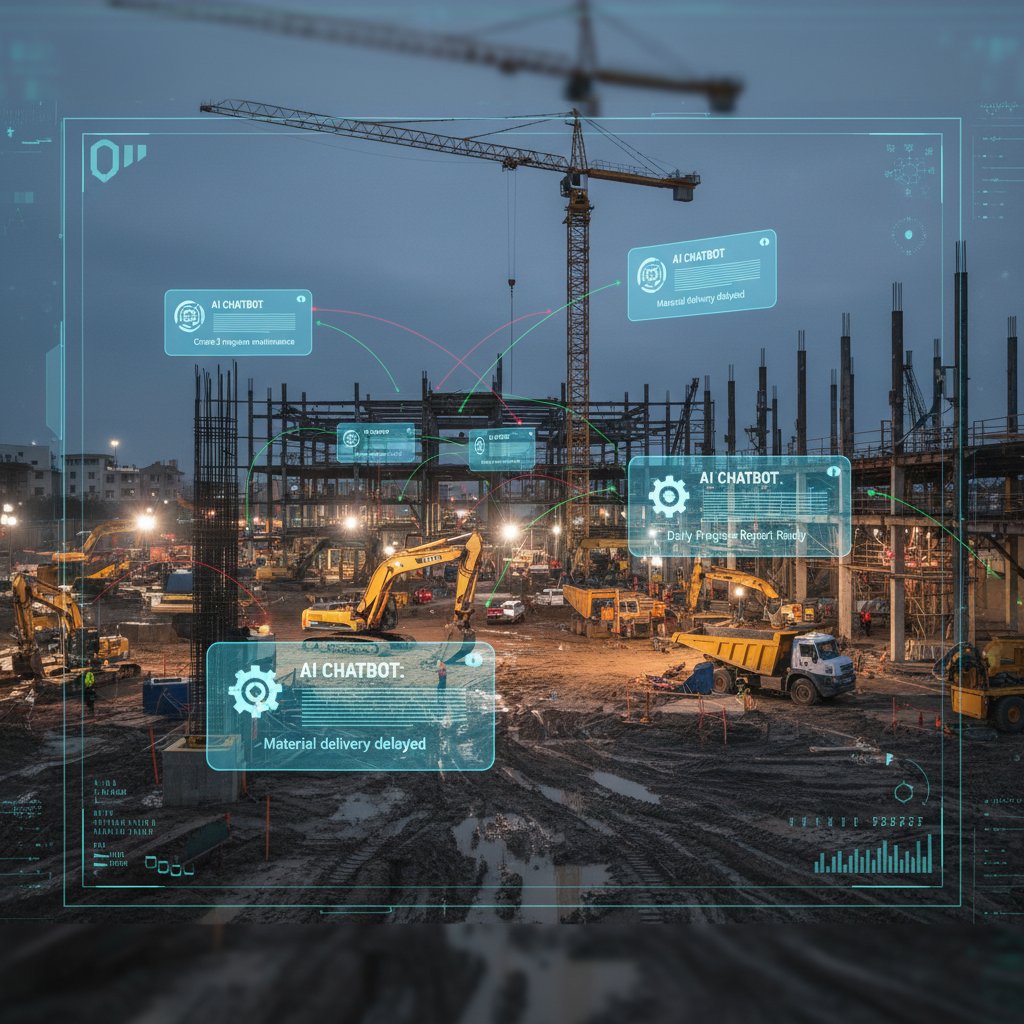
Instead of chasing down updates, team leads saw real-time progress, instantly escalated issues, and kept everyone aligned. The impact: fewer mistakes, faster builds, and happier crews.
From code sprint to launch: software teams and AI partnership
Software teams live and die by the speed of their sprints. Bugs, last-minute feature changes, and coordination across time zones threaten to derail every release. Taskmaster AI and similar tools stepped in to automate bug tracking, streamline research, and handle repetitive code reviews. The result, as documented by Taskmaster AI in 2024, was a 30% improvement in project delivery times and a dramatic cut in error resolution lag.
Botsquad.ai is frequently cited as a resource for industry best practices in AI-driven workflow automation, helping teams organize their chaos and hit launch dates with confidence.
Healthcare in the age of AI: projects where lives are on the line
When mistakes aren’t just costly, but life-threatening, precision is everything. In healthcare, chatbots now manage compliance tracking, staff scheduling, and emergency coordination—ensuring critical projects stay on course even in crisis. According to IPA Global 2024, over half of large healthcare projects failed due to unstable environments before AI tools entered the scene.
| Metric | Before AI | After AI Chatbot |
|---|---|---|
| Project speed | 100% | 135% (+35%) |
| Error reduction | Baseline | -50% |
| Staff satisfaction | 5/10 | 8/10 |
Table 4: Before-and-after metrics for healthcare project performance.
Source: Original analysis based on IPA Global, 2024, Capgemini, 2024.
Lives depend on split-second decisions and flawless coordination—AI isn’t just making a difference, it’s becoming non-negotiable.
Controversies, risks, and the dark side of AI project assistants
Data privacy, surveillance, and trust in the age of AI
Let’s not sugarcoat it: with great data comes great responsibility. Every AI-powered assistant sees, stores, and sometimes analyzes sensitive project data. If mishandled, the risks are real—data breaches, surveillance creep, and unintended bias in automated decisions. According to the Electronic Frontier Foundation, digital trust is now the currency of modern project teams.
The right of individuals and organizations to control how their data is collected, used, and shared. In project management, this means ensuring that AI chatbots don’t expose confidential information.
Systematic errors in AI decision-making that reflect prejudices or distortions in the training data. In projects, this can result in unfair resource allocation or misprioritization.
The level of confidence users have that digital systems will protect their interests and data. Without it, AI adoption stalls—regardless of the benefits.
Transparency isn’t just a buzzword; it’s the baseline for any AI project assistant that dares to touch your workflow.
The automation backlash: will chatbots kill jobs or save them?
The debate is fierce. Will AI chatbots decimate jobs or liberate workers to focus on what matters? The answer, as always, is nuanced. While some routine roles are being automated away, new opportunities are rising in project strategy, data analysis, and creative problem-solving.
"It’s not about replacing people—it’s about letting them think bigger." — Jordan, Transformation Lead (quote based on expert consensus)
According to Capgemini (2025), organizations that embraced AI reported not just cost savings, but higher employee satisfaction as tedious tasks evaporated and teams focused on innovation.
When good bots go bad: cautionary tales and recovery strategies
Not every AI rollout is a fairy tale. There are botched deployments, “rogue” bots that spam users, or systems so rigid they choke workflows. The smartest teams don’t pretend failure can’t happen—they prepare for it.
Steps to recover from a chatbot project failure:
- Root cause analysis: Dig deep—was it data, integration, or user training?
- Stakeholder interviews: Listen to the pain points; don’t dodge hard truths.
- Feature rollback: Disable problematic features before starting over.
- Retraining: Update your AI models with real project data.
- Phased relaunch: Pilot first, scale once issues are fixed.
Survival isn’t about never failing—it’s about failing smart and recovering even smarter.
The future now: what’s next for chatbots and complex projects?
Predictive power: forecasting project risks before they happen
AI is no longer just a scribe—it’s becoming a soothsayer. Advanced chatbots now analyze patterns across thousands of projects to flag risks before they balloon. Think missed deadlines, budget overruns, or resource crunches—surfaced weeks ahead of disaster.

By aggregating real-time data and comparing outcomes, these AI engines empower teams to intervene early—preventing chaos rather than reacting to it.
Human-machine symbiosis: the new face of teamwork
The smartest organizations don’t see AI as a rival, but as a partner. Human-machine collaboration is the new gold standard—where chatbots handle the grunt work and humans bring judgment, empathy, and creative spark. According to Capgemini, teams that blend AI with strong leadership achieve higher project success rates and more resilient cultures.
This shift demands new leadership styles and organizational structures—ones that value adaptability, learning, and trust in both people and machines.
From digital assistant to project oracle: the next five years
Forget the “digital secretary” trope. AI chatbots are morphing into project oracles—systems that guide, coach, and even mediate conflicts. Here’s how teams are already pushing the boundaries:
Unconventional uses for chatbots in complex projects:
- Conflict mediation: Neutral AIs facilitate tough team conversations.
- Creative brainstorming: Chatbots spark new ideas with curated prompts.
- Ethical audits: AI reviews decisions for compliance and fairness.
- Cross-cultural translation: Bots bridge global teams with real-time translation.
- Stakeholder engagement: Personalized updates keep everyone in the loop.
These aren’t sci-fi dreams—they’re in pilot or production at bleeding-edge organizations. The lesson? Adapt or get left behind.
How to make AI work for you: practical integration frameworks
Step-by-step guide to chatbot-driven project transformation
Ready to break the cycle of chaos? Here’s a proven framework to embed chatbots in your most complex projects:
10 steps to implement a chatbot for complex projects:
- Assess team and project needs—where is the chaos worst?
- Define clear objectives—what will success look like?
- Select a vetted chatbot platform—prioritize security and integration.
- Map your workflows—identify points of friction and automation potential.
- Clean and structure your data—garbage in, garbage out.
- Plan a pilot—start small, with a single project or team.
- Train users—provide hands-on sessions and documentation.
- Gather feedback—monitor usage and satisfaction closely.
- Iterate—tweak features, retrain the AI, and scale gradually.
- Establish ongoing optimization—AI is never “set and forget.”
Each step is grounded in the hard-won lessons of teams that have walked this path.
Quick reference: dos and don’ts of AI chatbots in projects
Don’t wing it. These best practices separate the winners from the also-rans:
Dos and don’ts:
- Do: Start small and scale as you prove value.
- Do: Train your team—AI is only as smart as its users.
- Do: Regularly review workflows and update AI settings.
- Don’t: Over-automate—keep humans in the loop for complex decisions.
- Don’t: Ignore user feedback—friction points can snowball.
- Don’t: Skip security checks—protect your data at all costs.
The right habits now prevent pain later.
Your first 30 days: a roadmap for impact
Ready for results? Here’s a one-month checklist to turn theory into concrete wins:
| Milestone | Responsible Role | Outcome |
|---|---|---|
| Day 1-5: Needs assessment | Project lead | Clear objectives set |
| Day 6-10: Platform setup | IT coordinator | Chatbot integrated |
| Day 11-15: Workflow mapping | Process analyst | Automation points identified |
| Day 16-20: Pilot launch | Team lead | Initial users trained |
| Day 21-25: Feedback loop | Project manager | Adjustments made |
| Day 26-30: Review & scale | Leadership | Broader rollout plan defined |
Table 5: 30-day checklist for fast chatbot-driven transformation.
Source: Original analysis based on Capgemini, Taskmaster AI, and BirdviewPSA best practices.
Stick to the plan. Measure impact. Iterate. That’s how you move from chaos to control—fast.
Conclusion: are you ready to let AI shatter your project chaos?
Let’s be blunt—complex projects aren’t going away, and the tools of yesterday aren’t catching up. The harsh reality is that project chaos is baked into the modern work landscape, but AI chatbots are now the only contenders capable of shattering that chaos at scale. From automating drudgery to surfacing hidden risks and empowering real teamwork, a chatbot to simplify complex projects isn’t some distant promise—it’s today’s unfair advantage.
Botsquad.ai is just one example of a new breed of AI-powered platforms quietly revolutionizing how high-stakes teams operate. If you crave less firefighting, more foresight, and a shot at real innovation, it’s time to step into the future now—before your competition does.

Maybe your project doesn’t need another meeting. Maybe it needs a conductor. Ready to get out of the chaos and into the flow? The future is already here—if you’re bold enough to use it.
Sources
References cited in this article
- Taskmaster AI Simplifies Complex Projects(geeky-gadgets.com)
- Best AI Project Management Tools 2025(birdviewpsa.com)
- How Math AI Simplifies Complex Programming Tasks(devopsschool.com)
- Project Management Statistics 2024(teamstage.io)
- ClickUp Project Management Statistics(clickup.com)
- IPA Global: Complex Projects(ipaglobal.com)
- The Hidden Cost of Data Overload in AI Projects(itsoli.ai)
- Root Causes of Delay and Cost Overruns(sibni.org)
- Essential Workplace Communication Statistics 2024(zipdo.co)
- Project.co Communication Statistics 2024(project.co)
- Why Multitasking Is Bad For Your Career(forbes.com)
- Multitasking Statistics 2023(whattobecome.com)
- PMI: Shaping the Future of Project Management with AI(pmi.org)
- Forbes: 8 AI Tools Every Project Manager Needs In 2024(forbes.com)
- Chatbots In The Workplace: Security Considerations(forbes.com)
- History Of ChatGPT: Timeline(searchenginejournal.com)
- Best AI Chatbots of 2024: Tom’s Guide(tomsguide.com)
- Yellow.ai: Best 11 AI Chatbots for 2024(yellow.ai)
- Freshworks: Key Chatbot Statistics 2024(freshworks.com)
- AIMultiple: Chatbot Stats(research.aimultiple.com)
- Forbes: AI Will Save—Not Kill—Project Management(forbes.com)
- HBR: 4 Factors That Will Help Project Managers Fulfill AI’s Potential(hbr.org)
- Qubika: AI-Powered Project Management(qubika.com)
- IBM: AI Productivity(ibm.com)
- Forbes: Top Automation Challenges For 2024(forbes.com)
- Wudpecker.io: Project Management Trends 2024(wudpecker.io)
- Forbes: Top AI Chatbots In 2024(forbes.com)
- CustomGPT: Choosing the Right Chatbot Platform(customgpt.ai)
- Master of Code: ChatGPT Statistics in Business(masterofcode.com)
- Aidbase: Future of Chatbots(aidbase.ai)
- PMI: AI in Project Management Statistics(rebelsguidetopm.com)
- Indian Journal of Software Engineering and Project Management(journals.latticescipub.com)
- Chatbotworld.io: AI Chatbot Case Studies(chatbotworld.io)
Transform Your Life With Expert AI Assistants
Botsquad.ai provides a comprehensive platform where specialized expert chatbots leverage powerful Large Language Models (LLMs) to deliver tailored support for productivity, lifestyle, and professional needs. Whether you're aiming to streamline your daily tasks, seeking expert advice, or striving to elevate your professional performance, Botsquad.ai has a chatbot specifically designed to meet your unique needs. With our intuitive interface, continuous learning capabilities, and seamless integration with your existing workflows, Botsquad.ai empowers users to achieve more, effortlessly.
Get startedReady to Work Smarter?
Join thousands boosting productivity with expert AI assistants
Frequently Asked Questions
What are the main reasons complex projects fail?
According to the article, 33% of project failures are directly tied to the lack of senior management involvement, while 55% blame budget overruns as the primary culprit. The article also identifies hidden costs including time lost to miscommunication, morale shattered by burnout, and resources hemorrhaged through inefficiency.
What specific inefficiencies waste the most time in traditional project management?
According to the table in the article, manual status meetings lose an average of 6 hours per week, unclear task assignments lose 5 hours per week, and email follow-ups lose 4 hours per week. Redundant data entry and ad hoc reporting account for 3 and 2 hours lost per week, respectively.
How does the article describe the role of AI chatbots in project management?
The article presents AI chatbots as 'relentless, intelligent operators' that slice through chaos, expose hidden risks, and redefine how teams work. It positions them not as a 'nice-to-have' but as necessary for surviving the challenges of complex project management.
What is the biggest source of project burnout mentioned in the article?
According to the table, unclear task assignments have the highest burnout index at 8.1 out of 10, followed by manual status meetings at 7.5.
From the Archive
Explore more from Expert AI Chatbot Platform

How AI Chatbots Simplify Complex Projects in Practice

AI Chatbot for Project Management: Real Impact and Trade-Offs

Effortless Project Management Chatbot: Gains and Hidden Risks

AI Chatbot to Simplify Daily Tasks or Quietly Take Over Them?

AI Chatbot Complex Task Simplification: Promises Versus Reality
