


Chatbot User Segment Analysis for ROI Improvement: Methods and Case Studies
Written with AI assistance under our editorial guidelines
Effective chatbot ROI in 2026 depends on advanced user segmentation rather than generic responses. Most organizations treat all users identically, leading to poor satisfaction despite 75% of customer interactions being bot-handled. Strategic segmentation based on user intent and behavior, powered by machine learning and real-time analytics, enables personalized conversations that build loyalty and drive revenue.
If you think you know who’s talking to your chatbot, think again. The digital landscape in 2025 is a minefield of shifting behaviors and hidden user intentions, where assumptions kill ROI and generic bot scripts are as useful as a locked door without a key. Chatbot user segment analysis isn’t just a line item for data geeks anymore—it’s the frontline weapon in the war for attention, loyalty, and, let’s be honest, cold hard cash. This guide will rip away the comfort blanket of buzzwords and show you the raw, researched reality behind advanced chatbot segmentation. Expect hard truths, case studies that don’t care about your feelings, and tactics your competitors are too lazy or scared to implement. Discover how to decode user intent, outsmart the platform algorithms, and make your chatbot the one users actually want to talk to—not just the one they’re stuck with.
Welcome to the only user segment analysis guide you’ll need in 2025—edgy, authoritative, and unafraid to challenge everything you thought you knew about conversational AI analytics.
Why chatbot user segment analysis matters more than ever
The hidden crisis of generic bots
Step into any modern office and listen for the sound that’s haunting support teams and marketers alike: the frustrated sigh of a user trapped in the chatbot vortex. For too long, organizations have deployed chatbots that treat every user like a pixel in a crowd—delivering copy-paste answers that solve nothing and erode brand trust. According to Grand View Research, 2024, nearly 75% of customer interactions are now handled by bots, but user satisfaction is stagnating because most bots still ignore the most basic truth: not all users are created equal.

“If you’re designing for everyone, you’re designing for no one.”
— Jamie
The fallout? Missed leads, eroded loyalty, and a slow bleed of potential high-value customers to competitors who actually listen. Poor segmentation doesn’t just annoy users; it forces companies into a race to the bottom, trapped in never-ending optimization cycles that never move the needle. The stark reality is: in chatbots, generic equals invisible, and invisibility equals irrelevance.
From blunt force to surgical precision: A timeline
Rewind a decade and chatbot segmentation was primitive at best—think basic demographics and clunky if-then scripts, more guesswork than strategy. But the rise of behavioral analytics, machine learning, and real-time data pipelines has rewritten the playbook. The industry has evolved from broad, blunt segmentation to the surgical precision demanded by today’s hyper-personalized marketplaces.
| Year | Segmentation Milestone | Industry Shift | Market Impact |
|---|---|---|---|
| 2015 | Demographics-based rules | Early chatbots, basic scripts | Low engagement, high drop-off |
| 2018 | Behavioral triggers (clicks, time) | E-commerce leaders experiment | Mild uplift, first targeted campaigns |
| 2020 | Psychographic profiling | Deep learning, NLP integration | Custom personas, higher NPS |
| 2023 | Real-time behavioral + intent analysis | AI-powered platforms, LLMs | Massive ROI jump, segmentation arms race |
| 2025 | Dynamic, context-aware segmentation | Cross-platform, privacy-first design | User retention, algorithmic dominance |
Table 1: Evolution of chatbot segmentation strategies in the last decade
Source: Original analysis based on Grand View Research, 2024, Mordor Intelligence, 2024
The real turning point? Cultural expectations shifted. Users stopped tolerating bots that didn’t “get” them, and businesses learned the hard way that segmentation is the only way to cut through algorithm fatigue.
What competitors won't admit about segment analysis
Here’s what nobody brags about at the chatbot vendor conference: segmentation is messy, non-linear, and full of landmines. Many teams rush to deploy the hottest model or copy-paste a competitor’s framework, only to watch their metrics flatline or worse, tank. The biggest pitfalls include overfitting segment rules, ignoring dynamic user contexts, and letting bias creep in undetected. Yet, the hidden benefits—those that industry leaders quietly exploit—are rarely publicized.
- Unseen revenue leaks: Pinpointing micro-segments exposes leaks in your funnel that are invisible to standard analytics.
- Cost savings: Automation of segment-specific flows slashes customer acquisition and service costs.
- Brand loyalty: Hyper-personalized experiences anchor users emotionally, driving repeat engagement.
- Algorithmic advantage: Adaptive segmentation keeps you ahead as platform algorithms shift (think Google, Facebook, WhatsApp).
- Crisis resilience: Fast, segment-driven pivots during PR or service crises minimize fallout.
- Compliance buffer: Fine-tuned segments help manage privacy and data security risks proactively.
- Continuous learning: Each interaction feeds back into the system, fueling ongoing optimization.
Leaders don’t chase every trend—they quietly build segment intelligence loops, testing ruthlessly and iterating faster than the competition can track.
Decoding chatbot user segments: Models, myths, and realities
What really defines a user segment?
Forget the textbook definitions—real-world chatbot user segments are living, breathing clusters shaped by data, context, and a healthy dose of interpretation. At its core, a segment is a group of users who share relevant traits or behaviors that matter for conversational outcomes. But if you stop there, you’re missing the nuance. True segmentation accounts for intent, emotional state, and even tech savviness—dimensions that only advanced analytics and AI can reliably reveal.
Key terms in chatbot segmentation:
A cohort of users grouped by shared characteristics (demographics, behavior, intent) with the goal of tailored interaction.
A fleshed-out fictional profile representing a typical user segment, complete with motivations, pain points, and goals.
A group sharing a temporal or lifecycle-based characteristic (e.g., new users in last 30 days, first-time buyers).
Users intentionally excluded from targeting—think bots, tire-kickers, or privacy-sensitive groups.
Why do definitions matter? Because getting them wrong leads to wasted spend, missed opportunities, and biased bots.
Common segmentation models (and why most are outdated)
Most organizations still rely on three classic models: demographic (age, location, gender), psychographic (values, attitudes), and behavioral (actions, clicks). While helpful, these are blunt tools in a nuanced world.
| Segmentation Model | Pros | Cons | Current Relevance |
|---|---|---|---|
| Demographic | Easy to implement, clear data | Overly broad, misses intent | Declining |
| Psychographic | Adds depth, uncovers motivations | Hard to scale, subjective interpretations | Moderate |
| Behavioral | Data-driven, reflects real actions | Misses “why” behind behavior | Essential |
| Intent-based (modern) | Captures user goals in real time | Requires advanced NLP, more data privacy | Critical |
| Dynamic/real-time | Adapts instantly to context | Technically complex, requires strong data ops | Emerging |
Table 2: Comparison of traditional vs. modern chatbot segmentation models
Source: Original analysis based on Market.us, 2024, Grand View Research, 2024
The market is shifting rapidly to intent-based and dynamic segmentation, where user clusters update in real time based on new data. Botsquad.ai and other leading AI platforms are at the forefront, leveraging Large Language Models (LLMs) and behavioral analytics to segment with surgical accuracy.
Myth-busting: More data, better segments?
There’s a dangerous myth in AI: throw more data at the problem and the right segments will reveal themselves. Reality check—big data often equals big noise. Without clear hypotheses and ruthless filtering, data overload creates more confusion than insight.
“Sometimes the best insights come from what you leave out.”
— Priya
In practice, organizations that collect every conceivable datapoint often drown in conflicting signals, missing the subtle cues that signal real intent or churn risk. The winners are those who know what not to measure, focusing on actionable user attributes that actually move the needle.
How leaders segment chatbot users: Real-world case studies
E-commerce: The art of personalized nudges
A leading e-commerce player faced a familiar issue: plenty of chatbot traffic, but conversions lagged. By deploying advanced segment analysis—tracking not just purchase history but onsite behavior, time of day, and cart abandonment signals—they crafted hyper-personalized nudges for high-intent users. The result? A reported 22% uplift in completed transactions and a 40% reduction in cart abandonment, according to Verloop.io, 2024.

Those who interacted with personalized product recommendations returned twice as often, proving that segmentation is the backbone of modern sales automation.
Healthcare: Segmentation for sensitive conversations
In healthcare, segmentation is a high-wire act—balancing empathy, compliance, and outcome-driven nudges. According to Mordor Intelligence, 2024, only 8% of organizations consider their AI initiatives mature, with data privacy cited as a top concern. One regional telehealth provider overcame this by segmenting users into “information seekers,” “anxious patients,” and “routine check-in” cohorts, each with distinct language, escalation paths, and privacy protocols.
By analyzing sentiment in real time and respecting segment-specific privacy flags, they achieved a 30% reduction in average response time and a significant boost in patient satisfaction scores.
Education & support: Meeting users where they are
Online education platforms are leveraging chatbot user segment analysis to personalize learning paths and support interventions. By grouping students into “struggling,” “on track,” and “advanced” cohorts—based on quiz performance, engagement streaks, and self-reported confidence—support bots can deliver tailored nudges. A leading edtech company reported a 25% improvement in student performance and an 18% increase in course completion rates after deploying segment-driven interventions.

Retention soared, and support satisfaction ratings hit all-time highs—not because of flashier bots, but smarter segments.
Building your segmentation strategy: Frameworks and checklists
Step-by-step guide to effective user segment analysis
Mastering chatbot user segment analysis isn’t about copying a competitor’s playbook—it’s a gritty, iterative process requiring ruthless honesty, technical chops, and a willingness to challenge sacred cows. Here’s the no-fluff, field-tested roadmap:
- Audit your data sources: Catalog every touchpoint—web, app, social, support logs—for segmentable signals.
- Define clear segment goals: Decide what success looks like (conversion, retention, CSAT) for each segment.
- Map user journeys: Visualize how different users move through your funnel and where chatbots can intervene.
- Hypothesize segments: Draft segment definitions rooted in real behaviors, not marketing wishlists.
- Validate with live data: Test segments against real conversations and refine based on actual outcomes.
- Implement adaptive flows: Build chatbot logic that adapts tone, content, and escalation path for each segment.
- Monitor & learn: Track segment KPIs relentlessly, flag outliers, and double down on what works.
- Iterate ruthlessly: Kill underperforming segments, experiment with new ones, and share learnings.
- Document everything: Keep segment definitions, logic, and results transparent for future teams.
Each step is a potential minefield—common pitfalls include overcomplicating segments, neglecting privacy, or mistaking correlation for causation.
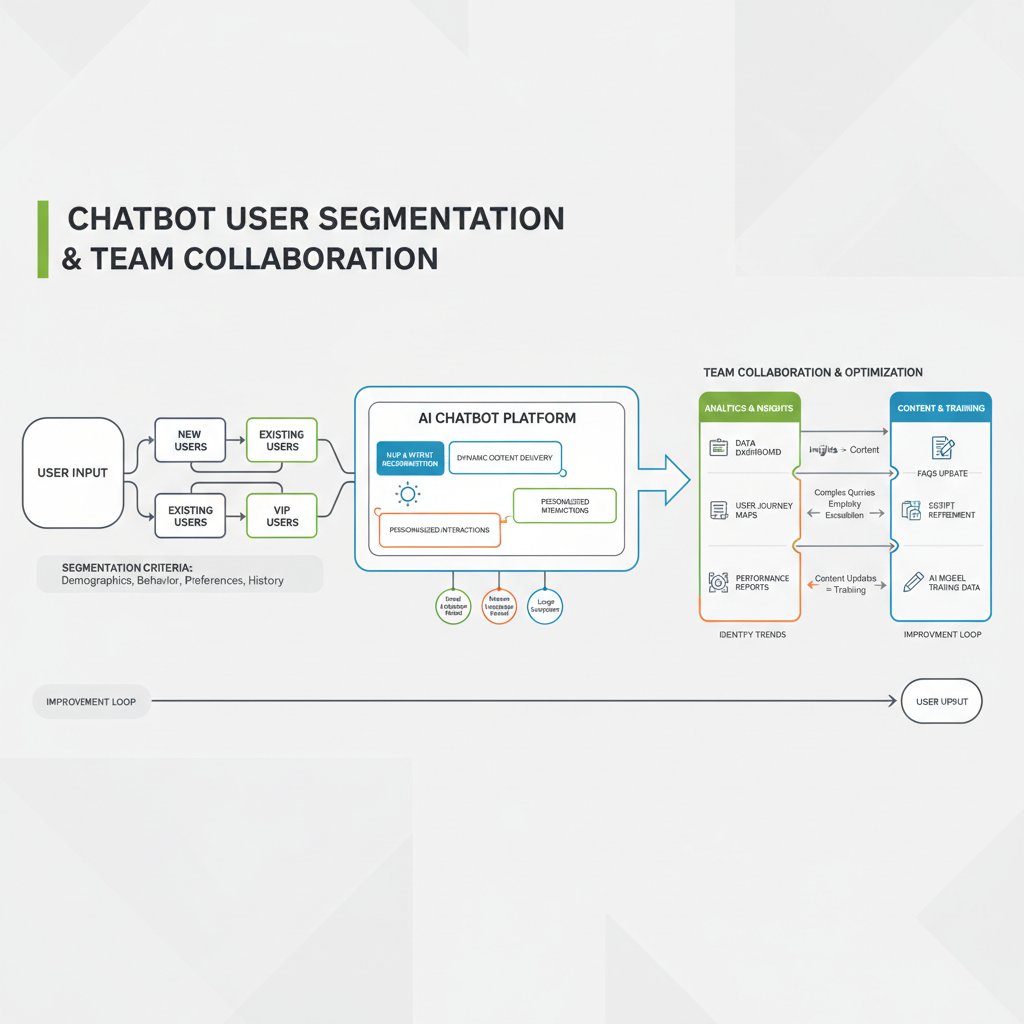
Fail here, and you risk turning your chatbot into just another digital zombie—alive, but lifeless.
Quick reference: Segmentation checklist for teams
- Ensure all user data is collected with explicit consent and transparency.
- Tie every segment to a measurable business objective.
- Validate segments with at least two independent data sources.
- Keep segment rules simple—complexity breeds bias and maintenance nightmares.
- Set up real-time monitoring for drift and bias detection.
- Run regular privacy audits on segment logic and data flows.
- Share segment performance openly across teams for continuous feedback.
- Schedule quarterly reviews to adapt segments to shifting user behaviors.
Integrating this checklist into your bot development cycle ensures that segmentation is a living, breathing practice—not a dusty spreadsheet.
The dark side: Ethical dilemmas and segmentation gone wrong
When segmentation crosses the line
Segmentation isn’t all upside. Get it wrong, and you risk privacy breaches, algorithmic bias, and outright exclusion of vulnerable users. In 2023, a major financial services firm faced public backlash after users discovered their chatbot was profiling by income and denying access to certain support channels—a chilling reminder that segmentation without oversight is a recipe for digital redlining.

The fallout was swift: reputational damage, regulatory scrutiny, and a mass exodus of users who felt surveilled rather than served.
How to segment ethically (and still win)
Ethical segmentation isn’t a luxury—it’s a survival tactic. Here’s how to walk the line:
- Start with transparency: Tell users how and why you segment.
- Minimize data: Collect only what’s necessary for meaningful segments.
- Build in bias checks: Regularly audit for algorithmic and human bias.
- Empower user choice: Let users see and edit their segment profile.
- Segment for inclusion: Ensure vulnerable or minority groups aren’t sidelined.
- Document edge cases: Track and flag outlier segment assignments.
- Review with external experts: Invite third-party oversight for high-stakes use cases.
“Respect isn’t optional—users know when you cross the line.”
— Marcus
The bottom line: segment with empathy and transparency, or risk burning trust you can’t buy back.
Beyond demographics: Advanced segmentation techniques for 2025
Intent-based and behavioral segmentation
Intent-based segmentation is the new king—grouping users not by static traits but by their real-time goals, emotions, and context. This approach leverages advanced NLP, behavioral analytics, and continuous learning to deliver hyper-targeted interactions.
| Feature/Model | Behavioral Segmentation | Psychographic Segmentation | Intent-Based Segmentation |
|---|---|---|---|
| Data required | Clicks, time, pageviews | Values, attitudes, surveys | Contextual signals, NLP |
| Adaptable | Moderate | Low | High |
| User experience | Reactive | Static, slow to update | Proactive, real-time |
| ROI | Strong | Moderate | Highest |
Table 3: Feature matrix for advanced chatbot user segment analysis
Source: Original analysis based on Verloop.io, 2024, Grand View Research, 2024
Platforms like botsquad.ai are leading this shift, enabling teams to move beyond basic personas and into the realm of contextual, intent-driven microsegments that adapt as user needs evolve.
Real-time and dynamic segmentation: The next frontier
The bleeding edge of chatbot user segment analysis is dynamic, real-time adaptation. Instead of locking users into static boxes, advanced systems analyze every interaction—adjusting segment assignment, conversation tone, and even escalation protocols on the fly.
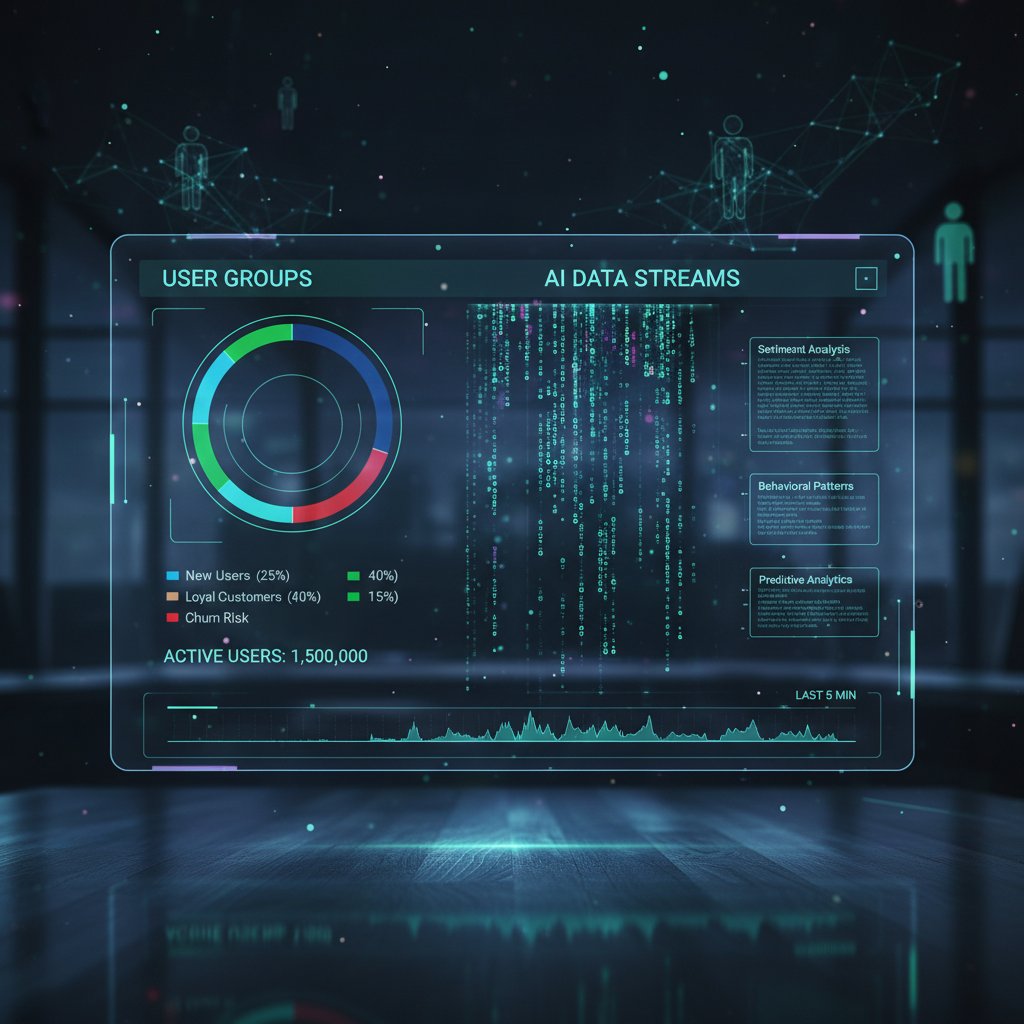
This real-time segmentation boosts engagement and conversion, but it comes with technical and business challenges: massive data throughput, algorithmic drift, and the ever-present specter of compliance. Only the most agile teams, equipped with robust data pipelines and constant monitoring, can pull it off at scale.
Unconventional uses and surprising outcomes
Anti-segments: The users you shouldn’t target
Not every user deserves your chatbot’s attention. Anti-segments—groups you intentionally ignore or deprioritize—are as important as your core segments. Examples include serial abusers, repeat returners, or users who consistently cost more than they’re worth.
- Bot traffic: Exclude known crawlers and spam agents to keep analytics clean.
- Repeat refunders: Identify and deprioritize users abusing refund policies.
- Chronic complainers: Route to specialized support, not your main flow.
- Low-intent browsers: Segment and automate, don’t waste human resources.
- Privacy-sensitive users: Offer opt-outs and minimal tracking.
- Geofenced groups: Adapt or exclude based on regional compliance needs.
Knowing who not to target keeps your team focused, your metrics honest, and your resources optimized.
Unexpected wins (and fails) from real deployments
The world of chatbot user segment analysis is full of surprises—sometimes the “obvious” segments flop, while a throwaway microsegment delivers outsized ROI. In one support deployment, targeting “midnight mobile shoppers” (users browsing after midnight via mobile) led to a 3x increase in late-night sales—an outcome missed by traditional demographics.

But beware: a retail chain’s attempt to hard-segment by income backfired when affluent users felt stereotyped and disengaged. Lesson learned—always test, always track, and never assume your segments are smarter than your users.
The future of chatbot user segment analysis: Trends, threats, and opportunities
AI, privacy, and the shifting segmentation landscape
AI is rapidly reshaping segmentation—but so are new privacy regulations, platform algorithm changes, and user expectations for transparency. The stakes are rising: according to Grand View Research, 2024, the chatbot sector hit $7.76B in 2024 with a 23.3% CAGR, but low adoption maturity (only 8% of orgs) means the market is both wide open and fraught with risk.
| Trend/Threat | Opportunity | Threat | Source |
|---|---|---|---|
| AI-driven segmentation | Hyper-personalization, real-time learning | Bias, algorithmic drift | Grand View Research, 2024 |
| Privacy regulations | User trust, opt-in microsegments | Fines, reputational risk | Mordor Intelligence, 2024 |
| Platform algorithm shift | First-mover advantage in new channels | Obsolescence, lost reach | Market.us, 2024 |
| User fatigue | Differentiation via empathy and relevance | Churn, disengagement | Verloop.io, 2024 |
Table 4: Industry analysis of opportunities and threats for chatbot user segment analysis
Source: Compilation based on Grand View Research, 2024, Mordor Intelligence, 2024, Market.us, 2024, Verloop.io, 2024
Botsquad.ai and similar expert platforms are helping organizations walk this tightrope—combining dynamic segmentation with privacy-first design and adaptive compliance.
Preparing for what’s next: Your action plan
- Map your current segments: Audit for bias, drift, and alignment with real business goals.
- Invest in adaptive analytics: Adopt tools that enable real-time, intent-based segmentation.
- Double down on privacy: Future-proof with transparent consent and minimal data collection.
- Train your teams: Make segmentation a core skill across marketing, support, and tech.
- Monitor KPIs ruthlessly: Track not just outputs, but outcomes.
- Foster user feedback loops: Let real users shape and validate your segments.
- Stay plugged in: Follow the latest research, regulatory changes, and platform updates.
“The only constant in user analysis is change.”
— Alex
Your best weapon is agility: those who adapt fastest will thrive as the segmentation game keeps evolving.
Resources and references: Going deeper
Expert opinions, further reading, and tools
If you’re ready to level up your chatbot user segment analysis, don’t just rely on internal reports. Here are the essential resources for staying sharp:
- Grand View Research (2024): In-depth reports on chatbot market segmentation and analytics.
- Mordor Intelligence (2024): Global and regional insights into AI-driven segmentation.
- Verloop.io: Industry blog with real-world statistics and best practices.
- Market.us: Research on AI chatbot trends, segmentation, and adoption.
- Botsquad.ai blog: Guides and case studies on expert chatbot segmentation for productivity, support, and engagement—botsquad.ai/resources
- AI Conversation Design Community: Peer forums for sharing segmentation frameworks and lessons learned.
- Google Scholar: For academic research on conversational AI and segmentation best practices.
Tap into these regularly to keep your segmentation strategy cutting-edge. And when you’re ready to operationalize advanced insights fast, platforms like botsquad.ai offer an ecosystem of expert chatbots and tools designed for segmentation mastery.
By now, you’ve seen the hard numbers, the war stories, and the uncomfortable truths. Chatbot user segment analysis isn’t a “nice-to-have”—it’s the dividing line between relevance and oblivion. Nail your segmentation, and you become the brand users actually remember. Miss the mark, and you’re just more noise in the algorithm’s echo chamber. The edge belongs to those who are willing to analyze, adapt, and challenge the status quo—starting now.
Sources
References cited in this article
- Verloop.io(verloop.io)
- AdamConnell.me(adamconnell.me)
- Fatima Habib, Medium(medium.com)
- Grand View Research(grandviewresearch.com)
- Mordor Intelligence(mordorintelligence.com)
- Market.us(market.us)
- TechTarget(techtarget.com)
- Medium Chatbot Timeline(medium.com)
- Grand View Research(grandviewresearch.com)
- Tidio(tidio.com)
- DemandSage(demandsage.com)
- DatacenterDynamics(datacenterdynamics.com)
- Gartner(gartner.com)
- Tridacom Chatbot Checklist(tridacom.com)
- Sigma Collection App Checklist(thesigma.co)
- AIMultiple Testing Frameworks(research.aimultiple.com)
- Botpress Analytics Guide(botpress.com)
- Chatbot.com Complete Guide(chatbot.com)
- AIMultiple(research.aimultiple.com)
- Frontiers in Education(frontiersin.org)
- Toxigon(toxigon.com)
- Twilitype(twilitype.ai)
- AIMultiple(research.aimultiple.com)
- SMB Guide(smbguide.com)
Transform Your Life With Expert AI Assistants
Botsquad.ai provides a comprehensive platform where specialized expert chatbots leverage powerful Large Language Models (LLMs) to deliver tailored support for productivity, lifestyle, and professional needs. Whether you're aiming to streamline your daily tasks, seeking expert advice, or striving to elevate your professional performance, Botsquad.ai has a chatbot specifically designed to meet your unique needs. With our intuitive interface, continuous learning capabilities, and seamless integration with your existing workflows, Botsquad.ai empowers users to achieve more, effortlessly.
Get startedReady to Work Smarter?
Join thousands boosting productivity with expert AI assistants
Frequently Asked Questions
Why is chatbot user segment analysis important for ROI in 2026?
According to the article, nearly 75% of customer interactions are now handled by bots, but user satisfaction is stagnating because most bots treat all users the same with generic responses. Poor segmentation causes missed leads, eroded loyalty, and loss of high-value customers to competitors, making segmentation essential for moving ROI rather than staying trapped in ineffective optimization cycles.
What is the main problem with generic chatbots?
Generic chatbots deliver copy-paste answers that solve nothing and erode brand trust by treating every user like a pixel in a crowd without considering individual needs. The article states that in chatbots, generic equals invisible, and invisibility equals irrelevance.
How has chatbot segmentation evolved over time?
According to the article, a decade ago chatbot segmentation was primitive with basic demographics and clunky if-then scripts relying mostly on guesswork. Modern segmentation has been transformed by the rise of behavioral analytics, machine learning, and real-time data pipelines, though the article's timeline section appears incomplete.
What does the article claim competitors are failing to do with chatbots?
The article suggests that most competitors are too lazy or scared to implement advanced user segmentation tactics that would make their chatbots ones users actually want to talk to, rather than ones they feel stuck using.
From the Archive
Explore more from Expert AI Chatbot Platform

Chatbot Content Strategy: Why Most Brands Fail

What Chatbot Conversation Insights Reveal About ROI and Risk

Chatbot Marketing Strategies: What Works and What Fails

Why Most Chatbot Messaging Strategies Fail

Chatbot Analytics Platforms and Measuring Conversational AI ROI


