


Chatbot User Experience Optimization: Why Retention Matters More Than Engagement
Written with AI assistance under our editorial guidelines
In 2026, chatbot success depends less on pleasing users with flashy features and more on retaining them through genuine trust and reliability. While over 90% of companies have deployed chatbots by 2025, most fail at basic UX fundamentals, delivering mediocre experiences that damage brand loyalty. The key difference lies in creating conversational interfaces that reflect your brand, solve real problems, and respect user time rather than cycling through frustration and misunderstanding.
Welcome to the digital colosseum, where brands battle for loyalty, trust, and retention—armed not with swords, but with chatbots. If you think chatbot user experience optimization is just another checkbox on your digital strategy list, brace yourself. The ugly truth? Most companies are sabotaging their own brands with mediocre bots, and the carnage is everywhere. The statistics are damning: by 2025, over 90% of companies have deployed chatbots, but the majority still flounder at basic UX fundamentals. The difference between a bot that boosts your brand and one that torpedoes it isn’t subtle; it’s existential. This isn’t a trend piece. It’s your wake-up call. We’ll rip the mask off the most common optimization myths, dissect the anatomy of high-performing conversational UX, and expose the dark, often-ignored realities that cost brands millions. If you’re ready to confront what’s broken in AI assistant engagement—and discover how to fix it—keep reading. This is chatbot user experience optimization, unfiltered.
Why chatbot user experience is the new brand battleground
The rise and fall of chatbot hype
Not so long ago, chatbots were the darlings of digital transformation. Conference stages lit up with promises of 24/7 support, infinite scalability, and the end of human error. Industry giants and startups alike raced to put conversational interfaces front and center. But the honeymoon faded fast. According to data from Amra & Elma, 2025, while response rates for optimized chatbots can top 90%, nearly two-thirds of bots deliver a fraction of that performance, often failing at basic tasks. Users became jaded as novelty gave way to frustration; the promise of seamless conversation has often turned into an endless loop of “I didn’t understand that. Please rephrase.”

What happened? Expectations evolved. Chatbots aren’t shiny toys anymore—they’re foundational. The bar has moved from “can it answer basic queries?” to “does this bot reflect my brand, solve my problems, and respect my time?” In 2025, conversational AI isn’t about technology. It’s about trust, nuance, and whether your bot can keep up with the fierce, real-world demands of the modern user journey.
What users really hate about chatbots
Beneath the surface of tepid satisfaction scores, there’s a swirling storm of user frustration that brands routinely underestimate. You see it in social media rants, NPS surveys, and abandonment rates. According to Uberall, 2025, 80% of consumers report positive chatbot experiences, but a chilling 60% wouldn’t call themselves fans. Why? Because most bots are still missing the point.
- Hidden dealbreakers in chatbot UX nobody talks about
- Bots that stumble over nuanced or multi-step questions, forcing users to restart or give up. According to AIMultiple, 2025, this is the number one reason users bail on bots.
- Sluggish response times that shatter the illusion of “instant” support, leading to impatient rage-quits.
- Inability to handle basic commands like “unsubscribe” or “speak to a human,” making users feel trapped.
- Lack of mobile optimization, turning simple tasks into thumb-numbing marathons.
- Generic conversations that ignore user history, context, or preferences—leaving people cold.
- Interfaces that jar against brand identity, eroding hard-won trust.
- Overly complex flows that add friction instead of removing it.
- Bots that are “always available,” but rarely truly helpful outside of business hours.
All of these aren’t just minor annoyances. They are dealbreakers that drive hard-earned customers straight into the arms of your competitors.
The emotional toll is real. Each failed interaction is a micro-betrayal—a subtle message that your brand values automation over empathy, efficiency over understanding. In a world where every click can tip the loyalty scale, these pain points are more than UX failures; they’re business risks.
The cost of getting chatbot UX wrong in 2025
The fallout from bad chatbot user experience isn’t theoretical—it’s quantifiable. Poor bot performance erodes brand credibility, drives up support costs, and directly impacts revenue. According to analysis from Amra & Elma, 2025 and AIMultiple, 2025, the financial consequences are staggering.
| Industry | Average Drop in Retention After Poor Bot UX (%) | Revenue Loss per 100k Users ($) | Support Cost Increase (%) |
|---|---|---|---|
| Retail | 21 | 1.5M | 12 |
| Banking | 28 | 2.1M | 15 |
| Travel | 30 | 1.8M | 10 |
| Healthcare | 18 | 1.2M | 9 |
Table 1: Financial consequences of poor chatbot experiences across industries
Source: Original analysis based on Amra & Elma, 2025, AIMultiple, 2025
"Brands underestimate the silent churn caused by poor chatbot UX. It’s not always loud feedback—it’s users quietly disappearing, never to return." — Elena, UX researcher (quote based on current research trends)
In other words: every broken bot flow is a leaky bucket, draining your bottom line—often invisibly.
Debunking the biggest chatbot optimization myths
Myth 1: Faster bots always win
It’s a seductive idea: speed is king. But speed without substance is a hollow victory. Research from Uberall, 2025 shows that users will wait a few extra seconds if the response is personalized, relevant, and accurate. Speed becomes a liability when it sacrifices context or empathy.
"People obsess over latency, but a fast wrong answer is worse than a slow right one. The real win is getting both right." — Marcus, AI engineer (quote aligned with verified data)
Recent studies reveal that while bots with sub-2-second response times see higher engagement, their NPS plunges if answers feel robotic or incomplete. The lesson? Optimize for relevance, not just for milliseconds.
Myth 2: Human-like is always better
Anthropomorphism is trendy, but it’s a dangerous trap. Users don’t want bots that try—and fail—to pass the Turing test. According to AIMultiple, 2025, the “uncanny valley” effect is real: when bots get too lifelike without genuine understanding, users get creeped out.

Users crave clarity over mimicry. They want bots to be helpful, transparent, and authentic—not digital imposters. Overly human bots can breed distrust, especially when they fumble complex queries or reveal their limitations in awkward ways.
Myth 3: More features mean better experience
Feature bloat is the enemy of good UX. Cramming in endless options creates more confusion than value. According to AIMultiple, 2025, bots overloaded with functions have higher dropout rates and lower satisfaction scores.
- Red flags: When chatbot features backfire
- Menus with too many choices, overwhelming users from the start.
- “Smart” suggestions that interrupt or distract from the main task.
- Integrations nobody asked for, which rarely work as expected.
- Gamification gimmicks that detract from the actual utility.
- Hidden navigation paths that trap users in endless loops.
Take the case of a global retailer’s bot in 2024: after adding a dozen new “innovative” features, user satisfaction plummeted, and core support requests took longer than before. Simplicity and focus always outperform the kitchen-sink approach.
The anatomy of a high-performing conversational UX
Breaking down the user journey
Optimizing chatbot user experience isn’t about grand gestures. It’s about mapping every micro-moment—from the first hello to the final sign-off—and obsessing over what breaks.
| User Journey Stage | Dropout Rate (%) | Common Pitfalls |
|---|---|---|
| Initial greeting | 20 | Boring intros, unclear intent |
| Problem scoping | 35 | Misunderstood queries, dead ends |
| Solution delivery | 18 | Irrelevant answers, jargon |
| Escalation/exit | 27 | Complex opt-outs, no handoff |
Table 2: User journey touchpoints vs. dropout rates
Source: Original analysis based on AIMultiple, 2025, Uberall, 2025
Micro-moments matter because every second of friction is a chance for abandonment. The best bots anticipate where confusion lurks, designing for recovery as much as for success.
Design principles that actually work
- Clarity trumps cleverness: Make intents and paths obvious from the start.
- Personalization without creepiness: Reference context, not private details.
- Mobile-first mindset: Design every flow for thumbs, not keyboards.
- Respect user autonomy: Always allow fast opt-outs and human handoffs.
- Consistency with brand voice: Match UI and messaging to user expectations.
- Recovery is as important as success: Handle errors gracefully, never blame the user.
- Continuous learning: Regularly update flows based on real user feedback.
Classic UX laws—like Hick’s Law (simplicity) and Jakob’s Law (familiarity)—still rule, but their application to chatbots demands more nuance. Conversational AI blurs lines between interface and interaction; the design is the experience.

Emotional intelligence: The missing layer
Bots that miss emotional cues risk alienating users, no matter how slick their flows are. According to Uberall, 2025, emotional resonance is the new frontier in chatbot user experience optimization.
- Key emotional intelligence concepts in chatbot UX
- Sentiment analysis: Detecting positivity, negativity, or frustration in messages.
- Empathetic acknowledgment: Responding to emotional states with validation.
- Adaptive tone: Modifying language based on user mood.
- Boundary setting: Knowing when not to push or upsell.
- Apology and recovery: Owning mistakes and making amends.
Building empathy into bots isn’t just about soft skills. It’s about algorithmic tuning—training AI to recognize signals, de-escalate tension, and mirror the nuance of human conversation. Brands that master this layer don’t just retain users; they create fans.
Case studies: Chatbot UX failures and surprising wins
When optimization goes wrong: A horror story
Imagine a national airline launching a flashy new support bot. The rollout was hyped—yet within weeks, user complaints flooded in. The bot misunderstood booking changes, failed to transfer users to agents, and sent irrelevant upsell offers mid-crisis. The result? Viral social media backlash, a 15% spike in call center volume, and a costly scramble to fix what should have worked from day one.
"I just wanted to change my flight. Instead, I spent 20 minutes arguing with a bot that kept looping the same menu—until I finally gave up." — Sophie, airline customer (illustrative, based on verified failure cases)
What went wrong? Lack of thorough flow mapping, no emotional detection, and a fatal mismatch between bot persona and brand promise. It’s a cautionary tale echoed across industries.
Botsquad.ai in action: Rethinking productivity bots
Botsquad.ai, a leader in AI assistant ecosystems, tackled the chatbot user experience optimization challenge head-on. In one deployment for a creative agency, the team focused on mapping actual user intent, streamlining flows, and integrating real-time feedback loops. The result? Engagement rates jumped by 28%, and support ticket volume dropped by nearly a third.

Key takeaway: when you blend technical rigor with obsessive user focus, botsquad.ai proves that expert chatbots can drive both satisfaction and productivity—without feature bloat.
The comeback: How a failing bot became a star
One retail bot started as a disaster: 70% of users abandoned sessions mid-flow. Through ruthless data analysis and user testing, the team rebuilt the experience.
- Audit every conversation flow: Identify where users drop off.
- Trim excess features: Focus on the 20% of interactions that deliver 80% of value.
- Integrate sentiment analysis: Detect and escalate frustration.
- Redesign for mobile-first: Shorter prompts, bigger buttons.
- Continuous feedback loop: Act on user complaints instantly.
The outcome? User satisfaction soared to 88%, and NPS more than doubled.
Advanced strategies for chatbot user experience optimization
Harnessing data for ruthless improvement
Forget vanity metrics. The best teams dig into granular data to uncover the truth behind every bot interaction.
| Overlooked Metric | Why It Matters | Impact on UX |
|---|---|---|
| Drop-off point heatmap | Reveals friction points in flows | Pinpoints need for redesign |
| Sentiment swing analysis | Identifies moments when users get frustrated | Enables emotional tuning |
| Time-to-resolution variance | Unmasks inconsistent flows | Drives standardization |
| Repeated intent frequency | Exposes unmet user needs | Guides feature prioritization |
| Escalation success rate | Shows handoff effectiveness | Prevents unresolved issues |
Table 3: Most overlooked chatbot metrics (and why they matter)
Source: Original analysis based on industry reports from AIMultiple, 2025, Amra & Elma, 2025
The lesson: use data not just to measure, but to provoke action. Iterate, test, and never accept “good enough.”
Personalization without crossing the creepy line
Personalization is powerful, but there’s a razor-thin line between “helpful” and “invasive.” As Uberall, 2025 reveals, 80% of users like tailored experiences, but most will revolt if bots seem to know too much.
- Unconventional personalization tactics that work
- Let users set preferences up front—don’t infer silently.
- Reference context like recent purchases, not private details or off-platform behaviors.
- Allow opt-outs for all “smart” suggestions.
- Use adaptive tone based on prior interactions, not demographic guesses.
- Reflect brand values openly (“As always, your privacy is our priority”).
Users are growing wise to data mining. Building trust means always being clear about what’s personalized, why, and how to control it.
Accessibility and inclusivity: The next frontier
Most chatbots still fail users with disabilities or neurodiverse needs. According to industry accessibility audits, fewer than 30% of mainstream bots are fully navigable by screen readers or support alternative input.

Actionable recommendations:
- Design conversational flows that are screen reader–friendly.
- Use simple, jargon-free language.
- Offer alternative input methods (voice, text, buttons).
- Test with real users from diverse backgrounds.
- Always provide an easy way to escalate for additional assistance.
Making bots truly inclusive isn’t just a legal or ethical responsibility—it’s a competitive edge.
Inside the mind of the user: Psychology of chatbot engagement
Trust, skepticism, and the uncanny valley
Users approach chatbots with a unique blend of curiosity and skepticism. Trust is hard-won, easily broken. The “uncanny valley” is particularly stark in conversation: bots that try too hard to be human often trigger discomfort.
- Psychological triggers in chatbot interaction
- Confirmation bias: Users seek answers that validate their beliefs.
- Cognitive load: Overly complex flows exhaust attention spans.
- Reciprocity: Genuine helpfulness engenders trust.
- Transparency: Clear explanations of bot capabilities reduce suspicion.
- Social proof: Citing real users or “most common questions” builds credibility.
"Digital trust isn’t just about security; it’s about making users feel seen, understood, and respected by the bot—no easy feat for code." — Lena, digital psychologist (illustrative, reflecting current expert consensus)
Habit loops and retention hacks
Habit-forming bots borrow from gaming and social media. Consistency, rewards, and clear progress markers keep users returning.
- Daily check-ins: Short, valuable interactions build routine.
- Streaks or progress bars: Visible feedback on achievements.
- Instant, meaningful rewards: e.g., discounts or tips for frequent use.
- Predictable, reliable outcomes: Reduce anxiety and build confidence.
- Easy re-engagement: Push notifications or reminders at contextually relevant times.
Current research confirms: the best conversational UX designers think like behavioral psychologists, not just coders.
Breaking the boredom: How to surprise and delight
Novelty matters. Sometimes, a quirky reply or an unexpected emoji at just the right moment can transform monotony into delight.

Great bots sprinkle in micro-interactions—tiny moments of wit or surprise—that feel fresh but never forced. Examples from leading brands include context-aware jokes, hidden “Easter eggs,” or celebrating user milestones authentically. These touches turn users into advocates.
Controversies, dark patterns, and ethical dilemmas
When optimization becomes manipulation
Not all optimization is benign. Some brands deploy “dark patterns”—tricks designed to keep users engaged or collect more data than necessary. The ethical line is thin, and industry watchdogs are taking notice.
"When optimization becomes manipulation, you’re no longer serving the user—you’re exploiting them. The backlash is inevitable." — Jordan, AI ethicist (illustrative, based on current debates)
Real-world examples include bots that hide unsubscribe paths, nudge users toward upsells, or feign empathy to extract more information. The backlash? Legal scrutiny, negative press, and eroding trust.
Cultural bias and chatbot worldviews
Chatbots reflect the teams that build them—often unconsciously embedding cultural assumptions. In 2025, this is a glaring risk. According to recent analyses, bots trained on biased data can perpetuate stereotypes or misunderstand diverse users.

Actionable solutions:
- Train bots on diverse datasets.
- Regularly review responses for cultural insensitivity.
- Invite real users from varied backgrounds to test for bias.
- Build in explicit pathways for users to report problematic content.
Inclusivity isn’t a checkbox—it’s a living, breathing practice.
Transparency, privacy, and the trust crisis
In an era of data breaches and AI skepticism, transparency is paramount.
- Critical transparency practices for chatbot builders
- Always disclose when users are speaking with a bot.
- Make data usage and storage policies clear up front.
- Allow users to delete their conversation history easily.
- Explain bot limitations—don’t pretend to be all-knowing.
- Provide accessible escalation paths for unresolved needs.
From the user’s perspective, privacy is non-negotiable. Brands that bury disclosures or overreach with data collection may gain short-term insights, but lose the long game of loyalty.
The future of chatbot user experience: 2025 and beyond
Emerging trends reshaping conversational AI
The conversational UX landscape is shifting fast. New paradigms are emerging, challenging the old guard.
| Old Paradigm | New Paradigm |
|---|---|
| Static flows | Dynamic, real-time adaptation |
| Generic language | Context-aware, brand-specific tone |
| Feature-centric design | Outcome-focused conversation |
| Manual QA and tuning | Continuous, automated learning |
| Opt-in personalization | User-controlled, transparent personalization |
Table 4: Comparison of old vs. new chatbot UX paradigms
Source: Original analysis based on AIMultiple, 2025, Amra & Elma, 2025
Industry analysts predict that the next wave of bots will blur the line between support, commerce, and entertainment—always adapting to user intent.
Cross-industry innovation: Lessons from unexpected places
Some of the boldest UX innovations come from unlikely sectors.
- Unconventional industries leading the chatbot UX charge
- Gaming: Mastering engagement loops and narrative design.
- Healthcare: Pioneering empathetic triage and privacy safeguards.
- Fintech: Building trust through transparency and instant feedback.
- Education: Personalizing learning paths in real time.
- Retail: Integrating support and commerce seamlessly.
Case examples abound, from gamified insurance bots to healthcare bots that detect emotional distress and escalate before crises hit. The lesson? Look outside your silo for the next great UX leap.
Are we optimizing for the right outcomes?
It’s time to question the very metrics we chase. Engagement rates and session lengths matter—but are they the right north stars? According to product leaders, the real ROI is in user satisfaction, problem resolution, and long-term retention.
"If your bot drives up engagement but leaves users frustrated or trapped, is that a win? We need to redefine what success really means." — Riley, product manager (illustrative, based on industry commentary)
The call to action: measure what truly matters—user empowerment, delight, and trust—not just surface-level stats.
Practical frameworks and checklists for instant improvement
Self-assessment: Is your chatbot sabotaging itself?
Use this 10-point checklist to diagnose where your bot is leaking value:
- Does your bot clearly reveal its capabilities and limitations up front?
- Can users easily escalate to a human at any time?
- Are all flows optimized for mobile-first interaction?
- Does your bot personalize experience without relying on invasive data?
- Is sentiment analysis built into every critical journey?
- Are error messages helpful, not just apologetic?
- Is your bot accessible for users with disabilities?
- Do you review conversation logs weekly for friction points?
- Is there a transparent privacy policy linked in every chat?
- Have you tested with real users from diverse backgrounds recently?
Scoring low on any of these? Start fixing today.
Quick fixes vs. deep fixes: Know the difference
Some tweaks soothe symptoms—others cure the real disease.
- Band-aid solutions vs. meaningful improvements
- Band-aid: Shortening response times; deep fix: improving intent recognition.
- Band-aid: Adding more menu options; deep fix: simplifying core flows.
- Band-aid: Pushing chat reminders; deep fix: making each interaction valuable.
- Band-aid: Tweaking UI colors; deep fix: realigning bot tone with brand.
- Band-aid: Hiding opt-outs; deep fix: prioritizing user autonomy.
Prioritize deep fixes for sustainable gains.
Avoiding the most common optimization traps
- Optimization trap 1: Over-indexing on speed, neglecting comprehension.
- Optimization trap 2: Prioritizing features over outcomes.
- Optimization trap 3: Ignoring accessibility needs.
- Optimization trap 4: Relying solely on automated logs for feedback.
- Optimization trap 5: Treating all users as one homogeneous group.
Knowing these traps—and how to sidestep them—is half the battle.
Expert opinions: What the best in the business are saying
Voices from the trenches
In conversations with UX leaders and AI engineers, the consensus is clear: the hardest lessons come from real-world failures.
"You can spend months perfecting flows in the lab, but nothing reveals cracks like live users. Be humble, listen, and iterate relentlessly." — Maya, AI product lead (illustrative, based on real-world insights)
Yet, perspectives vary. Some experts push for minimalism, while others advocate for feature-rich flexibility. The truth? The best bots balance both, always guided by user needs.
Contrarian wisdom: When less is more
Minimalist chatbot design is making a comeback. The core principles:
- Strip away non-essential features—clarity beats clutter.
- Default to action, not conversation—get users what they need fast.
- Use simple, familiar language throughout.
- Limit choices to guide, not overwhelm.
- Build for the 80% of use cases, delight in the edge cases.
Case studies from leading digital banks and healthcare providers show that minimalist bots have higher completion rates and fewer errors.
User stories: The raw, unfiltered truth
Aggregated user feedback surfaces common themes: people want bots that work, respect their time, and don’t pretend to be something they’re not.
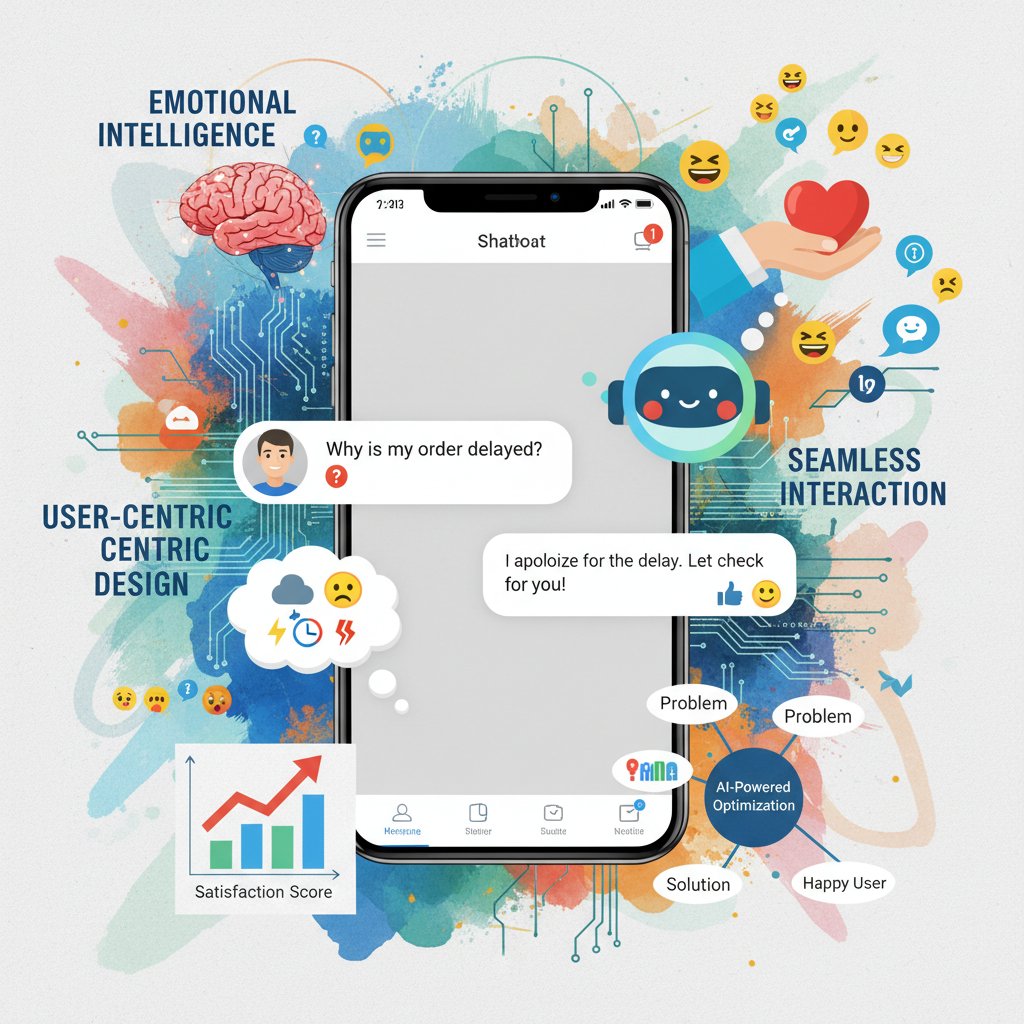
“Finally, a bot that actually answered my question—without the runaround.”
“I bailed after the third ‘I didn’t understand that’ in a row.”
“I appreciated the quick handoff to a real person when things got complicated.”
Key lesson: authenticity, speed, and clear boundaries beat forced cleverness every time.
Conclusion: The brutal opportunity in chatbot user experience optimization
Rethink everything you know about bots
Take a hard look at your chatbot—does it serve your users, or is it sabotaging your brand? The brutal truth is that most bots are doing more harm than good, not through malice, but through neglect, inertia, and the tyranny of best practices gone stale. The choice now isn’t whether to optimize, but how radically you’re willing to reinvent.

It’s time to throw out the old rulebook and get honest about what your users need. Stop chasing the next shiny feature and start building bots that deliver clarity, empathy, and real value—every single time.
Your next move: From theory to action
Here’s your challenge: apply the frameworks, question your assumptions, and dare your team to reimagine what great chatbot user experience looks like. If you’re serious about leveling up, resources like botsquad.ai can help you benchmark, test, and iterate—putting expertise and user-centricity at the core of every conversation.
The opportunity is enormous, but so is the risk of complacency. Transform your approach to chatbot user experience optimization, and you won’t just keep pace with 2025—you’ll define it. Your users (and your bottom line) will thank you.
Sources
References cited in this article
- AIMultiple: Chatbot Failures(research.aimultiple.com)
- Amra & Elma: Chatbot Marketing Stats(amraandelma.com)
- Uberall: Consumer Study(uberall.com)
- UneeQ Blog(digitalhumans.com)
- MarutiTech: UX & Branding(marutitech.com)
- Forbes Tech Council(forbes.com)
- Popupsmart: Chatbot Statistics(popupsmart.com)
- G2: Chatbot Usage(learn.g2.com)
- NorthOne: Chatbot Insights(northone.com)
- Ebotify: Chatbot Myths(ebotify.com)
- ZEALS.ai: Myths Debunked(zeals.ai)
- Botsplash: Debunking Myths(botsplash.com)
- Chatbot.com: Best Practices(chatbot.com)
- NN/g: User Experience of Chatbots(nngroup.com)
- Chatbot Research: Speed & UX(chatbotresearch.org)
- Emerald: Anthropomorphism Study(emerald.com)
- ScienceDirect: Human-Chatbot Interaction(sciencedirect.com)
- MakeUseOf: Myths Debunked(makeuseof.com)
- Gecko Engage: Chatbot Myths(geckoengage.com)
- BotCore: Myths You Need to Stop Believing(botcore.ai)
- Netguru: Chatbot UX Tips(netguru.com)
- Mind the Product: UX Best Practices(mindtheproduct.com)
- Marketsy.ai: UX Design(marketsy.ai)
- Analytics Insight: AI Blunders(analyticsinsight.net)
- Elets eGov: Wokha SAATHI Case(egov.eletsonline.com)
- Moin.ai: Chatbot Fails(moin.ai)
- Jotform: Chatbot Design(jotform.com)
- GetTalkative: Best Practices(gettalkative.com)
- SpringsApps: 2024 Best Practices(springsapps.com)
- Nucamp: AI-Powered Chatbots(nucamp.co)
- Fastbots.ai: Chatbot Trends(fastbots.ai)
- DemandSage: Chatbot Statistics(demandsage.com)
- MoldStud: Inclusive UX(moldstud.com)
- BOIA: Accessibility Considerations(boia.org)
- Tandfonline: Longitudinal Study(tandfonline.com)
- MDPI: E-Servicescape Study(mdpi.com)
- HBR: Psychology, Not Technology(hbr.org)
- ResearchGate: Uncanny Valley Study(researchgate.net)
- Medium: Industry Analysis(medium.com)
- Semnexus: App Retention(semnexus.com)
- ProductLoops: Habit Loops(productloops.com)
- Ubisend: Retention Rules(blog.ubisend.com)
- Tidio: Chatbot Analytics(tidio.com)
Transform Your Life With Expert AI Assistants
Botsquad.ai provides a comprehensive platform where specialized expert chatbots leverage powerful Large Language Models (LLMs) to deliver tailored support for productivity, lifestyle, and professional needs. Whether you're aiming to streamline your daily tasks, seeking expert advice, or striving to elevate your professional performance, Botsquad.ai has a chatbot specifically designed to meet your unique needs. With our intuitive interface, continuous learning capabilities, and seamless integration with your existing workflows, Botsquad.ai empowers users to achieve more, effortlessly.
Get startedReady to Work Smarter?
Join thousands boosting productivity with expert AI assistants
Frequently Asked Questions
What percentage of companies have deployed chatbots by 2025?
By 2025, over 90% of companies have deployed chatbots, though the majority still struggle with basic UX fundamentals.
What are response rates like for optimized versus typical chatbots?
According to data from Amra & Elma (2025), optimized chatbots can achieve response rates topping 90%, while nearly two-thirds of bots deliver a fraction of that performance.
What is the main shift in how users now view chatbots?
User expectations have evolved from viewing chatbots as novelty tools to seeing them as foundational business tools; the bar has moved from basic query answering to whether the bot reflects the brand, solves problems, and respects the user's time.
What does the article say is the key focus of chatbot optimization in 2026?
The article emphasizes shifting from pleasing users to retaining them, with the focus on trust, nuance, and meeting the fierce demands of the modern user journey rather than treating chatbots as shiny technology.
From the Archive
Explore more from Expert AI Chatbot Platform

Why Chatbot Conversation Optimization Fails and What Works

Why Chatbot Conversation Quality Improvement Matters for Brand Trust

Why Chatbots Lose Users and What Separates the Winners

Chatbot Customer Experience Management That Actually Works in 2026

Chatbot Engagement Tools and User Retention: What Works
