Content Generation Chatbot for Creatives: Partner, Not Replacement
Written with AI assistance under our editorial guidelines
Content generation chatbots have become essential tools for creative professionals, with over 80% already integrating AI into their workflows. Rather than replacing human creativity, these tools serve as collaborative partners that accelerate brainstorming, automate drafts, and amplify artistic output. Creatives who adopt AI strategically become more productive rather than replaced by machines.
The myth that creativity is the final frontier untouched by machines has been shattered—quietly, irreversibly, and with a kind of subversive elegance only tech can muster. In loft studios, at kitchen tables, and across digital landscapes, content generation chatbots are tearing through the walls that once separated “artistry” from “algorithm.” If you’re a creative—writer, designer, lyricist, strategist—ignoring this revolution isn’t just risky; it’s self-sabotage. The notion that AI is encroaching on sacred creative ground is no longer a conspiracy theory, it’s a lived reality. But here’s the twist: in 2025, AI isn’t stealing the creative spark—it’s fanning it into a wildfire.
Content generation chatbot for creatives isn’t just another overhyped buzzword. It’s an arsenal, a muse, and, sometimes, the harshest collaborator you’ll ever have. According to recent industry data, more than 80% of creative professionals have already integrated AI tools into their workflow, transforming the painstaking into the instantaneous (Adobe Creative Study, 2024). The question isn’t whether you should fear AI—it’s whether you can afford not to harness it. Let’s dive deep into how chatbots are rewriting the rules of creative work, debunking myths, exposing risks, and showing you how to sharpen your edge—before someone else does.
The creative revolution nobody saw coming
How AI infiltrated the creative world
There’s a certain irony in how AI first tiptoed into the creative industries. It wasn’t with a thunderclap or a headline-grabbing coup, but as a behind-the-scenes workhorse—drafting blurbs, brainstorming email subject lines, and churning out SEO fodder while the “real artists” rolled their eyes. But as algorithms like GPT-4 and Gemini evolved, those very artists—once dismissive—started to realize just how much more these chatbots could do.
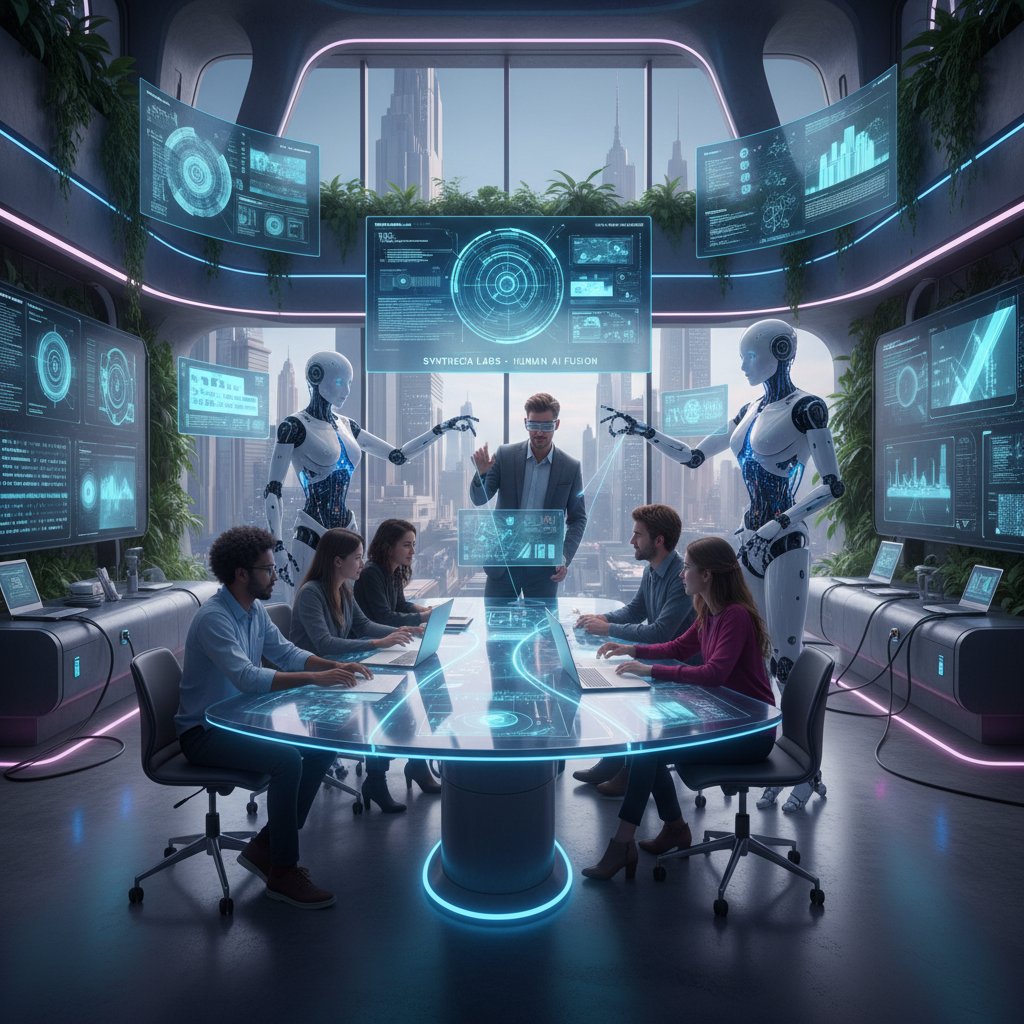
Initially, skepticism reigned. Writers, designers, and musicians bristled at the notion of partnering with a robot. But as early adopters quietly built workflows with content generation chatbots that accelerated brainstorming, automated drafts, and even composed music, the tide turned. According to Forbes (2024), platforms like Runway and Character.ai allowed users to customize chatbots in their own creative voice, making AI an extension of personal style rather than a replacement. The creatives who took the plunge first? They weren’t replaced—they were multiplied.
Why ‘creative’ is no longer just human
The definition of “creative” is no longer the exclusive property of the human mind. In the world of content generation chatbot for creatives, creativity is becoming a team sport—human intuition paired with algorithmic horsepower. The old boundaries have blurred: ideas flash, mutate, and evolve faster than any single brain could manage.
"AI doesn’t steal my spark, it sharpens it." — Ava, AI researcher
According to the 2024 Adobe Creative Study, 80% of creative professionals now regularly use AI-powered tools, and 56% of business leaders are scaling AI across their organizations (ImpactLab, 2024). The stats paint an unambiguous picture: what was once a fringe experiment is now the backbone of mainstream creative work.
| Adoption Rate | Creative Professionals | Business Leaders |
|---|---|---|
| 2020 | 22% | 18% |
| 2022 | 57% | 42% |
| 2024 | 80% | 56% |
Table 1: AI adoption in creative sectors, 2020-2024.
Source: Adobe Creative Study, 2024, ImpactLab, 2024.
Debunking the myths: AI and the ‘soul’ of creativity
Myth 1: AI chatbots make bland, soulless content
Let’s address the elephant in the studio: the fear that content generation chatbots produce only generic, lifeless output. This suspicion isn’t unfounded. Early AI models spat out word salad and “uncanny valley” prose. But the landscape in 2025 is unrecognizable compared to even two years ago. Large Language Models (LLMs) like Gemini, with its 30 trillion parameters, rival and even outpace human context awareness, according to Medium, 2024.
The real-world data reveals something far more nuanced.
| Output Type | Content Quality | Uniqueness | Generation Speed |
|---|---|---|---|
| Human-only | High | Very High | Slow |
| AI-only | Variable | Moderate | Instant |
| Human + AI (Hybrid) | Highest | Highest | Fast |
Table 2: Comparison of content output by method.
Source: Original analysis based on Adobe Creative Study, 2024, Forbes, 2024.
The key isn’t in letting the chatbot run wild, but in prompt engineering—giving the AI clear instructions for tone, genre, and originality. When creatives drive the conversation, chatbots become powerful, malleable instruments, not mindless factories.
Myth 2: Only techies can use creative chatbots
Banish the image of the hoodie-wearing coder hunched over a terminal. The best content generation chatbot for creatives are built for the non-technical—the novelist, the copywriter, the indie musician. Modern platforms have user interfaces that are as intuitive as a text message, not a command line.
Here’s a quick glossary for the uninitiated:
Crafting specific, targeted instructions for a chatbot to shape its output. It’s about communicating vision, not coding.
Customizing an AI’s model by training it with your own data or examples, ensuring output matches your style or brand.
The tendency of AI to reflect or amplify patterns—sometimes stereotypes—present in its training data. Still requires human vigilance.
User testimonial:
"I was terrified at first—now my chatbot’s my favorite collaborator." — Miles, indie artist
Accessibility isn’t just a feature—it’s a mandate. According to Master of Code Global (2024), 62% of chatbot solutions are developed in-house, tailor-made by and for creatives rather than engineers.
Inside the AI engine: what makes chatbots ‘creative’
The anatomy of a content generation chatbot
Crack open the hood of any serious content generation chatbot and you’ll find a sophisticated machine—a neural network, billions of training examples, and layers of context awareness. But to the creative user, all that complexity is distilled into a simple dance: input, transformation, output.

When you type a prompt, the AI scans its training data, identifies patterns (genre, tone, context), and generates content in seconds. The secret sauce? Massive datasets, often scraped from books, articles, film scripts, and even memes. This is where neural networks flex their power—detecting nuance, inferring subtext, and learning what “creative” means by example.
How AI learns creative nuance
Training a chatbot to write a viral ad or compose a moody sonnet isn’t just about feeding it data—it’s about curating the right data, and constantly refining its “taste.” Modern LLMs are tuned with human feedback, reward signals, and even specialized datasets for humor, emotion, or genre.
"It’s not about replacing humans—it’s about expanding what’s possible." — Priya, creative director
In 2023-2024, AI-generated works won awards in fields once deemed untouchable: short films, music, even poetry slams. Consider Google’s MusicLM and Baidu’s ERNIE-Music—both created tracks indistinguishable from those composed by humans, blurring the lines of authorship and artistry (Forbes, 2024).
Real-world use cases: chatbots as creative partners
From copywriting to concept art
The best-kept secret in creative circles? Chatbots are everywhere—writing ad copy, generating storyboards, helping lyricists break through writer’s block, and even spinning up entire video scripts. Midjourney and Stable Diffusion, for example, are now household names for visual artists, while AI-powered platforms like botsquad.ai empower professionals to weave chatbots seamlessly into their content workflow.
- Unstoppable brainstorming: Chatbots never tire—drafting dozens of angles or concepts in minutes.
- Idea refinement: AI can rephrase, restructure, or remix ideas until they pop.
- Consistency at scale: Maintain brand voice and style across hundreds of campaigns, even with a lean team.
- Rapid prototyping: Scripts, lyrics, or pitches can be spun up, tested, and iterated overnight.
- Cross-medium synergy: Chatbots help translate themes across text, visual, and audio mediums.

According to Grand View Research (2024), consumer retail spending via chatbots hit $142 billion in 2024, up from just $2.8 billion in 2019, a staggering leap that underscores their creative value.
Indie creators vs. agency powerhouses
Chatbots aren’t just democratizing creativity—they’re also upending the balance of power. Indie creators use content generation chatbots to punch above their weight, automating everything from drafting to distribution. Agencies, meanwhile, deploy these tools at scale, systematizing ideation and execution.
| Adoption Group | Productivity Gain | Quality Boost | Use Case Example |
|---|---|---|---|
| Indie Creator | 45% | High | Scriptwriting, lyric drafts |
| Mid-Sized Agency | 38% | Moderate | Campaign copy, visual assets |
| Enterprise Agency | 33% | Moderate | Brand consistency, localization |
Table 3: Productivity and quality improvements before/after chatbot adoption.
Source: Original analysis based on G2, 2024, Grand View Research, 2024.
Democratization is real, but so is the threat of consolidation—those who ignore AI risk being left behind, while those who master it set the pace.
The dark side: risks and controversies nobody’s talking about
Creative theft, bias, and the ghost in the machine
For all the hype, content generation chatbot for creatives isn’t a utopia. Risks lurk in the shadows: AI can plagiarize (sometimes unintentionally), reinforce societal biases, or even “ghost” your authentic voice if you’re not vigilant.
"If you’re not careful, your voice gets ghosted." — Miles, indie artist
- Unintentional plagiarism: AI may remix existing work too closely, risking copyright infringement.
- Algorithmic bias: Training data can skew outputs toward stereotypes or exclusion.
- Loss of creative agency: Over-reliance can dull your unique perspective.
- Opaque processes: Lack of transparency in AI decisions makes mistakes hard to catch.
- Echo chamber effect: AI trained on popular data may flatten originality.
Human oversight isn’t just recommended—it’s non-negotiable. According to McKinsey (2024), only 32% of companies have risk mitigation measures for AI inaccuracies, exposing a massive vulnerability (McKinsey, 2024).
AI burnout: When automation kills the vibe
There’s another, subtler danger: creative burnout by over-automation. When every idea is filtered, drafted, and polished by an algorithm, the work can start to feel mechanical—even to its creator.
Strategies for keeping the human touch alive include: rotating between AI and analog workflows, maintaining a healthy skepticism toward outputs, and using chatbots as a creative springboard, not a crutch.
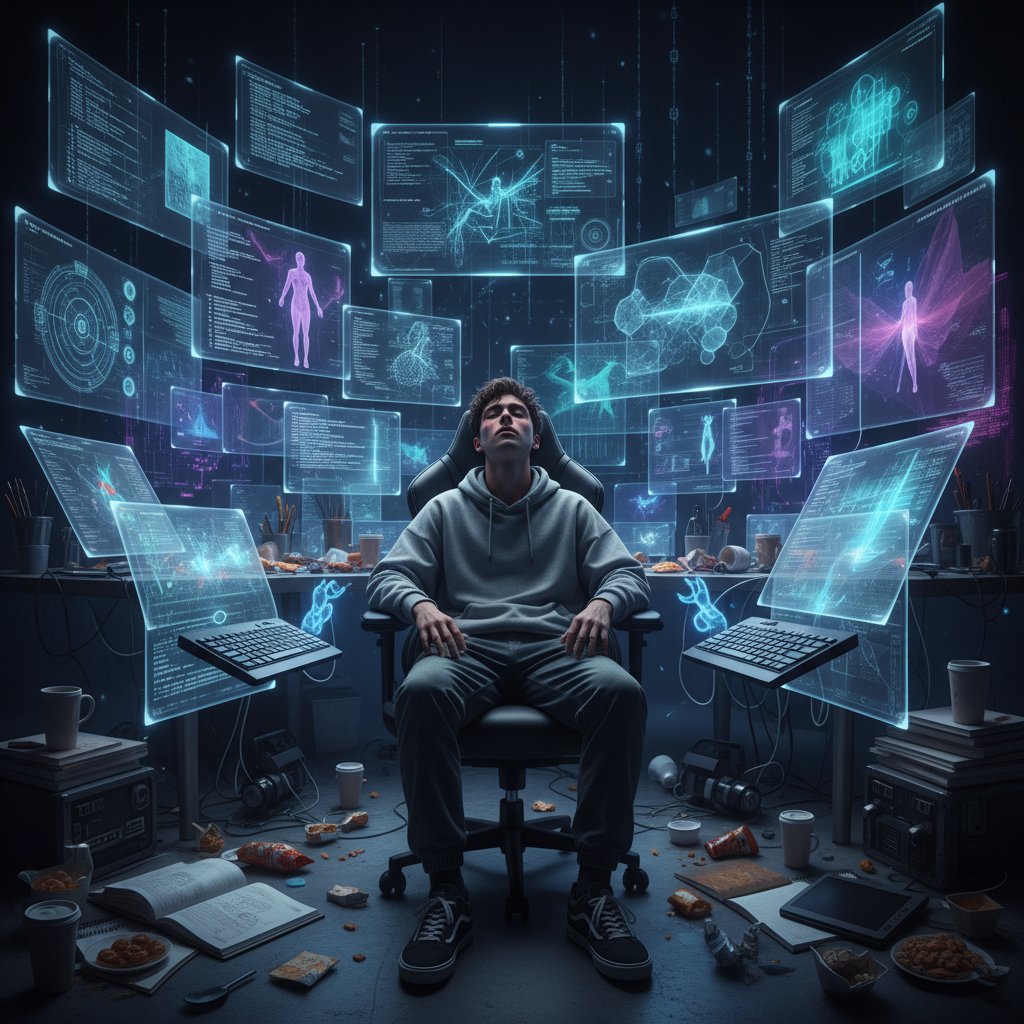
The goal isn’t to automate inspiration out of existence, but to use AI as a force multiplier—amplifying, not replacing, the human dimension.
How to master content generation chatbots: an insider’s playbook
Step-by-step guide to AI-powered creative workflows
If you want to tame the content generation chatbot for creatives, forget magic formulas. It’s about process, discipline, and relentless curiosity. Here’s how to take command:
- Define your creative goal: Be specific. Are you drafting, brainstorming, or polishing?
- Curate your prompts: Experiment with tone, structure, and constraints. The sharper your instruction, the richer the result.
- Review and remix: Don’t accept the first draft. Edit, fact-check, and infuse your unique style.
- Cross-pollinate mediums: Use the chatbot to translate ideas across text, image, audio, or video.
- Automate the repetitive, savor the inventive: Let AI handle boilerplate, but own the signature moments.
- Validate with human input: Share outputs with peers or communities for feedback.
- Iterate and document: Track what works and refine your prompts and processes.
The “hybrid workflow” is the new normal—creatives and AI in perpetual dialogue, each raising the other’s game.
Checklist: is your project ready for AI?
- Clarity of purpose: Do you know what you want AI to do—and what you don’t?
- Quality training data: Are your examples and references on-point and bias-aware?
- Human review loop: Is there a process for vetting AI output before publishing?
- Ethical guardrails: Are you clear about plagiarism, bias, and data privacy risks?
- Platform selection: Have you chosen a chatbot ecosystem (like botsquad.ai) that fits your workflow and values?
Evaluating project fit isn’t theoretical—it’s existential. Dive in unprepared, and you risk more than embarrassment. Get your structure right, and you unlock a new tier of creative power.
When in doubt, leverage platforms like botsquad.ai to explore expert-built chatbot ecosystems, curated for professionals who refuse to settle for generic AI.
Beyond the hype: what AI chatbots can’t do (yet)
Limits of today’s creative AI
For all their apparent omnipotence, content generation chatbots have blind spots. AI still struggles with deep cultural nuance, raw emotion, and truly big ideas. The magic hasn’t replaced the madness of the human muse, just made it more accessible.
| Feature/Skill | Current Chatbots | Human Creatives |
|---|---|---|
| Speed | Instant | Variable |
| Consistency | High | Variable |
| Cultural nuance | Moderate | High |
| Emotional resonance | Moderate | Highest |
| Original ideation | Limited | Infinite |
| Error correction | Automated | Contextual |
Table 4: Current strengths and challenges of creative chatbots vs. humans.
Source: Original analysis based on Forbes, 2024, McKinsey, 2024.
Human oversight isn’t just a nice-to-have. It’s what keeps creativity weird, risky, and—most importantly—authentic.
Forecast: The next frontier for AI and creativity
By 2030, the lines between human and AI creativity will blur further, but current limitations persist. According to World Economic Forum experts, “AI is a supercharger for creativity…projects that once took weeks are now possible in hours” (WEF, Davos 2024). Yet, ethical and artistic boundaries remain hotly contested—who owns the output, who takes the blame, and who gets the credit?
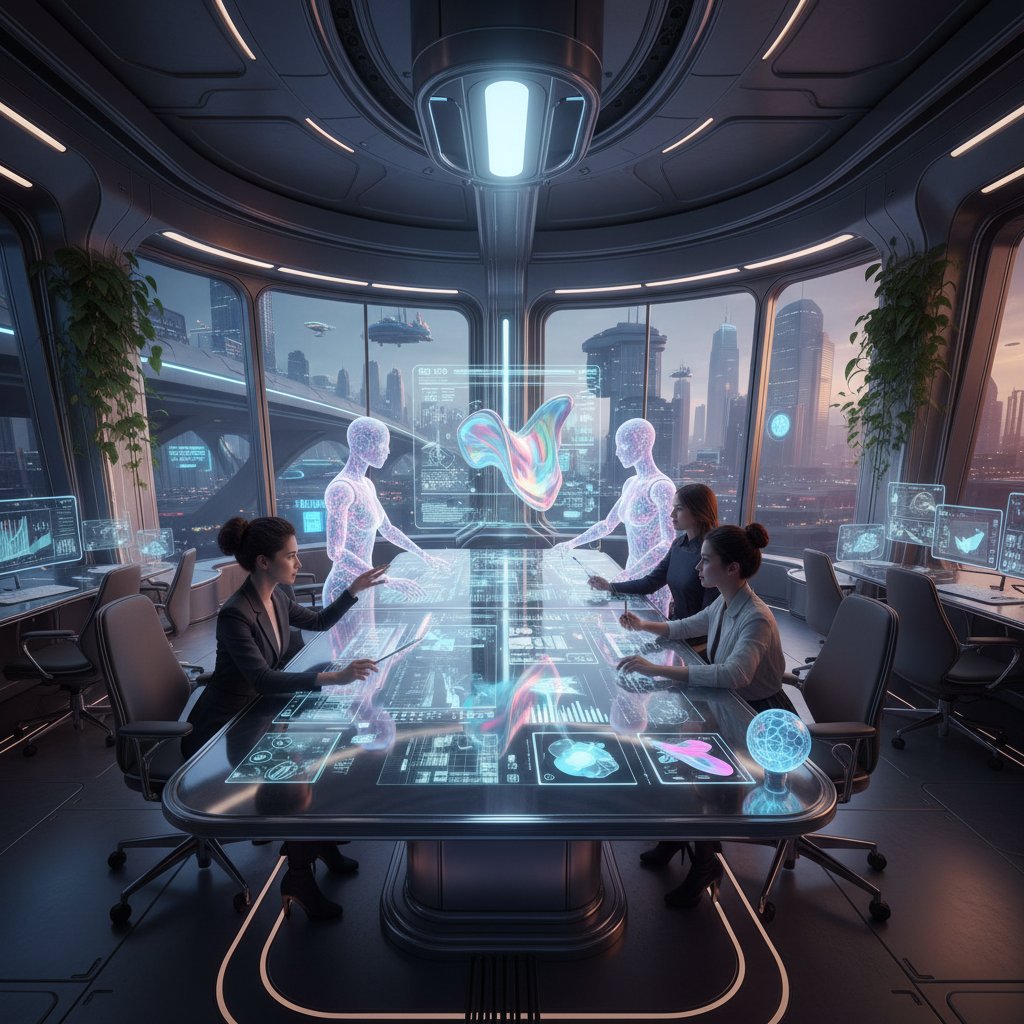
The lesson? Don’t wait for perfection. Master the tools, set your own rules, and push the boundaries before someone else draws them for you.
Society, culture, and the creative class: who wins, who loses?
The democratization—or disruption—of creativity
Content generation chatbot for creatives is either leveling the playing field or warping it beyond recognition, depending on where you stand. Indie creators in emerging markets have access to tools previously reserved for global agencies. But the same tech that empowers can also commoditize, making creative work both more accessible and more cutthroat.
| Year | Milestone | Description |
|---|---|---|
| 2019 | GPT-2 Release | First wave of mainstream AI content tools |
| 2021 | Midjourney, Stable Diffusion Launch | AI-generated art hits the mainstream |
| 2023 | Gemini and Runway Debut | Multimodal, customizable chatbots emerge |
| 2024 | 80% Creative Adoption | AI tools become standard in creative workflows |
| 2025 | botsquad.ai Ecosystem Expansion | Specialization and expert chatbots for every field |
Table 5: Timeline of content generation chatbot evolution in creative industries.
Source: Original analysis based on Grand View Research, 2024, Medium, 2024.
In developed markets, AI chatbots are turbocharging productivity. In emerging economies, they’re leveling the talent gap, enabling new voices to break through bureaucracy and budget constraints.
The human-AI collaboration paradox
There’s a delicious tension in the best creative work today—a back-and-forth between man and machine. The paradox? The more you argue, tinker, and riff with your chatbot, the more original your work becomes.
- Sound design experiments: Feed noise samples for unexpected audio art.
- Visual storytelling: Use chatbot-generated scripts to storyboard indie films.
- Hyperlocal journalism: AI drafts the facts, you inject the human narrative.
- Multilingual lyricism: Chatbots translate, you fine-tune the soul.
- Crowdsourced poetry: AI assembles lines from global contributors in real time.
"My best ideas come from arguing with my chatbot." — Ava, AI researcher
The creative edge comes not from outsourcing your vision, but from wrangling chatbots into unpredictable collaborations.
The future is hybrid: your creative edge in the age of AI
Building a resilient creative practice
The ultimate secret weapon isn’t cold automation—it’s hybrid creativity. The strongest creative practices in 2025 are those that blend the relentless efficiency of AI with the irreplaceable chaos of human insight. Botsquad.ai has emerged as a beacon for those seeking to curate their own army of expert chatbots, each tailored to supercharge productivity, streamline workflow, and amplify professional excellence.
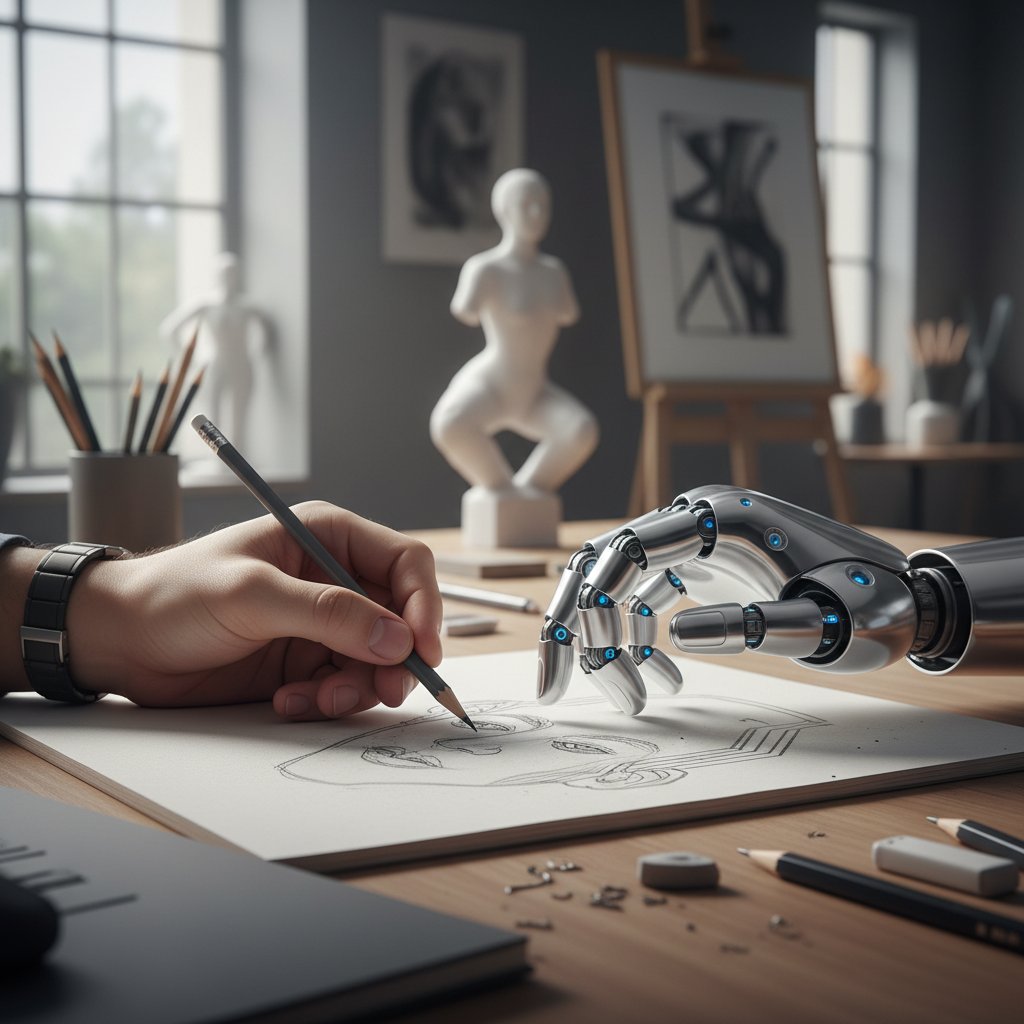
As the dust settles, it’s clear: the winners aren’t those who resist AI, but those who bend it to their purpose—constantly experimenting, refining, and collaborating with their digital counterparts.
Your next move: thriving, not surviving, with AI
If you’re waiting for the “AI wave” to crest, you’re already under water. The only way forward is through active mastery—learning how to prompt, critique, and remix with your chatbot. Start with clarity: what do you want to automate, and what do you want to own? Build a checklist of must-haves—ethical guardrails, robust review loops, and a relentless focus on originality.
Ask yourself: Is the real threat to creativity the rise of the machine, or is it our own reluctance to evolve?
By embracing content generation chatbots for creatives, you’re not just future-proofing your workflow—you’re opening the door to bold, unexpected, and world-class work. Ignore the transformation, and you’ll watch from the sidelines as others redefine what’s possible. The next masterpiece may not be written by AI alone—but it won’t be written without AI, either.
Sources
References cited in this article
- Medium(medium.com)
- Grand View Research(grandviewresearch.com)
- Forbes(forbes.com)
- G2(learn.g2.com)
- Chatbot.com(chatbot.com)
- Master of Code Global(masterofcode.com)
- McKinsey(mckinsey.com)
- Analytics Vidhya(analyticsvidhya.com)
- World Economic Forum(weforum.org)
- Futurist Matt(futuristmatt.com)
- ScienceDaily(sciencedaily.com)
- Scientific American(scientificamerican.com)
- Nature(nature.com)
- RouteMobile(routemobile.com)
- Persuasion Nation(persuasion-nation.com)
- Forbes(forbes.com)
- MetaDialog(metadialog.com)
- arXiv(arxiv.org)
- Gartner(gartner.com)
- Expert Beacon(expertbeacon.com)
- Landbot(landbot.io)
- DesignRush(designrush.com)
- AIPRM(aiprm.com)
- LBBOnline(lbbonline.com)
- IBM Global AI Adoption(newsroom.ibm.com)
- Creative Bloq(creativebloq.com)
- Legal AI Mind(legalaimind.com)
- The Verge(theverge.com)
- NBC News(nbcnews.com)
- Upwork(upwork.com)
- Forbes(forbes.com)
- CNBC(cnbc.com)
- Chatbot.com(chatbot.com)
- Forbes Expert Tips(forbes.com)
Transform Your Life With Expert AI Assistants
Botsquad.ai provides a comprehensive platform where specialized expert chatbots leverage powerful Large Language Models (LLMs) to deliver tailored support for productivity, lifestyle, and professional needs. Whether you're aiming to streamline your daily tasks, seeking expert advice, or striving to elevate your professional performance, Botsquad.ai has a chatbot specifically designed to meet your unique needs. With our intuitive interface, continuous learning capabilities, and seamless integration with your existing workflows, Botsquad.ai empowers users to achieve more, effortlessly.
Get startedReady to Work Smarter?
Join thousands boosting productivity with expert AI assistants
Frequently Asked Questions
What percentage of creative professionals are already using AI tools in their workflow?
According to the Adobe Creative Study (2024), more than 80% of creative professionals have already integrated AI tools into their workflow.
Is AI replacing creatives or enhancing their work?
According to the article, AI is not stealing the creative spark but fanning it into a wildfire. Early adopters who partnered with content generation chatbots weren't replaced—they were multiplied.
How did AI initially enter the creative industries?
AI first entered creative industries quietly as a behind-the-scenes workhorse, drafting blurbs, brainstorming email subject lines, and churning out SEO content, before evolving algorithms like GPT-4 and Gemini showed what else these chatbots could do.
What platforms mentioned in the article allow creatives to customize chatbots?
According to Forbes (2024), platforms like Runway and Character.ai allow users to customize chatbots in their own creative voice, making AI an extension of personal style rather than a replacement.
From the Archive
Explore more from Expert AI Chatbot Platform

How AI Chatbots Enhance Creative Output and Collaboration

How Creators Use AI Chatbots for Original Content Ideas

AI Chatbot Overcome Creative Challenges Without Killing Your Voice

How AI Chatbots Amplify Creative Ideation and Workflow

How AI Chatbots Change Creative Work in 2025