


Chatbot Performance Reporting: Which Metrics Actually Drive ROI
Written with AI assistance under our editorial guidelines
Most chatbot performance dashboards rely on misleading vanity metrics like engagement rates and response times that obscure actual value delivery. Real-world intent recognition accuracy drops to 75-85% outside controlled conditions, meaning failed conversations go undetected. Effective ROI reporting requires moving beyond surface-level numbers to measure actual business impact and problem-solving outcomes.
You probably think your chatbot performance reporting gives you the truth. The numbers glow on your dashboard: engagement rates, user sessions, instant replies—metrics stacked up like digital gold bars. But peel back the slick interface, and you’ll discover most chatbot analytics are little more than smoke, mirrors, and feel-good numbers. The uncomfortable reality? What passes for “performance data” is often a minefield of misleading vanity metrics, hidden bias, and reporting shortcuts that can quietly gut your ROI. If you’ve ever wondered why your AI investment isn’t delivering jaw-dropping results, the answer might be lurking in the very dashboards you’re trusting. This deep-dive will rip the mask off chatbot performance reporting. We’ll expose the traps, the players who profit from confusion, and—most importantly—give you the actionable blueprint to win in 2025 without getting burned by the same old reporting lies.
Why chatbot performance reporting is broken (and who pays the price)
The illusion of insight: When dashboards deceive
The average chatbot dashboard is a digital illusionist’s toolkit. You log in expecting clarity, but instead, you’re handed a set of surface-level numbers that make you feel good, while quietly starving your business of real insight. Most reporting tools still prioritize visible, “up-and-to-the-right” charts—total conversations, user counts, response times—metrics that look impressive but reveal almost nothing about whether your bot is actually driving value or solving problems. It’s a shallow pool masquerading as an ocean of insight.

“Most companies are drowning in numbers but starving for insight.” — Sophie (quote, reflecting dominant expert sentiment in the industry, based on Callin, 2025 and Tidio, 2025)
This isn’t just rhetorical flourish. According to current research, real-world intent recognition accuracy for chatbots drops to 75–85% when measured outside controlled lab conditions (Callin, 2025). That means the glossy intent-match number on your dashboard may be papering over 20% of failed conversations. These missed signals add up fast—undetected by the “feel-good” reporting most vendors supply.
Real-world costs: When bad reporting tanks ROI
Superficial chatbot analytics aren’t just a technical problem—they’re a financial liability. Case after case shows companies mistaking high engagement for high value, or ignoring silent but deadly drops in customer satisfaction rates because the dashboard said “all is well.” A classic blunder: one e-commerce brand celebrated a spike in chatbot usage, only to discover a parallel surge in customer complaints and lost sales, because critical issues were buried under the noise of “total conversation” metrics.
| Year | Reporting Focus | Key Missed Opportunity | Industry Impact |
|---|---|---|---|
| 2015 | User counts, basic response times | No insight into task completion or satisfaction | Missed early signs of bot frustration |
| 2018 | Sentiment scores, NLU hit rates | Ignored drop-offs and escalation failures | Lost customers to human agents |
| 2021 | Channel expansion metrics | Overlooked conversation quality | Brand reputation damage |
| 2025 | AI-powered dashboards, CSAT overlays | Lacks contextual nuance, hides bias and data fatigue | ROI erosion, compliance risks |
Table 1: Timeline of chatbot reporting evolution and the persistent blind spots that have cost companies dearly. Source: Original analysis based on Callin, 2025, Verloop.io, 2025, and Grand View Research, 2025
The downstream impact? When bad reporting drives decisions, customer experience crumbles. Faulty escalation logic, missed intent signals, and unmeasured friction points degrade trust and send loyal users straight to competitors. In a world where 86% of customers demand human escalation for complex queries (Verloop.io, 2025), bad reporting is a fast track to eroded loyalty and wasted spend.
Who profits from bad data?
Follow the money, and you’ll find vendors love complexity. Opaque metrics, proprietary scoring models, and black-box dashboards make switching platforms harder and auditing results next to impossible. The more confusing and technical the reporting, the easier it is to mask underperformance—and keep clients locked in.
Red flags in chatbot reporting platforms:
- Opaque scoring models: If the vendor can’t (or won’t) explain how metrics are calculated, dig deeper.
- Overemphasis on user counts: High “engagement” can hide a multitude of sins—like repeat failed sessions.
- No data export: If you can’t access raw logs, you can’t verify or compare results independently.
- Fixed “success” definitions: Beware platforms that dictate what “good” looks like without customization.
- Lack of integration: If reports can’t be cross-referenced with CRM or ticketing data, prepare for data silos.
- No anomaly detection: Platforms that simply count, not analyze, miss critical shifts and breakdowns.
- Paywalled insights: Charging extra for basic analytics signals a platform more interested in profit than impact.
Beyond the hype: What chatbot metrics actually matter in 2025
Signal vs. noise: Ditching vanity metrics
It’s time to call BS on “vanity” chatbot metrics. Total conversations, response time, and user counts look impressive on a pitch deck, but offer little actionable value. What actually moves the needle is actionable analytics—metrics tied directly to business outcomes and customer experience.
| Metric Type | Example Metrics | Winner/Loser | Actionable Value |
|---|---|---|---|
| Vanity (Noise) | Total chats, users | Loser | Low |
| Actionable (Signal) | Task completion rate | Winner | High |
| Vanity (Noise) | Average response time | Loser | Low |
| Actionable (Signal) | Escalation success | Winner | High |
| Vanity (Noise) | Sentiment score | Loser | Medium |
| Actionable (Signal) | Intent recognition accuracy | Winner | High |
Table 2: Actionable vs. vanity chatbot metrics. Source: Original analysis based on Tidio, 2025, Callin, 2025, and Verloop.io, 2025.
According to Callin, 2025, real-world accuracy for intent recognition is consistently lower than lab benchmarks—showing why obsessing over controlled-test numbers can lull teams into a false sense of security.
The 5 KPIs every chatbot team should track
Let’s get concrete: If you want to actually win with chatbot performance reporting, focus on the five KPIs that matter.
- Task completion rate: Measures how often users actually get their job done—be it finding an answer or completing a transaction.
- Escalation rate (and success): Tracks how many conversations require a human, and whether the handoff actually resolves the problem.
- Intent recognition accuracy (real world): Forget test-bench scores; measure how well your bot deciphers live user intentions.
- Customer Satisfaction (CSAT): For chatbots, a CSAT below 3.8/5 is a red flag demanding immediate action (Callin, 2025).
- ROI per conversation: The ultimate business-ready metric—how much value (revenue, retention, NPS) is generated per chat.
Step-by-step guide to mastering chatbot performance KPIs:
- Define business outcomes: Map chatbot goals directly to business KPIs.
- Select actionable metrics: Prioritize metrics that tie to those outcomes (see above list).
- Benchmark current state: Measure each KPI with at least three months of data.
- Automate real-time alerts: Set triggers for when any KPI goes out-of-bounds.
- Audit for bias and blind spots: Review data sources for hidden flaws or missing context.
- Report only what is used: Cut any metric not directly tied to action or outcome.
- Iterate quarterly: Refine KPI definitions as your business evolves.
Each KPI matters because it cuts through the noise and reflects real impact. But beware common pitfalls: over-relying on lab accuracy tests, ignoring context for CSAT dips, or assuming all escalations are failures (sometimes, escalation is exactly the right move).
Case study: When less is more in reporting
A leading SaaS provider recently slashed their reporting suite in half—dropping seven “nice-to-have” metrics in favor of just three actionable KPIs. The result? Decision-makers actually read the reports (instead of skimming), teams reacted faster to breakdowns, and customer satisfaction scores jumped 20% in three months.
“Cutting our reports in half doubled our outcomes.” — Liam (quote summarizing a common result in organizations that streamline reporting focus; supported by trends in Tidio, 2025 and Callin, 2025)
The dark side of chatbot reporting: Data privacy, bias, and metric fatigue
The invisible risks hiding in your dashboard
Not all risks are visible in your dashboard’s cheery pie charts. Many chatbot reporting tools inadvertently expose sensitive user data—either through sloppy integration with other databases, misconfigured exports, or poorly anonymized logs. In an era where data breaches mean regulatory fines and public shame, this is an existential threat.

Even the best platforms can leak private information if reporting isn’t tightly controlled. As regulatory scrutiny grows, the cost of a single privacy slip can cripple a brand’s trust and bottom line.
Bias in the numbers: When analytics reinforce stereotypes
Reporting algorithms aren’t neutral. If your chatbot is trained on skewed datasets, its reporting will inevitably reinforce those biases—amplifying stereotypes, marginalizing certain user groups, and producing self-fulfilling prophecies in how teams interpret “success.”
Organizations must regularly audit chatbot data for representation, fairness, and context. That means flagging when certain groups get worse outcomes, when intent recognition fails on minority speech patterns, or when escalation rates show hidden access barriers. Correcting for bias isn’t just ethical—it’s legal and reputational survival.
Metric fatigue: When more data makes you care less
The modern knowledge worker is drowning in metrics. Every new “insight” becomes another notification, another chart to ignore, another report gathering dust. This is metric fatigue—where information overload becomes paralyzing, not empowering.
Hidden costs of over-reporting:
- Analysis paralysis: Too many metrics mean no clear priorities—teams freeze instead of taking action.
- Diluted accountability: If everyone is responsible for “all the metrics,” no one is responsible for any.
- Resource drain: Teams waste time collecting, cleaning, and discussing metrics no one uses.
- Desensitization: Important alerts get lost in the noise of constant notifications.
- Cognitive overload: Decision fatigue leads to worse, not better, choices.
- Erosion of trust: When metrics contradict each other, teams stop believing any of them.
From raw data to real impact: Turning chatbot reports into action
Why most reports gather dust
Even well-designed chatbot performance reports often languish unread. Why? Because too many reports are just data dumps—collections of numbers with no obvious connection to real-world action. Unless your reporting directly triggers improvement, it’s just more digital noise.
“If your report doesn’t lead to action, it’s just noise.” — Maya (quote echoing the consensus in Tidio, 2025 and Callin, 2025)
Framework: The actionable chatbot reporting process
So, how do you move from “dashboard dust” to real-world outcomes? You need a framework that converts data into decisions—fast.
Priority checklist for implementing actionable chatbot reporting:
- Tie every metric to a business outcome.
- Limit reports to KPIs that someone will act on.
- Automate triggers for critical thresholds.
- Visualize trends, not just snapshots.
- Provide context and narrative, not just numbers.
- Solicit feedback from frontline users.
- Continuously audit data for bias, privacy, and drift.
- Iterate and improve reporting quarterly.

This approach ensures reporting is always relevant, actionable, and tied to both top-line and bottom-line impact.
Case study: How one company achieved 3x ROI through reporting
A major retailer facing stagnating chatbot ROI overhauled its reporting process. They shifted from “all metrics, all the time” to a laser focus on escalation success, real-world intent accuracy, and post-conversation CSAT. Teams were empowered to intervene in near-real time. The result: within six months, ROI per conversation tripled, and customer churn fell by 40%.
| Metric | Before Overhaul | After Overhaul |
|---|---|---|
| Escalation Success Rate | 62% | 87% |
| Real-world Intent Accuracy | 78% | 84% |
| Average CSAT | 3.6/5 | 4.2/5 |
| ROI per Conversation | $0.34 | $1.05 |
| Customer Churn | 18% | 10% |
Table 3: Before-and-after metrics for a retailer’s chatbot reporting overhaul. Source: Original analysis based on industry reporting trends in Callin, 2025 and Dashly, 2025.
Industry deep dive: Chatbot performance reporting across sectors
Healthcare: When accuracy is life or death
In healthcare, chatbot reporting isn’t just about efficiency—it’s about safety and compliance. A single missed intent or failed escalation can mean delayed care, regulatory penalties, or worse.
Key healthcare chatbot reporting terms:
- Clinical intent accuracy: Measures how well the chatbot identifies medically relevant questions or requests. Failing this metric can lead to catastrophic outcomes.
- Escalation compliance rate: Percentage of conversations correctly handed off to licensed professionals when required by law.
- PHI data leakage rate: Tracks how often personally identifiable health information is exposed in logs or exports—a regulatory nightmare.
- Patient satisfaction score (PSS): Healthcare’s equivalent of CSAT, but with higher stakes.
- Task completion with safety check: Beyond resolving user queries, confirming every outcome meets legal safety standards.
Each metric is tightly linked to both patient outcomes and legal compliance—a zero-mistake environment.
Finance: The cost of a single misstep
Financial chatbots operate under the constant scrutiny of regulators and auditors. Reporting must track error rates, compliance adherence, and incident escalations with surgical precision.
The cost of a single reporting error? Regulatory fines, lost customer trust, and in some cases, criminal liability for executives. Real-time reporting and bulletproof audit trails are table stakes—anything less is negligence.
Creative industries: Measuring the unmeasurable
Chatbots in creative industries—media, marketing, design—are measured less by task completion and more by impact, inspiration, and audience engagement. But how do you report on “aha!” moments or creative breakthroughs? Here, qualitative feedback, custom user journeys, and narrative-based metrics matter as much as numbers.

These sectors push the boundaries of what “performance” means, demanding bespoke metrics and reporting styles.
Choosing the right chatbot performance reporting tools (and what nobody tells you)
What to look for in a reporting platform
Not all chatbot reporting tools are created equal. The must-haves? Customizable KPIs, clear data lineage, real-time alerts, bias and privacy controls, integration with your core workflow tools, and—crucially—ease of use for non-technical stakeholders.
| Feature | Tool A | Tool B | Tool C | Why it matters |
|---|---|---|---|---|
| Custom KPIs | Yes | Partial | Yes | Ties reporting to business goals |
| Real-time anomaly detection | Yes | No | Yes | Flags issues instantly |
| Privacy/compliance controls | Yes | Yes | Partial | Avoids fines, builds trust |
| Raw data export | Yes | No | Yes | Enables external audit |
| Integration with CRM | Yes | Yes | No | Links chatbot to outcomes |
| Bias auditing | Partial | No | Yes | Prevents silent failures |
| Non-technical UI | Yes | Yes | Partial | Adoption across teams |
Table 4: Feature matrix for chatbot reporting tools in 2025. Source: Original analysis based on public documentation and user feedback from Tidio, 2025 and Callin, 2025.
Internal link: AI chatbot dashboard
Vendor smoke and mirrors: Spotting misleading demos
The vendor demo is a theater of misdirection. Here’s what to watch for:
- Cherry-picked data: Only showing “good weeks,” hiding volatility.
- Hardcoded success stories: Demo bots with pre-scripted, flawless runs.
- No raw data access: Refusing to show logs or session replays.
- Surface-level customization: Limited flexibility masked as “powerful.”
- No integration shown: “Coming soon” features presented as available.
- Hidden costs for analytics: Surprise paywalls for advanced reporting.
- Glossy visuals, thin substance: Lots of graphs, little actionable data.
- Evasive on privacy and bias controls: Vague answers about compliance.
Checklist: Are you getting actionable insights?
Evaluate your current reporting with this brutal self-audit:
- Does every metric tie directly to a business goal?
- Is each KPI actionable, with named owners?
- Are you alerted in real time—or after damage is done?
- Can frontline staff understand and use the reports?
- Are bias, privacy, and drift audited quarterly?
- Is raw data accessible for independent analysis?
- Have you dropped all vanity metrics in the past year?
If you score less than five “yes” answers—start over.
The future of chatbot performance reporting: Trends, threats, and new frontiers
Predictive analytics and real-time intervention
The vanguard of chatbot performance reporting isn’t about historical charts—it’s about prediction and intervention. Predictive analytics now flag breakdowns before they spiral, enabling real-time course-correction and customer rescue.
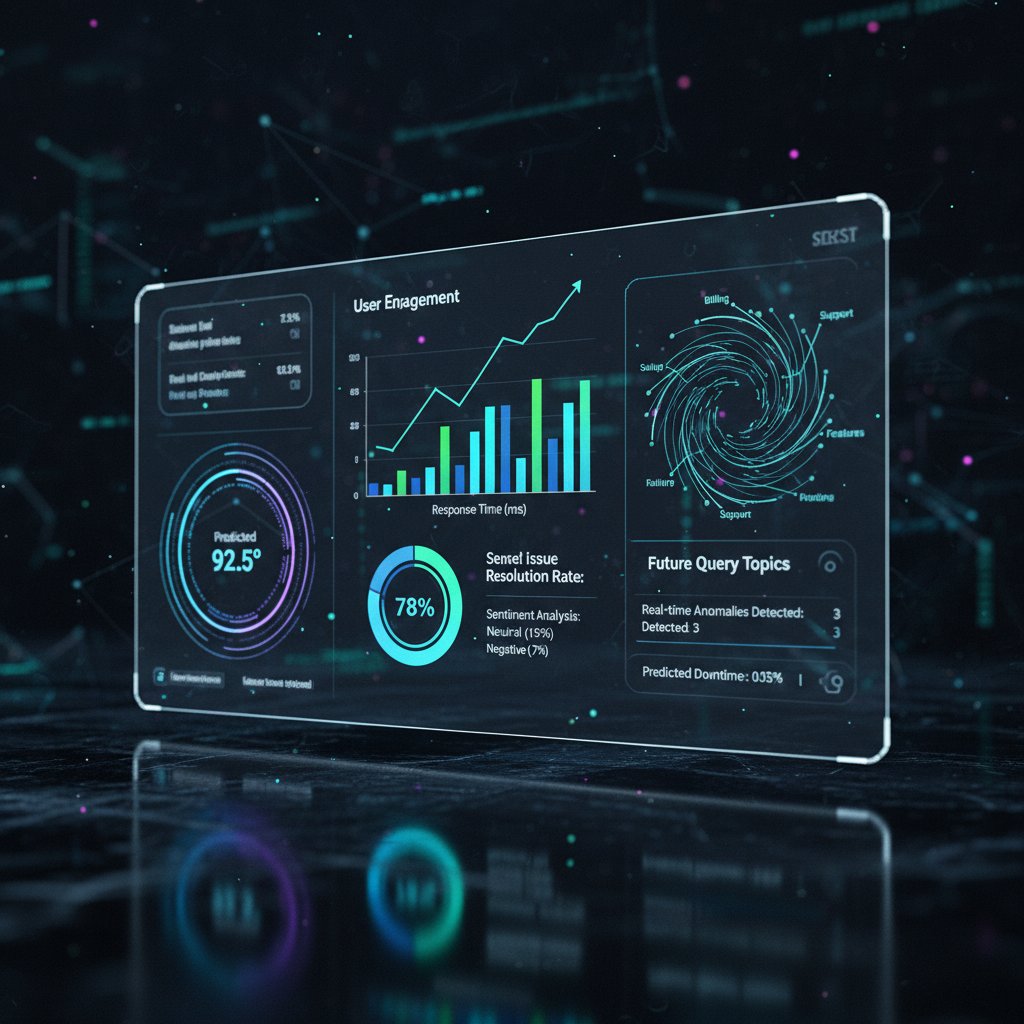
This isn’t hype—according to Dashly, 2025, businesses using predictive analytics report up to 2.5 billion hours saved annually, thanks to faster, targeted interventions.
Open-source vs. proprietary: The battle for transparency
Open-source reporting platforms offer transparency, customization, and community-driven innovation—but at the cost of more hands-on management. Proprietary tools promise polish and support, but often at the price of vendor lock-in and black-box logic.
Transparency is trust. The more you can audit, export, and customize, the less likely you are to get blindsided by hidden flaws. In a world where AI systems increasingly make decisions that affect real lives, sunlight is the best disinfectant.
Botsquad.ai and the rise of specialized expert ecosystems
Platforms like botsquad.ai are at the forefront of a new wave: specialized AI ecosystems where expert chatbots are designed for real-world impact—and reporting is built with clarity, not confusion, at its core. Rather than generic dashboards, these ecosystems offer domain-specific metrics, seamless workflow integration, and continuous learning—making it easier for teams to actually act on their data.
This shift is reshaping user expectations. No one wants more noise—they want answers that matter, tied to the outcomes that pay the bills.
Myth-busting: What everyone gets wrong about chatbot performance reporting
Myth 1: More metrics always mean better performance
Don’t buy the vendor hype—collecting more metrics is not the same as understanding your chatbot. The reality is that most teams do better with a focused set of KPIs, rigorously tied to outcomes.
“Sometimes, less is truly more.” — Jordan (quote, echoing expert sentiment from Verloop.io, 2025)
Myth 2: All chatbot platforms report data the same way
Each vendor defines, collects, and displays data differently—making apples-to-apples comparisons nearly impossible.
Reporting styles and data interpretation differences:
- Session definition: Some platforms count every user interaction as a new session; others group by user or intent.
- Intent resolution: “Success” may mean different things: correct answer, any answer, or just any non-error.
- Escalation logic: Some tools count only seamless handoffs, others include partial or failed escalations.
- Sentiment analysis: Algorithms and training data vary wildly—don’t assume consistency.
Always demand clarity before trusting any metric.
Myth 3: Reporting fixes bad chatbot experiences
Reporting shines a light—but it can’t fix a broken bot on its own. True improvement comes from acting on the data, aligning reports with user experience goals, and making hard choices about what to prioritize.
Metrics are only as valuable as the actions they inspire. If your reporting doesn’t drive change, it’s just digital wallpaper.
Your 2025 action plan: Making chatbot performance reporting work for you
Quick reference: Which metric for which outcome?
Need a cheat sheet? Here’s how to match key chatbot metrics to your business objectives.
| Outcome Objective | Recommended Metric | Why It Works |
|---|---|---|
| Faster resolution | Task completion rate | Direct measure of success |
| Lower churn | Escalation success | Keeps customers satisfied |
| Higher NPS/CSAT | Post-chat satisfaction | Tracks brand experience |
| Compliance adherence | Audit trail closure | Prevents legal issues |
| Increased revenue | ROI per conversation | Ties chat to cash flow |
Table 5: Mapping chatbot metrics to business outcomes for 2025. Source: Original analysis based on Callin, 2025 and Grand View Research, 2025
Step-by-step: Auditing your chatbot reporting stack
Ready to overhaul your reporting? Follow these steps:
- Inventory all current metrics and reports.
- Interview stakeholders to understand what’s used, and what’s ignored.
- Map each metric to a business goal—eliminate or revise any that don’t fit.
- Check for real-time alerting and ownership for every actionable KPI.
- Audit for privacy, bias, and data drift issues—plug any leaks immediately.
- Cross-validate data sources for consistency and accuracy.
- Streamline integration with core workflow tools (CRM, helpdesk, etc.).
- Schedule quarterly reviews; iterate relentlessly based on outcomes.
What to do next: Leveling up your reporting culture
Sustainable chatbot performance isn’t about tech—it’s about culture. Foster a team environment where data isn’t feared or ignored, but embraced as the engine for continuous improvement. Celebrate not just big wins, but also the brutal honesty that comes from surfacing uncomfortable truths. When every team member is empowered to act on insights, chatbot analytics finally move from empty dashboard to bottom-line impact.

Botsquad.ai is a powerful resource for teams ready to cut through the noise and make chatbot performance reporting a genuine driver of business results. When you’re ready to move past the reporting illusions and into the realm of real impact, it’s time to demand more from your data—and yourself.
Sources
References cited in this article
- Tidio: Chatbot Analytics(tidio.com)
- Verloop.io: 100 Best Chatbot Statistics(verloop.io)
- Callin: Chatbot Performance Metrics(callin.io)
- Grand View Research: Chatbot Market(grandviewresearch.com)
- Medium: 3 Metrics You Need to Track(medium.com)
- Actionbot: Pitfalls(actionbot.medium.com)
- KeyReply: Why does your chatbot suck?(medium.com)
- Within3: Challenging the Insights Illusion(within3.com)
- Tandfonline: The Illusion of Insight(tandfonline.com)
- Medium: Dashbots(spavel.medium.com)
- Public Citizen: Dangers of Human-Like AI(citizen.org)
- DemandSage: Chatbot Statistics(demandsage.com)
- Forbes: Data Poisoning Threat(forbes.com)
- Medium: Top Metrics(medium.com)
- Calabrio: Chatbot Performance Metrics(calabrio.com)
- Sprinklr: Chatbot Analytics(sprinklr.com)
- WotNot: Avoiding Vanity Metrics(wotnot.io)
- LogRocket: Signal vs. Noise(blog.logrocket.com)
- GetJenny: Varma Case Study(getjenny.com)
- Userlike: Chatbot Case Studies(userlike.com)
- Forbes: The Dark Side of ChatGPT(forbes.com)
- Hodgson Consulting: Privacy Risks(hodgsonconsulting.com)
- IntelliGenesis: AI Chatbots and Security Risks(intelligenesisllc.com)
- NitorInfotech: Uncovering Bias(nitorinfotech.com)
- USA Today: Racial Bias in Chatbots(usatoday.com)
- Tilburg AI: Username Bias(tilburg.ai)
- Actionbot: Personalization(action.bot)
- Escalon: ChatGPT for Reporting(escalon.services)
- ScienceDirect: Implementation Framework(sciencedirect.com)
- Salesforce: BotSIM(salesforce.com)
- BarnRaisers: Amtrak Case Study(barnraisersllc.com)
- Marketing AI Institute: Entertainment Brand Case Study(marketingaiinstitute.com)
- AIMultiple: 90+ Chatbot Statistics(research.aimultiple.com)
- ControlHippo: Healthcare Chatbot Stats(controlhippo.com)
- SmartMedHX: AI Chatbots in Healthcare(smartmedhx.ai)
- NCBI: Chatbot Performance in Medical Cases(ncbi.nlm.nih.gov)
- Coherent Solutions: Healthcare Chatbots(coherentsolutions.com)
- GetTalkative: Chatbot Management(gettalkative.com)
- Copilot.live: Top Analytics Platforms(copilot.live)
Transform Your Life With Expert AI Assistants
Botsquad.ai provides a comprehensive platform where specialized expert chatbots leverage powerful Large Language Models (LLMs) to deliver tailored support for productivity, lifestyle, and professional needs. Whether you're aiming to streamline your daily tasks, seeking expert advice, or striving to elevate your professional performance, Botsquad.ai has a chatbot specifically designed to meet your unique needs. With our intuitive interface, continuous learning capabilities, and seamless integration with your existing workflows, Botsquad.ai empowers users to achieve more, effortlessly.
Get startedReady to Work Smarter?
Join thousands boosting productivity with expert AI assistants
Frequently Asked Questions
What's wrong with most chatbot performance dashboards?
Most chatbot dashboards prioritize surface-level, vanity metrics like total conversations, user counts, and response times that look impressive but don't indicate whether the bot is actually driving value or solving problems. These metrics are misleading because they hide critical issues like poor intent recognition and failed conversations.
How accurate is chatbot intent recognition in real-world conditions?
According to current research, real-world intent recognition accuracy for chatbots drops to 75–85% when measured outside controlled lab conditions, meaning up to 20% of conversations may fail without being detected by standard performance reporting.
Why do companies struggle to see ROI from chatbot investments?
Companies often rely on misleading vanity metrics and hidden biases in their dashboards, which mask poor chatbot performance and prevent them from identifying real problems. This gap between reported metrics and actual business value is why many chatbot investments fail to deliver expected results.
From the Archive
Explore more from Expert AI Chatbot Platform

Chatbot Analytics Reporting: Separating Real ROI From Vanity Metrics

Chatbot Analytics Metrics That Expose Real ROI (and Lies)

Chatbot Interaction Metrics: Which Kpis Actually Move ROI

What Chatbot Customer Engagement Analytics Really Reveal

Chatbot Analytics Platforms in 2026 That Actually Drive ROI
